


- Home
- Companies
- QIAGEN GmbH
- Products
- PyroMark Q24 - Sequence-based detection ...
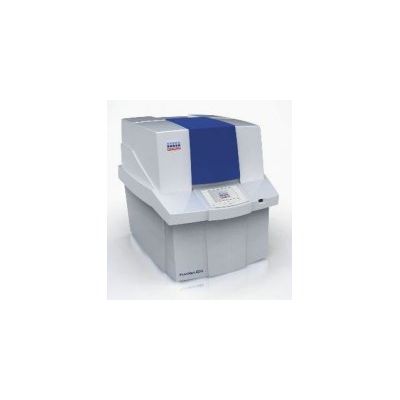
PyroMark Q24 - Sequence-based detection and quantification by pyrosequencing
For methylation analysis, sequence variation analysis, and microbial identification using Pyrosequencing technology
- Reliable quantification of allele representation and methylation status
- Sequence information enables discovery of rare mutations
- Methylation analysis can be combined with SNP typing in one assay
- 1–24 samples can be analyzed in as little as 15 minutes
The PyroMark Q24 System includes the PyroMark Q24 Instrument, the PyroMark Q24 Vacuum Workstation for sample preparation, PyroMark Q24 Software 2.0 for versatile analysis of results, optimized reagents, and dedicated PyroMark Test Kits (see Related Products).
Pyrosequencing technology, which is based on the principle of sequencing by synthesis, provides quantitative data in sequence context within minutes. PyroMark Q24 is a fully integrated system that provides real-time sequence information and is highly suitable for epigenetics research and genetic analysis.The system includes PyroMark Q24, PyroMark Q24 Vacuum Workstation, PyroMark Q24 Software, PyroMark Gold Q24 Reagents, PyroMark Control Oligo, and PyroMark Q24 Validation Oligo. Sample preparation solutions are also supplied to enable preparation of single-stranded DNA using the PyroMark Q24 Vacuum Workstation.
The Pyrosequencing reaction involves five steps:
Step 1
A sequencing primer is hybridized to a single-stranded PCR amplicon that serves as a template, and incubated with the enzymes, DNA polymerase, ATP sulfurylase, luciferase, and apyrase as well as the substrates, adenosine 5` phosphosulfate (APS), and luciferin.
Step 2
The first deoxribonucleotide triphosphate (dNTP) is added to the reaction. DNA polymerase catalyzes the incorporation of the deoxyribo-nucleotide triphosphate into the DNA strand, if it is complementary to the base in the template strand. Each incorporation event is accompanied by release of pyrophosphate (PPi) in a quantity equimolar to the amount of incorporated nucleotide.
Step 3
ATP sulfurylase converts PPi to ATP in the presence of adenosine 5` phosphosulfate (APS). This ATP drives the luciferase-mediated conversion of luciferin to oxyluciferin that generates visible light in amounts that are proportional to the amount of ATP. The light produced in the luciferase-catalyzed reaction is detected by a charge coupled device (CCD) chip and seen as a peak in the raw data output (Pyrogram). The height of each peak (light signal) is proportional to the number of nucleotides incorporated.
Step 4
Apyrase, a nucleotide-degrading enzyme, continuously degrades unincorporated nucleotides and ATP. When degradation is complete, another nucleotide is added.
Step 5
Addition of dNTPs is performed sequentially. It should be noted that deoxyadenosine alfa-thio triphosphate (dATP•S) is used as a substitute for the natural deoxyadenosine triphosphate (dATP) since it is efficiently used by the DNA polymerase, but not recognized by the luciferase. As the process continues, the complementary DNA strand is built up and the nucleotide sequence is determined from the signal peaks in the Pyrogram trace.
Streamlined workflow - from sample to result
The versatile PyroMark Q24 seamlessly integrates into epigenetics and genetic analysis workflows, and complements QIAGEN`s advanced technologies for sample preparation, bisulfite conversion, and PCR amplification. The highly reliable instrument enables sequence-based detection and quantification of CpG sites as well mutations. The streamlined workflow means that results can be achieved faster.
Flexible and simple Pyrosequencing assay design using PyroMark Assay Design Software
PyroMark Assay Design Software 2.0 ensures easy design of PCR and sequencing primers. The assays are optimized for all PyroMark instruments.
Fast and easy sample preparation
From PCR product to single-stranded template ready for sequencing — up to 24 samples can be prepared in parallel using the PyroMark Q24 Vacuum Workstation, in less than 15 minutes. The workstation ensures easy handling and the actual hands-on time is less than 5 minutes.
Easy-to-use PyroMark Q24 software
PyroMark Q24 software, installed on a PC, enables comprehensive analysis of your results. The software contains two analysis modes, CpG and AQ (Allele Quantification). Both of these modes can be used to analyze samples on the same plate, enabling different types of samples to be run at the same time. The AQ mode can be used for analysis of single and multivariable positions as well as di-, tri- , and tetra- allelic mutations. The CpG mode enables analysis of multiple consecutive CpG sites and provides a built-in control of the bisulfite treatment.
The versatile PyroMark Q24 seamlessly integrates into epigenetics, genetic analysis, and microbiology applications workflows.
A detection tool highly suited for epigenetics research
Pyrosequencing complements QIAGEN`s epigenetics portfolio and enables accurate and sensitive quantification of the methylation status by providing highly reliable sequence data. It even allows the identification of novel mutations as well as detection of aberrant DNA methylation patterns present at low levels. PyroMark Q24 includes a complete software package for CpG methylation analysis as well as a built-in control for bisulfite treatment.
Quantification of individual CpG sites
Analysis of single CpG sites is of crucial importance when studying differential gene expression in various tumors. Traditional methods often fail to provide this degree of sensitivity since the data obtained is of lower resolution. Pyrosequencing technology overcomes this challenge and enables analysis of single variations in the methylation pattern of multiple sites with high accuracy.
A highly suitable platform for genetic analysis
Genetic analysis comprises multiple applications to analyze differences in genomic DNA, including mutation detection and SNP typing. PyroMark Q24 facilitates accurate and highly sensitive mutational analysis of any gene of interest and enables quantification of allele representation in mixed cell populations. Pyrosequencing technology offers optimized and validated RUO tests for mutation analysis of genes such as KRAS.
KRAS assay
Mutations in the KRAS gene are implicated in several types of human cancers with the most common mutations found in codons 12, 13, and 61. The PyroMark Q24 KRAS v2.0 test enables reliable detection and quantification of mutations in these codons in a single run. In addition, the flexible assay set up provided by PyroMark Q24 allows the detection of additional, rare mutations "Results from mutation analysis of codons 12 and 13 using PyroMark KRAS v2.0 test and PyroMark Q24" and "Results from mutation analysis of codon 61 using PyroMark Q24 KRAS v2.0 test and PyroMark Q24".
An invaluable tool in a variety of research areas
Pyrosequencing is becoming increasingly relevant for research applications in a variety of disciplines. Whether examining drug-resistance development in pathogens, the role of epigenetic DNA methylation in gene expression regulation, genetic markers for specific phenotypes in livestock, or polymorphisms in forensic samples of mitochondrial DNA, the PyroMark Q24 enables powerful and versatile analysis of genetic and epigenetic variation. In addition, because Pyrosequencing integrates sequence detection and quantification, the enhanced analysis resolution can lead to new discoveries.
- Instrument dimensions: 420 x 390 x 525 mm (16.5 x 15.4 x 20.7 in)
- Weight: 27.5 kg (60.6 lb)
- Samples per run; throughput: 1–24
- Applications: Methylation analysis, allele quantification, genotyping, sequence analysis
- Technology: Pyrosequencing
- Kits designed for this instrument: PyroMark Q24 Tests
- Software: PyroMark Q24 Software 2.0 (to be installed on PC)
- Power: 100–240 V AC, 47–63 Hz, 1.1–0.45 A (grounded); from external power supply to the instrument : 12 VDC and 24 VDC nominal
- Operating temperature: 15–32°C (59–90°F)
- Humidity: Relative humidity of 20–90% (noncondensing)
- Altitude: Up to 2000 m (6500 ft)
- Place of operation: For indoor use only
- Pollution level: 2
- Overvoltage category: II
- Chemical resistance: pH 4 to pH 9, common detergents, 0.5 M sodium hydroxide, ethanol
- Process time: Depends on the number of dispensations (20 dispensations take 24 minutes)
- Process temperature: 28°C (82.4°F) ± 1%
- Connections: One USB port (2.0)