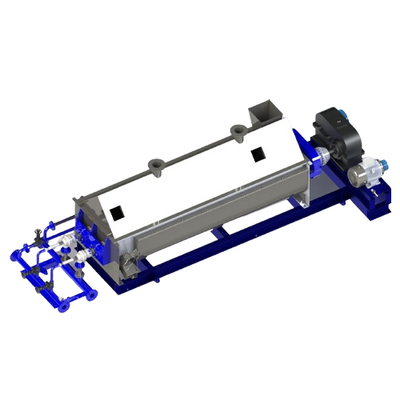
Hollow Paddle Sludge Dryer
Micro Sludge dryer has been designed and developed for drying of different types of sludge paste like biological & chemical sludge. These machines are highly efficient, mechanically agitated, indirect heating by steam or thermic fluid. There are two counter rotating paddle shaft with uniquely designed intermeshing wedge type paddles that produce intimate mixing and self-cleaning of heat transfer surface for optimization of heat transfer resulting in minimizing the footprint of machine.
Electric Heating Sludge Dryer
Micro Batch type Sludge Dryer is designed with electric heating system upto 300 kg per 3hr/batch.
Solar Sludge Dryer
Micro Transmission Systems is a reputed manufacturer of water and wastewater treatment solutions. The firm was founded in 1995 to serve engineering industry and later on we moved to serve water/ waste water treatment industry as per growing need of society and worldwide scarcity.
SSDR – II: HOW IT HAPPENS
Sewage treatment plants generate sludge as excess biomass during the biological treatment of wastewater. This biomass, typically wasted during the treatment process, initially contains less than 1% solids. It is first mechanically dewatered to achieve a solids content of 18–20%. The dewatered sludge is then transported to a greenhouse structure covered with specially coated polycarbonate sheets. These sheets are designed to optimize solar energy utilization, allowing direct solar radiation to effectively dry the wet sludge. When automatic conveyor systems are unavailable, sludge is delivered by truck or tractor trolley and unloaded onto the greenhouse floor at a maximum height of 60 cm. A sludge turner then agitates and spreads the material across the floor, maintaining a uniform layer approximately 50 mm thick. Solar heat causes water in the sludge to evaporate, drying the top layer while lower layers remain moist, necessitating periodic turning. Evaporation increases humidity within the greenhouse. Ceiling-mounted circulation fans, installed at 10 m intervals, direct heated air downward toward the sludge surface. This airflow removes the moisture-laden layer formed by evaporation, redistributing it into the greenhouse interior. Exhaust fans located at both the inlet and outlet ends of the greenhouse expel the saturated air, simultaneously drawing in fresh air to maintain optimal drying conditions Fresh sludge is loaded at the entry side of the greenhouse daily. The sludge turner pushes the material incrementally toward the exit end. Due to its higher rotational speed compared to its forward movement, the turner simultaneously aerates the sludge, enhancing the drying process. Once the sludge achieves the desired dryness, it is removed from the system using a loader. The process operates continuously, with new sludge being introduced and dried sludge being removed each day. All system operations, including fan control and turner movement, are remotely monitored and managed to ensure consistent performance and efficiency.