


- Home
- Companies
- Wuhan Michuang Technology Co., Ltd ...
- Products
- MCscope - Model MC-6552 - Soldering ...
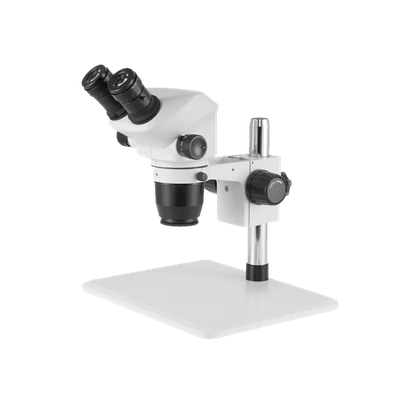
MCscope - Model MC-6552 -Soldering Microscope for Electronics Repair
Engineered for precision soldering and inspection tasks, the MC6552 soldering microscope delivers stable, distortion-free 3D visualization for electronics repair, PCB assembly, and quality control applications.
Its dual-eyepiece design with 24mm ultra-widefield optics provides a clear and immersive viewing experience, allowing technicians to accurately observe solder joints, component alignment, and micro-scale defects during real-time operations.
With a tool-friendly 118mm working distance and a robust Greenough optical system, this soldering inspection microscope is well suited for soldering, rework, and inspection workflows that require both precision and efficiency.
During electronics manufacturing and repair, various soldering defects can occur that directly impact product reliability. A soldering microscope helps identify these issues clearly and efficiently.
Common defects include:
- Cold solder joints – poor electrical connection due to insufficient heat
- Solder bridges – unintended connections between adjacent pads
- Voids and bubbles – internal gaps affecting joint strength
- Insufficient wetting – uneven solder spread on pads or leads
- Cracks and fractures – caused by thermal or mechanical stress
Using a soldering microscope allows technicians to detect these defects in real time and improve inspection accuracy.
For a more detailed breakdown of soldering defects and inspection methods, refer to our detailed guide:
Choosing the right soldering microscope depends on several key factors, including magnification range, working distance, and depth perception.
- Adequate magnification (typically 5×–50×) for soldering and inspection
- Long working distance for comfortable tool operation
- Stable 3D viewing for evaluating solder joint quality
For a practical, step-by-step guide covering real soldering scenarios, magnification selection, and system configuration, refer to our detailed guide:
- 30% larger FOV than standard 20mm eyepieces (24mm observation area)
- Flat-field optics eliminate edge distortion, ideal for PCB assemblies and biological specimen scanning.
- Soft rubber eyeguards reduce eye strain during prolonged use.
- Adjustable Interpupillary Distance (52-76mm):Universal fit adapts to diverse users, from students to professionals.
- All-Metal Chassis: Withstands vibration and accidental impacts in workshops or production lines.
- Sealed Optics: Dust-resistant design for reliability in harsh environments (e.g., metalworking labs).
- 6.5X-52X Parfocal Magnification: Maintains focus while zooming—critical for soldering, assembly verification, or gemstone grading.
- Quick-Lock Presets: Instantly switch between fixed magnifications (e.g., 10X for coarse alignment → 40X for detail verification).
- 45° Angled Viewing: Natural neck posture for multi-hour sessions in quality control or training.
- Tool-Free IPD Adjustment (52-76mm): Adapts to any user within seconds, from technicians wearing safety glasses to students.
- 118mm Clearance Zone: Accommodates probes, tweezers, or bulky samples without obstructing the view—key for circuit board rework.
- Optical System: Greenough Optical System
- Observation Head: Binocular/Trinocular, 45° inclined
- Interpupillary Dist.: 52mm-76mm
- Stereoscopic Angle: 10°
- Zoom Mechanism: Switchable continuous/stepped zoom (0.65x-5.2x)
- Zoom Ratio: 1:08
- Eyepiece: PL10X24mm (diopter adjustable)
- Working Distance: 118mm (1x objective lens)
- Eyepiece Tube: Φ30mm inner diameter, 10mm parfocal
- Image Output: 100% optical path switching
- Stand: Φ76mm adapter hole diameter