


- Home
- Companies
- Mycometer A/S
- Products
- Mycometer - Surface Bacteria
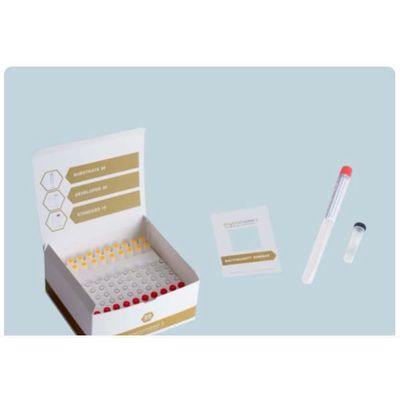
Mycometer - Surface Bacteria
Test Assays: The tests assays are packed in a box of 20 samples. A box contains all accessories for sampling and analysing 20 samples.
20 Sampling units
20 Substrates
40 Developers
10 Fluorescent standards
4 Filtration units
40 Pipette tips (100µl)
Onsite bacterial contamination assessment. Onsite results in less than an hour! Verified Technology (USEPA 2011)
High data reproducibility
The Mycometer® surface Bacteria is a rapid method for measuring the level of bacteria on surfaces whether they are introduced from flooding or whether they are present due to structural water damage or a generally high moisture content. The method was developed specifically as a tool to investigate surfaces that have been affected by Category 1, 2 & 3 water sources. Mycometer® surface Bacteria fills the gap between the slow classical cultivation methods and the very rapid but non-specific and inaccurate methods based on ATP technology. A high reproducibility and robustness has provided a platform for the development of Interpretation Criteria which is a unique feature for the Bactiquant-surface. The Mycometer® surface Bacteria is the only rapid surface technology specifically for bacteria that has been verified by US-EPA (Environmental Protection Agency). Bacteria can sometimes inhibit mould growth and vice versa. In situations where liquid water is visibly present bacteria often dominates completely inhibiting mould growth. Where conditions are moist, but without liquid water, mould usually dominates and can inhibit bacterial growth.
Sampling kit for Mycometer® surface Bacteria Sterile swab Wetting solution Template (9cm2)
Collecting a sample
Break the seal on the sterile swab container by twisting the red cap.
The cotton swab is then wetted in the sterile saline contained in the tube with the black cap. (Do not use the green capped wetting solution from the Mycometer® surface Bacteria test!)
Apply the self-adhesive template to the surface to be sampled.
Firmly grip the wooden swab handle, keeping your fingers at least one inch from the cotton swab.
Thoroughly clean the surface as well as possible by rubbing the area inside the template.
The swab should be rotated in order to use as much of the cotton as possible. Keep a low angel between the swab and surface.
Return the swab into the container until analysis. Samples should be analysed within 24 hours of collection.
Other things to consider about sampling
When sampling for bacteria often there is no visual sign, such as discoloration, as is frequently seen when sampling for mould. It is, therefore, not always obvious where to sample. In our experience Bacteria are often scattered unevenly on a surface. It is recommended to take a minimum of three samples from the surface in order to have a high probability of discovering a bacterial contamination.
The Mycometer® surface Bacteria method has been developed for rapid assessment of bacterial contamination after flooding, sewage backflow or spills. Mycometer® surface Bacteria can give a rapid answer to the questions, “Is the surface contaminated or just dirty? Is a surface successfully cleaned?” Though this has been the main use of the method, consultants and contractors have found that the method is also very useful when investigating building with water damage or moisture problems in general. Many times consultants are called in to look for mould and may overlook the fact that bacteria can be the problem. Contrary to mould growth which often gives visual discolouration, bacterial growth in moist/wet areas of a building are often not visible. Taking a sample on a surface that visually doesn’t appear contaminated and then getting results that show high levels of bacteria has taken many a consultant by surprise.
Interpretation criteria that differentiates surfaces contaminated with high level of bacteria from the level found on dirty surfaces in non flooded normal buildings.
Defines clean as a criteria for Post Remediation Verification (PRV). Surfaces considered clean contain only background levels of bacteria as that seen in normal non problem buildings.
- BQS-number >350& Contaminated surfaces
- BQS number 26-350 Dirty surfaces
- BQS number 0-25 Clean surfaces