


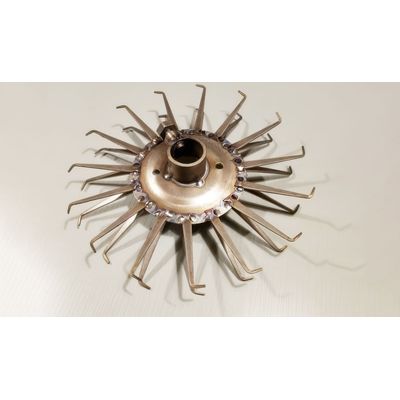
When choosing the right Titanium Jigs for Anodizing, several factors need to be considered:
- Workpiece size and shape: The jigs should be appropriately sized and shaped to securely hold and position the specific workpieces. They need to provide good contact and support to prevent any movement during the anodizing process.
- Current distribution: The design of the jigs should ensure even current distribution across the workpiece surface to obtain a uniform anodic oxide layer.
- Corrosion resistance: Since they are exposed to the anodizing electrolyte, the titanium jigs themselves need to have excellent corrosion resistance to withstand the chemical environment and have a long service life.
- Ease of loading and unloading: The jigs should be designed for easy and quick loading and unloading of the workpieces to improve efficiency in the production process.
- Compatibility with the anodizing system: They should be compatible with the equipment and setup of the anodizing system to ensure seamless integration and proper functioning.
- Cost: While quality is important, the cost of the jigs also needs to be taken into account to ensure it fits within the budget of the anodizing operation.
Evaluating these factors carefully will help in selecting the most suitable Titanium Jigs for Anodizing, resulting in efficient and high-quality anodizing processes.