FibrePlate - Ultrafiltration Membrane Modules
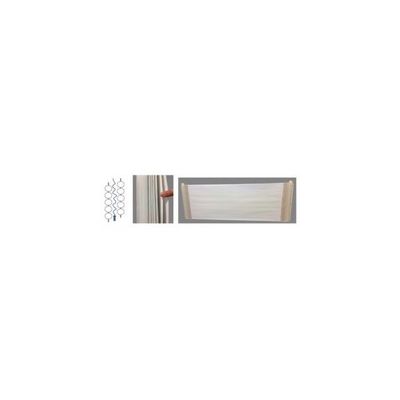
A FibrePlate module consists of (16) triple reinforced sheets, aligned horizontally, with sheet ends potted within vertical permeate collection headers. The combined surface area of the sheets deliver 500 ft2 of active filtration per module. Different from conventional UF, membrane modules are mounted horizontally and not vertically, resulting in open free-flow passages through cassettes, reducing hydraulic restrictions and eliminating debris collection/high abrasion zones common to hollow fibre. FibrePlate’s innovative design ensures trouble free and simplified operations over the design life of the membrane and cassette.
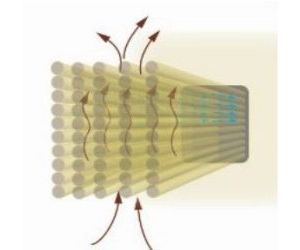
A primary benefit of FibrePlate horizontal configuration is that there is no top header and that the modules and cassettes have an open flow configuration with nothing to trap debris. Without restrictions or obstruction, solids go with the flow.
The FibrePlate membrane configuration allows for a higher packing density which translates into smaller and optimal tank utilization than other types of immersed wastewater membranes. The combinations of increased packing density, increased hydraulic efficiency and not requiring “flow around” space between the cassettes and tank walls results in a significant footprint advantage compared to Plate-and-Frame and Hollow-Fiber membranes. Smaller footprint means lower civil work costs and lower capital costs as the membrane tanks can be made smaller or with capacity for future expansions.
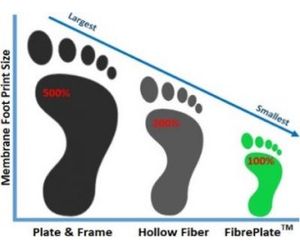
A smaller membrane footprint means that any membrane plant can increase its current flow capacity by retrofitting existing membranes with FibrePlate. Since FibrePlate cassettes are designed to easily fit with the membrane train of other manufacturers, capacity upgrading is fast and simple. Depending on the type of membranes being replaced, Fibracast can double, triple and even quadruple plant flow.
The FibrePlate membranes are the only membranes that use the combined effect of aeration and mixed liquor cross filtration to continuously clean the membrane surfaces. This results in an effective continuous surface cleaning which reduces the need for chemical maintenance cleans. Using the return activated sludge flow to scour the membranes can also translate into lower energy costs since the cost to pump the RAS is lower than the cost of aeration.

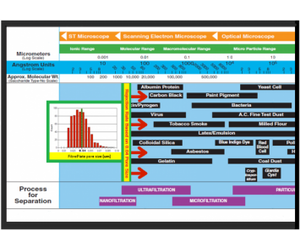
The FibrePlate membrane is a tight ultrafilter with a nominal pore size smaller than 0.04 microns. This means that our membranes do not only remove Protozoa and bacteria that are much bigger than our pores, but also a large number of viruses since many viral species are larger than our pores. This makes the FibrePlate membranes particularly efficient for water reuse applications.