


- Home
- Companies
- Wire Weaving Dinxperlo
- Products
- Woven Wire Mesh
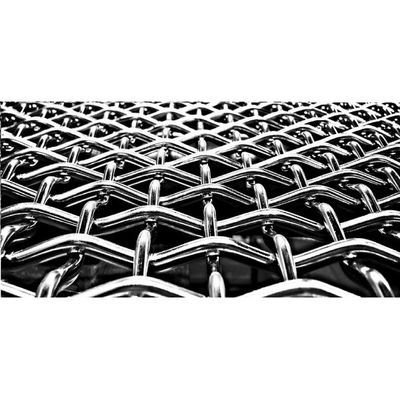
Woven Wire Mesh
With our team of experienced professionals, our modern machines and tools we produce the most diverse metal weaves.
Square Weave
This is the simplest and most used method of weaving. The warp thread passes the weft yarns; alternately above and below.
Twill Weave
With this type of weave, for example, a weft thread always passes two warp threads above and below, consecutively. This creates a finer weave with a thicker wire than with smooth woven wire mesh. An important characteristic of this mesh is the better formability.
Broken Twilled Weave
A twill fabric in metal has the tendency to pull skew. To prevent this, a so-called twist is made at a specific distance. This keeps the weave flat and from pulling askew
Dutch Weave
With this weave the weft threads are against each other. It is produced in plain weave and in twilled weave. The mesh size with this type of weaving is known as retention. This retentionis diffiicult to calculate because various factors like pressure and shape of the particles to be sieved can play an important role.
Finishing Processes
Hot-dip galvanizing, rolling, electrolytic polishing, ultrasonic and alkaline cleaning, (UV resistant) epoxy powder coating and annealing.
- Available materialsAISI 304(L), AISI 316(L), AISI 430, AISI 904L, INCONEL®, INCOLOY®, MONEL, HASTELLOY®, brass, copper, iron, aluminum, spring wire, galvanized, galfan and many more.
- Wire warp0.020 - 4 mm
- Opening0.005 tot 50 mm