


- Home
- Companies
- Vacuum Process Engineering (VPE)
- Services
- Precision Brazing Services
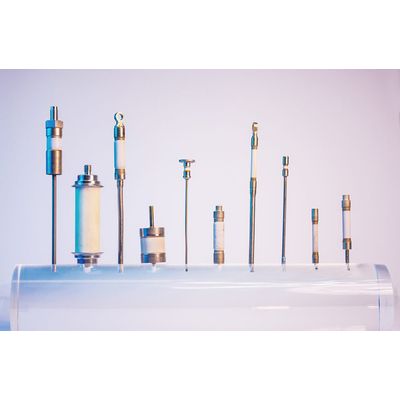
Precision Brazing Services
VPE is capable of many different types of precision brazing e.g.:
- Vacuum Brazing
- Aluminum Vacuum Brazing
- Hydrogen Furnace Brazing
- Induction Brazing
- Infrared (Quartz Lamp) Brazing
- Diffusion
- Inert Gas
- Laser & torch
- Pressure assisted (applied force)
- Retort
- Controlled atmosphere
- Ultra-fast
- Controlled dew point
- Joint design to meet service requirements
Assembly Features
With increasing frequency and if we apply conventional design criteria, there are instances where assembly features constrain the design of a braze joint and render the assembly “not brazeable”.
Factors that drive these assembly features e.g.:
- Component geometries that are becoming much smaller
- Materials innovations
- Market competitiveness
- New machining innovations
Capillary Action
A key factor in precision brazing is capillary action, which ensures proper filler metal distribution. Furthermore, it is of particular importance when brazing assemblies that incorporate microchannels and other small features.
Biocompatible Materials for Medical Applications
Thin film metalized ceramics for miniature feedthroughs used in medical devices require the use of specific biocompatible materials. However, yesterday’s materials choices are not acceptable in these applications. To clarify, biomaterials are often reactive and limiting; accurately controlling the time-at-temperature makes some designs suitable that would otherwise not work.
Filler Alloy Type
Conventional brazing uses “in-stock” or “inventoried off-the-shelf” forms of filler alloy for the sake of convenience. Conversely, in precision brazing, we select or develop the alloy chemistry appropriate for the application to meet the strength as well as the environmental/service requirements.
Filler Alloy Quantity
In precision brazing, serious consideration is given to determining how much filler alloy to use for a given assembly. In addition, precision brazing challenges the old rule of thumb of using 125% to 150% of joint volume as the amount of filler alloy to employ.
Filler Alloy Metallurgy as well as Metallurgical Reactions
Filler alloys may react to form lower-melting eutectics with consequences that are often difficult to predict. However, when performing precision brazing services, we frequently make use of metallurgical reactions to obtain optimal brazing results.
Applied Force
We can reduce the uncertainty of whether the mating surfaces predictably seat against one another by applying a force during precision brazing. For this purpose, the use of a deadweight, hydrostatic pressure, differential thermal expansion effects, or an active force from a hydraulic ram applies the force.
Diffusion Brazing and Transient Liquid Phase Diffusion Bonding
These processes can provide a brief period of liquid at the joint interface, helping to achieve intimate contact. Furthermore, the liquid will solidify isothermally under correct processing to achieve high-strength bonds.
Filler Alloy Application Technique
EDM methods precision-fabricate preforms to achieve precise placement of the filler alloy. Furthermore, the preforms help keep the filler alloy away from capillaries. Applying preforms e.g.:
- Foil, wire, and powder—by hand, pneumatic, or robotic techniques
- Wet plating
- PVD coatings
Filler Alloy Flow-Arresting Features
To clarify, we use channels (or even sharp corners) to impede the flow of filler alloy.
Joint Design—Volume, Volume Control, as well as Assembly Fit-Up
Knowing the joint volume is important in determining the amount of filler alloy to use. In addition, our design engineers review assembly tolerances to assure the assembly performs work in service as well as use an optimal amount of brazing filler metal.
Rapid Brazing
To clarify, rapid brazing processes avoid undesirable brittle inter-metallic reactions.
Time-Temperature-Applied Force Profile
With a time-temperature-applied force profile, fundamental parameters have the capacity to alter metallurgical reactions. Hence, VPE considers the role of each parameter carefully when designing critical assemblies.
Other Important Process Parameters
Important process parameters e.g.:
- Interface chemistry
- Production tooling design
- Selective enabling or limiting capillary action
- Service environment e.g.: hermeticity, corrosive, temperature, stress, life, creep, as well as fatigue
- Temperature profile design