


Structural-Concrete Analysis Services
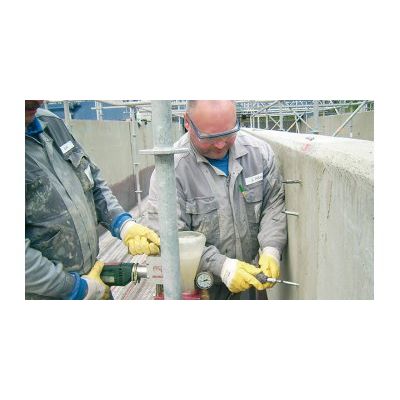
Structural-concrete analysis is a key requisite for the targeted and optimal renovation of wastewater treatment tanks. The chemical analysis of the concrete, performed by an expert WTA and DPÜ e.V certified Krumme planner, is guaranteed by over 20 years of practical experience. Highly qualified staff using special machinery collects samples of the material on site that are then analysed in the laboratory.
Ladybugs, only 4 to 9 mm long, often almost go unnoticed and yet they are extremely important insects. They are known to bring good luck but they are also very useful creatures in the biological fight against pests such as aphids and mealybugs that are their most important sources of nourishment. Ladybugs protect plants and help them grow, thereby contributing in a significant way to keeping a balance in Nature.
By looking only at the surface, it is impossible to plan useful and qualified concrete renovation. Only an in-depth analysis and microscopic examination of the concrete of the tanks can allow us to provide our clients with detailed structural analyses before intervening with an optimized work plan.
We also offer the structural analysis of concrete elements of wastewater treatment plants as a standalone service. Design centres and private as well as public clients often turn to us for this service. According to the laws in force regarding the public sector, in Germany, before starting the renovation of any statically important concrete structure, a so-called ‘expert planner’ must be called in to renovate the concrete. Experts of this kind not only have to obtain special professional qualification but also additional training with a final exam. To renew their qualification they must attend periodic refresher programs every three years. At Krumme, this classroom training is enriched by over 20 years of practical experience in the field of concrete renovation.
- Measurement of the damage
- Structural surveys
- Exposure and scanner analysis of the reinforcement bars
- Measurement of degree of carbonation
- Tensile strength test
- Coring
A wet coring drill on a support stand is used to extract samples then used for lab analysis.
Additional testing in specialised labs:- Compression test
- Chloride and sulphates tests
- Electron and optical microscope examination, if necessary, for detection of sulphate attacks or alkali-aggregate reactions
- Testing for polycyclic aromatic hydrocarbons (PAHs) and/or asbestos
- Tensile strength tests on samples of collected material
- Additional carbonation measurements
- Analysis of reinforcement bars
- Mineralogical analysis of cores
- Phenolphthalein testing provides information about the depth of carbonation in the concrete structures.
- Salts and sulphates damage these structures. The laboratory discovers them using a physical/chemical process called ion exchange chromatography.
- Observation under an optical and electron microscope, when necessary, provides information about the mineral composition of the samples of material.