


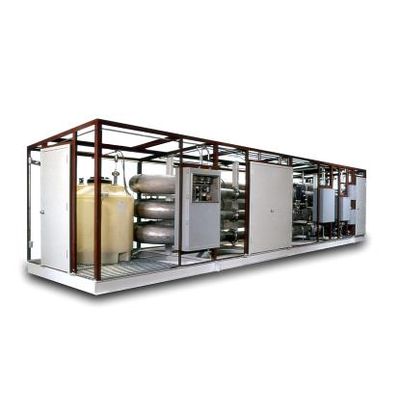
APTwater HiPOx - Advanced Oxidation Process Systems for Water Treatment
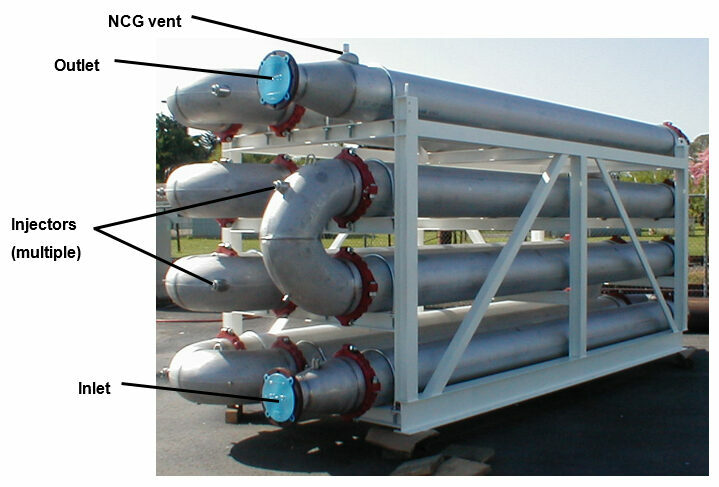
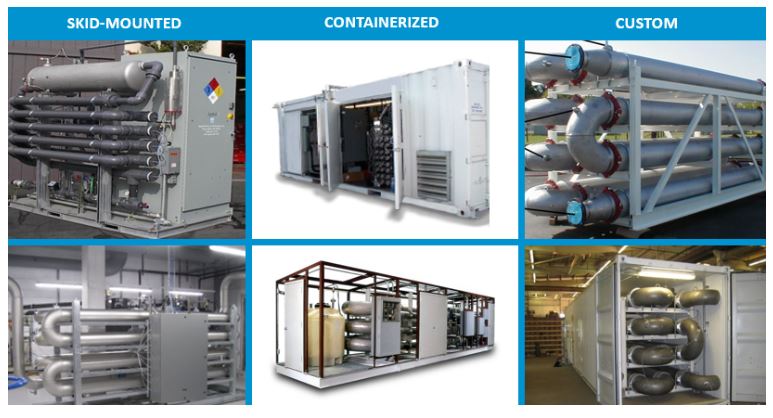
Complete Destruction & Mineralization of 1,4-Dioxane & Other Emerging Contaminants of Concern at a Fraction of the Cost & Energy Use. HiPOx® is our patented, high-performance advanced oxidation process (AOP) system in a small footprint for municipal, industrial, and remediation applications needing to destroy difficult-to-degrade trace organics and EDCs and disinfect without creating residual waste. It’s innovative injection and mixing techniques utilize either ozone alone or hydrogen peroxide with ozone to efficiently create hydroxyl radicals (OH•) that destroy organic compounds while minimizing bromate formation. This guarantees it always works when mixed properly at the right concentrations. Just ask the over 100 organizations who have successfully used HiPOx to date.
- Ideal for municipal drinking water, municipal wastewater, industrial process water, and environmental remediation applications
- Lower power consumption than UV AOP systems
- Lower operating costs than UV AOP systems
- No optical fouling concerns
- No pre-treatment required
- Water-Treatment-as-a-Service model minimizing your upfront investment and relying on us to design, build, and operate your system
- Flexible project financing for lease and lease-to-purchase options
Generation of Hydroxyl Radicals
2 O3 + H2O2 → 2 OH ? + 3 O2
Reaction is diffusion-limited, but fast with HiPOx


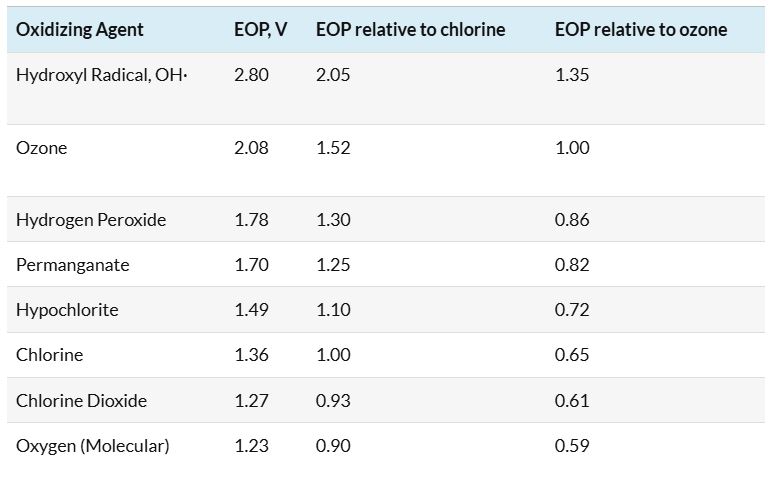
Hydroxyl Radical (OH•) is strongest oxidant used in water treatment
Hydroxyl Radical is non-selective and reacts fast with many compounds
-
Superior ozone utilization/High mass transfer
- Lower Applied Ozone Dose
- Less Power Consumption
- Less Oxygen Usage
-
Superior Mixing
- Maximize reaction efficiency
- Faster reaction
- Smaller footprint
- Patented bromate control to near non-detect concentrations
- Advanced on-the-fly treatment tuning for changing contaminant demand for lower operating cost
- Lower installation costs
- Hydrogen peroxide utilization is poor for UV/H2O2 since only 10-15% of hydrogen peroxide is utilized = Higher hydrogen peroxide costs and higher quenching costs
- UV lamp replacement and sleeve cleaning increases maintenance costs and downtime relative to ozone systems
- Power requirements for UV in AOP mode are 3 -6 times higher than UV in disinfection mode
- UVT – not a factor, means HiPOx can be used as either pre-treatment or post-treatment
- Typically lower hydrogen peroxide dose (2.5-5 mg/l for MF effluent)
- Hydrogen peroxide utilization of 75-100%
- Ozone generally recognized as superior oxidant to UV for many trace organics
- Ozone and OH very effective at virus removal (no coliform in membrane treated effluent)
- Bromate formation may be controlled with HiPOx or bromate removed by RO
- Very sensitive to UVT, determines power consumption
- Typically higher hydrogen peroxide dose (5-10 mg/l for MF Effluent)
- Hydrogen peroxide utilization of 10-15%, increases quenching costs or chlorine demand
- UV Dose in AOP mode is 3 – 6 times greater than UV Dose in disinfection mode
- No bromate formation
- Has mercury in bulbs which requires special handling to avoid contamination
- Chlorinated Solvents – 1,4-Dioxane, PCE, TCE, VC, DCE
- Fluorinated Chemicals - PFAS, PFOS, PFOA
- Fuels – BTEX, TPHg, TPHd
- Oxygenates – MTBE, TBA, Benzene, TAME
- Aromatics – PAHs, Phenols, Chlorobenzenes, Creosols
- Pesticides & Herbicides – Atrazine, Dioxins, Lindane
- Taste, Odor & Color Compounds – MIB, Geosmin, Sulfides