


- Home
- Companies
- Dynex Technologies, Inc.
- Training
- ELISA Equipment Training
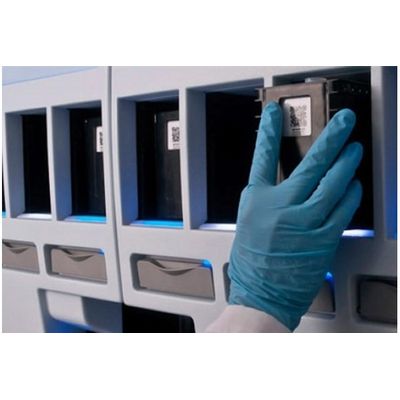
ELISA Equipment Training
ELISA is a test that identifies and quantifies the antibodies in a sample. It is a standard laboratory procedure because of its sensitivity, fast deployment, and easy automation. These benefits lead to results that are accurate and specific and are therefore reliable. However, the ELISA test’s reliability is dependent upon the user employing proper technique.
Training for automated ELISA systems by Dynex Technologies provides laboratory technicians with the knowledge they need to use these machines and interpret the results. It will increase awareness of and skills used for accepted ELISA techniques.
The automated ELISA workstation will include these components:
- Controls
- Coated plates
- Sample diluent
- Wash concentrate
- Substrate
- Conjugate
- Stop solution
The general procedure for testing follows these steps:
- Coating: The antibody is immobilized to the well’s surface during incubation.
- Capture: The sample is added to the well, and the antibodies will capture the proteins.
- Blocking: An irrelevant protein or molecule is added to the well to cover all unsaturated binding sites.
- Detection: A detection antibody is added to the well to help identify the protein that was captured.
- Conjugate: A conjugate is added to the well to bind to the detection antibody.
- Substrate: A colorimetric substrate is added to the well. When the enzyme catalyzes it, it will take on a visible color.
- Analysis: The machine determines the amount of protein in the sample.
Dynex Technologies’ machines automate every step of this procedure, taking care of tasks like:
- Pipetting samples.
- Diluting samples.
- Adding reagents.
- Washing plates.
- Incubating with necessary shaking.
- Reading results.
- Performing data reduction.