
- Home
- Applications
- united kingdom
- decarbonization
Refine by
Decarbonization Product Applications In United Kingdom
12 applications found

Premium
Carbon dioxide (CO2) can be captured either as emissions resulting from the combustion of hydrocarbons, or from the process itself where CO2 is produced, such as cement manufacture. In many cases, this can be carried out by adapting existing technology, for example amine sequestration, while a range of new processes and technologies are also under development. ...
ByLAND® based in Dronfield, UNITED KINGDOM

Premium
Battery production processes (thermal management in battery manufacturing). Lithium-ion batteries have transformed the way we power our devices and vehicles, offering a rechargeable, high-energy-density solution that has become the cornerstone of modern portable electronics and electric vehicles ...
ByLAND® based in Dronfield, UNITED KINGDOM
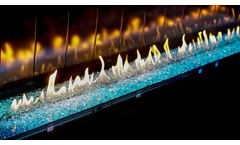
Providing heat and cooling to homes and businesses makes up a quarter of the UKs greenhouse emissions and 51% of all energy used in Europe. Providing heat and cooling to homes and businesses makes up a quarter of the UKs greenhouse emissions and 51% of all energy used in Europe. This huge energy demand is usually met by using natural gas, instead of utilising low carbon solutions, such as hydrogen. Hydrogen can be blended with natural gas to decarbonise the gas we use for heating and cooling. By doing this, the ...
ByITM Power based in Sheffield, UNITED KINGDOM

ITM Power can provide a clean, on-site hydrogen supply which will decarbonise the refining process and reduce emissions. Refinery’s use vast quantities of hydrogen in the de-sulfurization of crude oil to make petrol and diesel. Recently with the demand of diesel increasing, this has led to a demand increase for hydrogen, as diesel requires more refining than petrol. Currently hydrogen used in this process is made via steam methane reformation (SMR) which usually involves natural gas for the feedstock for the ...
ByITM Power based in Sheffield, UNITED KINGDOM

Premium
Transition to low-carbon energy sources in industry. CO2 emissions can be reduced or even eliminated by replacing fossil fuels with biofuels, and waste-derived fuels, or through electrification. Already common in some markets, this trend is likely to accelerate as the goal of net-zero carbon is ...
ByLAND® based in Dronfield, UNITED KINGDOM

Premium
Measures to boost energy efficiency in industrial processes. Decarbonisation trends will change how industrial operators work – forcing end-users, technology licensors, and instrument manufacturers to continuously seek incremental and radical improvements to process ...
ByLAND® based in Dronfield, UNITED KINGDOM

Decarbonising the production of hydrogen, enabling a green transport fuel for passenger vehicles. ITM Power supplies on-site hydrogen generation systems, which use electricity and water to make green hydrogen for refuelling Fuel Cell Electric Vehicles (FCEVs). When hydrogen is generated on-site via water electrolysis, it is a very clean fuel to use in your car. The refuelling process is very simple and similar to refuelling a car with petrol or diesel ...
ByITM Power based in Sheffield, UNITED KINGDOM
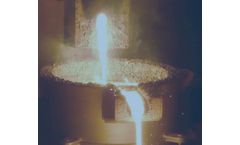
High-temperature, high-power plasma torch technology can significantly assist in decarbonising industrial processes in several ...
ByTetronics Technologies Limited based in Swindon, UNITED KINGDOM

As an energy storage medium, hydrogen is at least as versatile as carbon based fuels finding potential applications in domestic and industrial heating, transportation, and electricity generation. Taking into account this inherent versatility and the fact that burning it produces only water as a by-product, the transition from the carbon economy we have today to a hydrogen economy in the future is seen by many to be the ultimate solution to the climate crisis. Critical to this transition will be provision of ...
ByC-Capture based in Leeds, UNITED KINGDOM
Methane emissions contribute to about a third of global warming, however some of these emission sources are only just being understood. Every year, 3 billion tonnes of CO2e enters the atmosphere due to methane escaping from water. Water utilities in particular must have a thorough understanding of their emissions if they are to achieve ambitious net zero carbon targets. Additionally, public and private resources need to be allocated to solutions that enable water utilities to mitigate their greenhouse gas ...
ByBluemethane based in London, UNITED KINGDOM

Decarbonising the production of hydrogen, enabling a green transport fuel for trains. The ongoing trend to deploy more renewable power sources is a positive step towards reducing dependency on fossil fuels, but it causes some big issues for electricity grid operators. Balancing the grid is becoming more challenging, because renewables are increasing the temporal mismatch between supply and demand on all timescales. Conventional grid balancing techniques cause CO2 emissions (ramping up a gas or coal power plant), ...
ByITM Power based in Sheffield, UNITED KINGDOM
With recent interest in the environment, carbon emissions, electric vehicles, heating our homes etc, there has been a massive surge in interest in hydrogen. This is because it can be used to power vehicles, generate electricity and provide power for industrial ...
ByCambridge Sensotec Limited based in St. Ives, UNITED KINGDOM