
200850ec Articles & Analysis
18 articles found
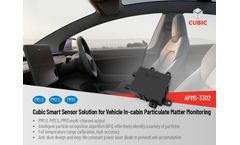
In recent years, the issue of in-cabin air quality has gained widespread attention. Following the EU Air Quality Directive (2008/50/EC), member states are striving to reduce particulate matter (PM10 and PM2.5) in the air to protect people from the harmful effects of air pollution. Simultaneously, under the European Green Deal, the EU has set a target to achieve "zero pollution" by 2050. The Zero ...

In April 2024, the EU Parliament adopted a provisional agreement with the EU countries on improved air quality in the EU. For a formal adoption, the text needs to be translated and confirmed by the Parliament and approved by the EU Council. These final pieces are expected to fall in place in October 2024. New Air Quality Standards The new directive replaces the current directives on air quality ...
ByOPSIS AB
In the previous article, we explored how the EPA regulates air pollution. Today, I want to discuss how the European Union regulates air pollution. But first, I will start with the basics. So, I will ask all readers one question regarding the topic. Tell me what comes to your mind when you hear how the EU regulates air pollution. Besides this, let me start by sharing the article’s insight ...

The 2008/50/EC Directive’s sampling point requirement introduces and examines the main question of when air pollutants should be measured. The Directive further examines different types of urban air quality monitoring locations: where should these monitoring stations be located and what is the requirement of the monitoring locations? Read on more to learn about the different monitoring ...
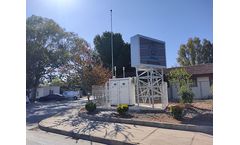
Customer / Beneficiary: Environmental Protection Department of Ministry of Tourism and Environment in Northern part of Cyprus Project: Environmental Monitoring Supplies for the Turkish Cypriot community Project funding: The Aid Programme of the European Commission ...
ByENVEA

It is not just something in the air, people are directly affected: The particle matter (PM) pollution is an often-discussed topic before all else in larger cities and metropolitan areas - which is quite right to do. Airborne particles are harmful to human health even in low concentrations which makes precise measurements verifying compliance with the statutory limit values even more ...

Air pollution is one of the main environmental problems to be addressed by the EU. In order to foster sustainable development and mitigate climate change, it is therefore important to provide national and regional authorities with appropriate measures to reduce criteria pollutants (PM 10, PM2.5, O3, CO2, SO2 and NOx) concentrations in air. Many cities are not able of meeting the implemented EU ...
ByENVEA
Air pollution is one of the main environmental problems to be addressed by cities worldwide. In order to foster sustainable development and mitigate climate change, it is therefore important to provide national and regional authorities with appropriate measures to reduce criteria pollutants (PM 10, PM2.5, O3, CO, SO2 and NOx) concentrations in ambient air. Many cities are not able of meeting ...
ByENVEA

Air quality is essential to all of us, and consequently, so is the monitoring of air quality. However, what should be monitored, and where, and how? There are many bids on that. Some ten years ago, The European Union established its directive 2008/50/EC “on ambient air quality and cleaner air for Europe”. It is aimed at protecting human health as well as vegetation, and it has ever ...
ByOPSIS AB

Different modelling approaches are used to design and assess air quality plans across Europe. This study assessed the strengths and weaknesses of these different approaches. The researchers conclude that a large variety of models is in use, without a preferred or standard model having emerged yet. They identify integrating local-scale and large-scale models and verifying models with measurements ...
Overall approach for scoring The evaluation of the overall country performance is based on simple scoring rules: for each data flow, the maximum score is 3 points and the minimum score is – 1 point (see the detailed evaluation criteria on pages 8–17 in this report). Scores from all priority data flow areas are summed up for each country and then expressed as a percentage of the ...

Ljubljana has an unfavourable geographical location in the basin, almost entirely surrounded by high hills. Winds in the basin are often weak and situations with temperature inversion are very frequent, therefore, many PM 10 daily limit value exceedances were observed in 2011. The Directive 2008/50/EC (EU, 2008) requires member states to adjust or provide new air quality plans in order to ...
Air quality continues to be a very important issue for public health, the economy and the environment. Europe has significantly cut emissions of several air pollutants in recent decades, greatly reducing emissions and exposure to substances such as sulphur dioxide (SO2), carbon monoxide (CO), benzene (C6H6) and lead (Pb). Despite improvements over several decades, air pollution continues to ...
Despite efforts to mitigate ozone pollution, the number of exceedances of EU ground-level ozone concentration standards for protecting human health (Directive 2008/50/EC) remained at serious levels during summer 2012 (1). In the summer of 2012, the threshold of 120 micrograms per cubic metre of air (ìg/m3) maximum daily eight-hour mean was exceeded on more than 25 days again across large ...
Receptor models (RMs) identify pollution sources by solving a mass balance equation using measured chemical composition of samples either in combination with known source profiles or not. This approach has been extensively used in North America and South–Eastern Asia mainly on particulate matter (PM). Also, in Europe RMs found wide acceptance and contributed to the identification of sources in ...
'Air pollution is bad for our health. It reduces human life expectancy by more than eight months on average and by more than two years in the most polluted cities and regions. Member States must comply with EU air quality standards quickly and reduce air pollutant emissions,' Janez Potočnik, EU Commissioner for the Environment (EU, 2010a). Emissions of air pollutants derive from almost all ...
Ozone is the main product of complex photochemical processes in the lower atmosphere, involving NOX and VOCs as precursors. Ozone is a strong photochemical oxidant. In elevated concentrations it causes serious health problems and damage to materials and vegetation such as agricultural crops. The main sectors that emit ozone precursors are road transport, power and heat generation plants, ...
This technical reference guide provides a general overview of the use of models with regard to the consolidated Directive 2008/50/EC on ambient air quality and cleaner air for Europe (theAQ Directive). This guide has three key aims: To provide common technical guidance for the use of air quality (AQ) modelling in relation to the EU's AQ Directive; To provide a central reference point for the ...