
Refine by
3d Printer Articles & Analysis
40 articles found

One of the key challenges in microneedle fabrication is achieving high precision and uniformity in needle design, and this is where 3D printing technology comes in. About 3D Printing Technology 3D printing, also known as additive manufacturing, is a process of creating three-dimensional objects by layering material one thin layer at a time. ...

Introduction of 3D Printing Materials 3D printing has revolutionized the manufacturing industry, allowing the creation of complex and customized objects with ease. One critical aspect of 3D printing is the materials used, which greatly impact the functionality and compatibility of the final product. ...

This fascinating substance is essentially a type of ink made from living cells and other biocompatible materials that can be used to 3D print complex biological structures. What is Bio-Ink Made Of? The composition of bio-ink can vary depending on the desired application, but it typically consists of three main components: Living cells: These can be stem cells, adult cells, or ...
ByMatexcel
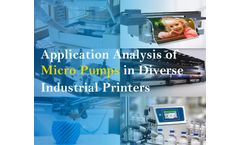
With the continuous progress of technology, various types of industry printers have significantly improved in meeting diverse needs. Micro pumps, as a crucial liquid delivery device, play an essential role in various printers. 1. Diaphragm Pump Diaphragm pumps use the bending of a diaphragm to drive fluid transfer, and their precision and controllability make ...
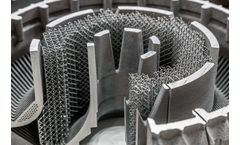
The industry applications of metal 3D printing are vast and growing rapidly. Metal 3D printed components are used in aerospace (for lightweight components with complex designs), automotive (for customized parts and prototypes), medical (for implants and prosthetics), and even jewelry manufacturing. The ability to create intricate metal parts with high precision ...

This case study illustrates designing and fabricating silicone bolus using the Adaptiiv software solution. This flexible silicone bolus fabrication process was then compared to the fabrication process of a rigid 3D printed bolus to determine whether it yielded comparable or improved plan metrics for treating an inner canthus ...

CANT TOUCH THESE NON-CONTACT LEVEL SENSORSFood manufacturers find non-contact level sensors attractive for a number of reasons. Of course, since nothing comes into contact with the material, there’s no risk of equipment interfering with the process or rogue parts breaking off and getting stuck in equipment, or contaminating ingredients intended for human consumption. Plus, they provide continuous ...

Developments in 3D printing have changed the prosthetics game forever. Through additive and 3D manufacturing technology, bionic hands can be made more durable and affordable than ever, providing users the prostheses they deserve. Even beyond price and durability, 3D printing offers so much more - which is why the Zeus is made using 3D printing technology. But, we know that there are still ...
Fluoropolymer or PTFE is a commonly used material in filament-based 3D printers. This compound helps protect and insulate any wires in printed products. ...

Co-founder Ryan Bethencourt is one of the investors behind Sustainable Food Ventures Cultivated Meat Startups Landscape: Enabling Technologies Here’s the full list in alphabetical order: Agulos Biotech (US, 2017, cell culture media) — developing Simulated Platelet Lysate (porcine), a replacement for FBS Back of the Yards Algae Sciences (US, 2018, cell culture media) — algae ...

3D Scanning and Metrology in Non-Industrial Application 3D scanning and metrology—among the myriad of measurement methods out there—are sometimes depicted as being part of state-of-the-art sectors and technologies, accessible only to a handful of initiated masters. But fear not, the democratization of technological advancements makes way for a new era. And so, did you know that ...
Reverse engineering is the process that identifies a physical object’s properties by performing a comprehensive analysis of its structure, functions and operations. Measurements of the object’s full surface geometry are taken, either manually or with various 3D measurement technologies, to create a 3D digital representation of the object. Reverse engineering allows manufacturers to ...
The design team for the New York Yacht Club’s American Magic, the US Challenger for the 36th Americas Cup, is continuing to drive innovations to its 75-foot monohull in final push before the race in Auckland, New Zealand, in March 2021. Using Creaform’s handheld 3D scanners for the final changes on the PATRIOT’s product development process American Magic’s competing ...

“Uncontrolled variation is the enemy of quality.” That quote, coined by renowned quality management expert Dr. W. Edwards Deming, can apply to just about any process. When the actions to create a product are predictable, so is the result. That’s a significant part of manufacturing quality management—standardization. However, it’s impossible to eliminate every ...
3D measurement is a metrology process that uses different types of 3D measurement tools, such as 3D scanners, to collect 3D data from physical objects, such as their shapes, textures, geometries and colours. Scan-to-CAD and inspection software then extracts the 3D measurements from the 3D models for further analysis and processing. What types of companies use 3D measurement? In a nutshell: any ...
Additive manufacturing (AM) often involves melting plastic and other complex compounds that can release volatile organic compounds (VOCs) near the printer and the object. Powders and dust are also dislodged and released into the air as objects are removed from the 3D printer upon completion or as jobs accumulate during the process. According to ...

Ingestible devices, like a pill that moves through the digestive system, transmitting diagnostic information back to the doctor. 3D printers that can be used to create everything from custom prosthetics to artificial organs. ...
ByEtQ, LLC

His work mostly centers around using 3D printers and automation to improve assay development, compound management, and ultra-high throughput screening for the Lead Identification group of the department. ...

Volunteers mobilized across the country to equip the workforces on the frontline of the fight against COVID-19 with 3D printed face shields. Usually used by our R&D team to develop prototypes, our 3D printer has been running at full speed in support of the initiative. ...

An example of nanoparticles is the materials used in 3D printers. Nanoparticle Processes There are four main processes by which nanoparticles are produced: gas-phase, vapor deposition, colloidal and attrition. ...