
Refine by
Accidental Release Articles & Analysis
70 articles found

Introduction Argon gas TIG welding, or Tungsten Inert Gas welding, is a specialist technique known for its precision and clean welds. Unlike other welding processes, TIG welding utilises a non-consumable tungsten electrode, and argon gas plays a pivotal role in shielding the weld from atmospheric contaminants. Precision in welding is crucial, particularly in industries where the integrity of the ...
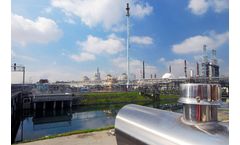
It is therefore essential to minimize planned emissions to air and to protect humans and the environment around the industries in case of unplanned releases of process gases. Fence-line Monitoring A clever approach to air quality monitoring at an industry is fence-line monitoring. ...
ByOPSIS AB

This term refers to the escape of methane (CH₄)that is intended for combustion as energy. Accidentally released into the atmosphere during storage, transport or usage, CH₄ is --among greenhouse gases -- the second ranking contributor to global warming. ...

Additionally, the closed-loop design of mobile pyrolysis units minimizes the risk of accidental spills or releases, further reducing environmental risks. 2. ...

During replacement of oil furnace by an HVAC contractor in Ohio, there was an accidental release of almost 250 gallons of No. 2 heating oil in the basement. ...

Serious dangers also exist from wildlife such as poisonous snakes, black recluse spiders, cougars and bears which are constantly present in these locations – specialized equipment and training are part of these high-risk operations Hydrogen sulfide gas: This heavier-than-air gas can be accidentally released during routine work and collects in low lying ...
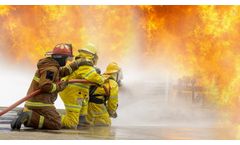
OSHA issued the Hazardous Waste Operations and Emergency Response (HAZWOPER) standards, 29 CFR 1910.120 and 29 CFR 1926.65 (54 Federal Register 9294-9336, March 6, 1989), to protect workers and enable them to handle hazardous substances safely and effectively. The HAZWOPER standard for the construction industry (29 CFR 1926.65) is identical to 29 CFR 1910.120. For brevity, the HAZWOPER standard ...

News stories have highlighted cases where contaminants have been released into waterways from factories and plants, with disastrous consequences for marine life. ...
ByPhathom
AL-Khafji Joint Operations (KJO) Upgrade HVAC and Installation of Safety System for Sour Gas Dispersion (Saudi Aramco & KNPC Joint ...

It can be formed from atmospheric reactions of chlorine-containing compounds with NO2 and through oxidation of chlorides in presence of strong oxidants in the atmosphere such as ozone. Once released, it rapidly combines with other chemicals/compounds in the atmosphere to form secondary compounds instead of remaining in a pure elemental state. ...
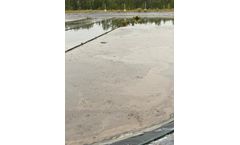
Delta Remediation of Alberta, Canada remediated an accidental release of petroleum into a wastewater treatment lagoon using Biologix, which is a specialty blend of micorbes provided by CL Solutions. ...

Sewage is not known for its pleasant aroma, but what exactly is that smell, and what causes it? The municipal wastewater treatment process can release odors in the collection and treatment process. Wastewater is mostly water, but it also contains organic and inorganic matter, bacteria, and other microorganisms. These all contribute to processes that release gases into the air that are unpleasant ...

What are the Fugitive Emissions? This type of emission is the release of chemicals into the air from unintended sources. These releases can be accidental or deliberate, but they are not always intentional. ...

Standard SDS made according to GHS rules should consist of the following 16 sections: SECTION 1: Identification of the substance/mixture and the company/undertaking SECTION 2: Hazards identification SECTION 3: Composition/information on ingredients SECTION 4: First aid measures SECTION 5: Firefighting measures SECTION 6: Accidental release measure ...

Remediation of an industrial site may be required when an environmental permit is surrendered or following an accidental release of pollutants to land. Similarly, it is often required in order to obtain planning permission and develop the site. ...
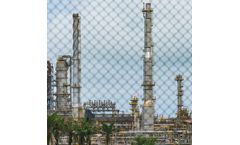
Fence-line systems can serve at least three different purposes, all which can be fulfilled with a single monitoring system: To act as an alarm system in cases of accidental releases of air pollutants. To allow back-tracking of the pollutants to the sources of emissions for further actions. ...
ByOPSIS AB
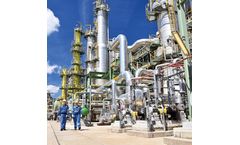
The purpose of the latter can be to generally monitor to what extent the public in the vicinity of the plant is exposed to air pollutants, or to serve as a warning system in case of accidental releases of toxic gases from the production, or to provide a combination thereof.The OPSIS systems are very well suited for SO2 monitoring in and around sulfuric acid ...
ByOPSIS AB
Remediation of an industrial site may be required when an environmental permit is surrendered, or following an accidental release of pollutants to land. Similarly, it is often required in order to obtain planning permission and develop the site. ...

The violation concerned a failure to prevent an accidental release arising from of a 2008 explosion. 2. American Samoa: Proposed consent decree requires seafood processing and canning company to perform injunctive relief, pay USD 6.3 million civil penalty, and perform a Supplemental Environmental Project benefitting local first responders. ...

Devlin’s group has extensively modeled the results of accidental releases, studying groups of transgenic and non-transgenic fish in “naturalized” aquatic test beds that are exposed to variations in conditions, such as food supply. ...
ByEnsia