
Refine by
Activated Sludge Optimization Articles & Analysis
18 articles found
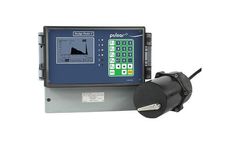
Why the Sludge Finder 2 and Viper Transducers? Pulsar Measurements Sludge Finder 2 provides reliable and continuous sludge blanket level measurement that requires no maintenance. ...

United Utilities uses the SENTRY monitoring platform to optimize loading capacity and energy efficiency of the Activated Sludge Process. ...
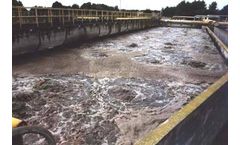
SRT however, is the length of time that a unit of sludge (or other bio media) is active within the reactor. Treatment selection and design of biological wastewater treatment systems take all five of those criteria (and others) into account. ...

Depending on design capacity, agitators consume about 5 to 20% of the total energy consumption of a wastewater treatment plant. Based on inhabitant-specific energy consumption (kWh PE120−1 a−1; PE120 is population equivalent, assuming 120 g chemical oxygen demand per PE per day), power density (W m−3) and volume-specific energy consumption (Wh m−3 d−1) as evaluation indicators, this paper ...
Anaerobic hydrolysis in activated return sludge was investigated in laboratory scale experiments to find if intermittent aeration would accelerate anaerobic hydrolysis rates compared to anaerobic hydrolysis rates under strict anaerobic conditions. The intermittent reactors were set up in a 240 h experiment with intermittent aeration (3 h:3 h) in a period of 24 h followed by a subsequent ...
The activated sludge process (ASP) is the most generally applied biological wastewater treatment approach. Depending on the design and specific application, activated sludge wastewater treatment plants (WWTPs) can achieve biological nitrogen (N) and phosphorus (P) removal, besides the removal of organic carbon substances. ...
The activated sludge process is an old technology, but still the most commonly used one for treatment of wastewater. Despite the wide spread usage the technology still suffers from instability (Tandoi et al. 2006) and high operating cost. Activated sludge processes often carry a large solids inventory. Managing the total ...

Introduction The use of the BM advanced respirometry system enables the user to get the precise calculation of the operating parameters and limit set points that any activated sludge actually needs within the framework of an energy optimization. ...
A fast and accurate classification method for sewage sludge biological activity classification is of great significance for wastewater treatment. However, the data are often imbalanced and the accuracy of traditional classification algorithms applied to imbalanced small classes of data is very low. Such small classes are crucial application data. Therefore, based on the analysis of eight ...
Hydrolysis is known as the rate-limiting step during waste activated sludge (WAS) digestion. The optimization of the culture conditions of Geobacillus sp. ...
Optimal design of activated sludge process (ASP) using multi-objective optimization was studied, and a benchmark process in Benchmark Simulation Model 1 (BSM1) was taken as a target process. ...
ABSTRACT Many wastewater treatment plants use more than 50% of their total energy budget in the aeration basin and, when nutrient removal is included in the activated sludge process, it is very common that the majority of oxygen uptake goes to the nitrification process. For that reason, in most wastewater treatment plants, energy optimization is ...
An anaerobic phosphorus release tank was introduced to an anaerobic–anoxic–aerobic (A2/O) process treating domestic sewage to enhance the phosphorus removal at low temperature. Phosphorus release of the activated sludge from the second sedimentation tank was evaluated at 14 °C by batch cultures, and the nutrient removal in the modified low temperature A2/O process was ...
Adding a moving bed biofilm reactor prior to the existing activated sludge step gives: (i) cost advantages when increasing biological capacity as higher COD volume loads of MBBRs allow smaller reactors than usual for activated sludge plants; (ii) a relief of strain from the activated sludge step ...
The research conducted a study on decomposition and biodegradability enhancement of textile wastewater using a combination of electron beam irradiation and activated sludge process. The purposes of this research are to remove pollutant through decomposition and to enhance the biodegradability of textile wastewater. The wastewater is treated using electron beam irradiation as a pre-treatment ...
Large waste water treatment plants (WWTP) often operate nitrification in two different process environments: the cold-dilute sewage is treated in the mainstream nitrification/denitrification system, while the high strength ammonia liquors from sludge dewatering are treated in a separate high temperature reactor (SBR). This study investigates transfer from nitrifier biomass into a two-stage WWTP, ...
ABSTRACTThe principal objective of our study was to optimise a municipal activated sludge wastewater treatment plant (WWTP) to face high organic flows due to viticulture effluents inputs. Treatment file optimization consisted in testing different treatment lines, changing the number and volume of biological basins and clarifiers, with or without ...