
Refine by
Agrochemical Articles & Analysis
90 articles found

The University of Nebraska-Omaha operates one of the state’s few programs dedicated to supply chains. Steve Schulz, Ph.D., Associate Professor of Logistics & Supply Chain Management, said the program focuses on all the latest innovations regarding supply chain technology. ...

Client: Confidential Client Site: Scotland, UK Application: Agrochemical manufacturer -patented cattle feed supplement for CH4 reduction Thermal oxidation and scrubbing of process vent gases - complete package Treats 0-400 kg/hr N2 with chlorinated VOC, HCl, NOx plus waste solvent destruction IED complian ...
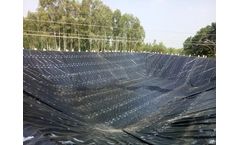
Introduction: Solving Rural Water Challenges with Geosynthetics India faces a growing water crisis—particularly in rural and agricultural regions where seasonal rains are unpredictable, and groundwater levels are rapidly depleting. One such area is Chhindwara district in Maharashtra, known for its rich agricultural output but increasingly challenged by monsoon-dependent irrigation cycles. ...

Adjuvants: Used to enhance the effectiveness of other agrochemicals. Plant Growth Regulators: Gaining popularity for managing plant growth effectively. 2. ...

Plastic Applications for Agriculture Plastics have a variety of applications in the agriculture industry, including but not limited to: Mulch films for cereal crops Bulk bags for crop transportation Veterinary medicine containers Hoses and nozzles for irrigation Plastic bags for grain storage Solid fertilizer containers Seed packaging Net to tie bales Plastic film to cover horizontal silos and ...
The NMR analysis for agrochemicals include, but are not limited to the following. Analysis of active ingredients in agrochemicals Active ingredients in agrochemicals are the key components that determine the effectiveness of a product against a specific pest or disease. ...

This growth is evident across various segments, including petrochemicals, specialty chemicals, and agrochemicals. Within this broad spectrum, silicone materials have garnered significant attention due to their unique properties and diverse applications. ...

This would reduce the logistical complexities and costs associated with long-distance waste transport.Application in Agricultural Remediation: Future applications of TDU technology may extend to the remediation of agricultural lands contaminated by agrochemicals or industrial runoff. By tailoring the thermal desorption process to address specific contaminants in soil, this could ...

Specialty chemical synthesis: CROs with expertise in specific areas, such as fine chemicals or agrochemicals, can offer custom synthesis of specialized compounds. They can synthesize complex molecules with unique structural features or provide access to rare and difficult-to-obtain compounds. ...

Introduction – The characterisation of xenobiotic metabolism using in silico methods enables chemists to predict sites of metabolism (SoM) of potential drug candidates, agrochemicals, nutritional supplements, and cosmetics. Therefore, optimising the structure of new chemical entities can be more cost-effective and toxic metabolites can be identified early in the project. ...

Solvent recovery is the process of extracting useful solvents and raw materials from waste or byproduct solvents that are generated during manufacturing processes. The solvents that are used in these situations are often not disposed of or incinerated, but instead recovered and purified, as this saves considerable costs. Used solvents are mostly purified by means of distillation. Solvent recovery ...
ByB&W Tek
Additionally, they are used to produce cosmetics, agrochemical products, polymers, and rubbers, just to name a few. Despite environmental concerns and potential health hazards, organic solvents (e.g., hydrocarbon, chlorinated, oxygenated, as well as nitrogen- and sulfur-containing) are still widely used because of their unparalleled performance. ...

[vii] These are broadly classified into bulk chemicals, specialty chemicals, agrochemicals, petrochemicals, polymers and fertilisers. No two plant installations are the same and industrial noise emissions come from a wide variety of sources, so identifying the exact source and field of noise propagation can be a complex matter. ...

It can increase production efficiency by adapting crop inputs, notably fertilizers and agrochemicals, to changing local circumstances within a field and collecting site-specific data on crop growth and yield-affecting factors. ...
Measuring Tanks was a Daunting Task An agrochemical company supplied high-quality agricultural chemicals, fertilizers, seed treatments, and biological nutrition to farms. ...
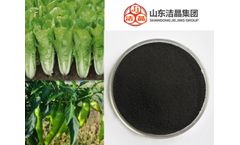
And the results of a large number of compounding experiments of brown algae polyphenols with other agrochemicals approves that brown algae polyphenols can be compounded with specific amino acids, humic acid, macro, medium and trace elements and other agrochemicals to produce preparation products. ...

The blueberry (Vaccinium corymbosum) is a fruit highly appreciated for its intense flavor and color in the gastronomy of many countries. It is a climacteric fruit that surprisingly behaves like a non-climacteric fruit. This is because, once harvested, its respiration rate drops considerably. Blueberries are usually transported and marketed in micro-perforated clamshell boxes to avoid bruising ...

An important company based in Emilia Romagna, specialised in the recovery and disposal of special hazardous industrial waste turned to us for a solution for the shredding of hazardous waste for bulk reduction, in line with 4.0 Industry requirements. In view of the type of application, a twin shaft shredder from the 2R series, 150 HP, with hydraulic drive, fitted with 4×75 mm tips, was ...
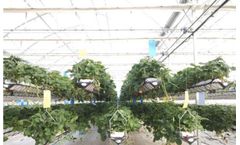
Hydroponic techniques emerged as a solution to the issues of growing directly on soil. Depending on the needs, the climate zone, the greenhouse and type of cultivation, we will be interested in working or not with a hydroponic ...
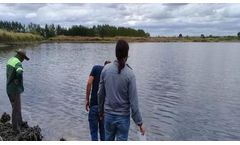
In Argentina, green-blue algae have made their appearance in various lakes and lagoons. Not only do they smell bad – they hamper the growth of aquatic plants, threaten marine life, and cause health issues in humans due to the release of cyanotoxins. Besides, excess blooms also affect local fishing and touristic ...