
Refine by
Air Flotation Articles & Analysis
207 articles found
As environmental control standards continue to tighten, traditional single-type treatment equipment has limited adaptability and insufficient operational stability, making it difficult to meet the requirements of long-term operation, ultra-low emission, and safe & green production in petrochemical plants.Operating Condition Challenges This project treats mixed waste gas from multiple sources ...
While traditional clarifiers have long been used to settle solids out of water, dissolved air flotation systems have emerged as a highly effective and preferred alternative for many industrial applications. ...
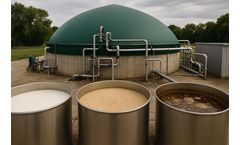
The process separates digestate solids from liquid using a high-efficiency separation step, typically dissolved air flotation. The concentrated biomass, rich in active microbes and organic matter, is returned to the digester, while excess material is removed for dewatering or further treatment. ...
Industrial wastewater facility upgrade, higher capacity, and easier maintenance with EDI Fixed Grid aeration system. Project Information Project Type: Industrial wastewater treatment Completion Date:January 2023 Treatment Objectives: Design flow: 1 MGD Treatment requirements: BOD and Nutrient Removal ...
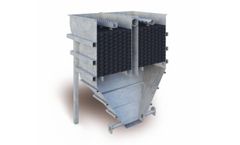
Common solutions include grease traps or dissolved air flotation (DAF) systems, both designed to reduce FOG concentrations before wastewater reaches the trickling filter. ...
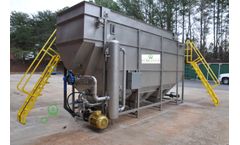
Ecologix Environmental Systems' 3rd generation Enhanced Dissolved Air Flotation (E-DAF) systems, introduced in 2018, integrate decades of expertise with cutting-edge technology to establish a new benchmark for modern wastewater treatment solutions, focusing on efficiency, reliability, and ease of operation. ...
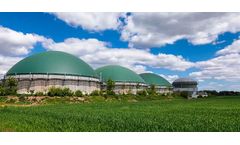
Here’s how recuperative thickening with a sidestream loop can be a game changer for your enterprise Industrial operations that use anaerobic digestion to treat high-strength organic waste often face a dilemma, that is, whether to expand digester volume or push existing units harder. Recuperative thickening offers a third option. It involves retrofitting an existing digester with a ...

Advanced technologies help in the removal and recovery of nitrogen and phosphorus Meat-processing facilities generate wastewater that contains high concentrations of nitrogen and phosphorus. These nutrients are by-products of organic matter, like proteins and amino acids. While essential for biological functions, when discharged in excess, they pose serious environmental risks by triggering ...

Retrofitting many types of anaerobic digesters with this technology can fundamentally shift the plant’s dynamics Anaerobic digesters are central to turning high-strength organic waste into valuable by-products like biomethane and stabilized biosolids. Yet despite the widespread use of anaerobic digestion, many existing systems underperform, often due to limited biomass control, outdated ...
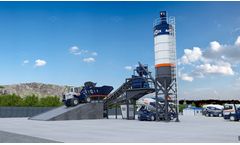
Three-stage filtration systems with dissolved air flotation remove solids and oils from washout water, while reverse osmosis modules handle dissolved salts. ...

The following is a detailed introduction: Working principle Physical lithium battery recycling equipment mainly uses the physical property differences of different materials in waste lithium batteries, such as particle size, density, magnetism, etc., through a series of physical means such as crushing, screening, magnetic separation, flotation, air flow sorting, ...
Anaerobic digestion can transform what was once considered a liability into a reliable energy source The imperative for sustainable practices in industrial operations has never been greater. Among the sectors facing increasing pressure to reduce environmental impact is the meat-processing industry. While the public conversation around this industry often centers on emissions and waste, it is ...
Tertiary treatment for nutrient removal: Advanced filtration, dissolved air flotation (DAF) systems, or chemical dosing can improve nutrient removal, ensuring compliance with stricter discharge regulations. ...
Canada’s oldest cheese company looks to Newterra for systems and support. Market Served Dairy Manufacturing Facility Application Decentralized Wastewater Treatment Location Madoc, Ontario Challenge Stringent Discharge Requirements Solution MBR Industrial Sewage Treatment ...
Wastewater treatment systems are typically energy-intensive, consuming substantial amounts of expensive electricity to operate aeration systems, pumps, and other treatment processes, so optimizing efficiency to reduce both the carbon footprint and operating costs of plants is essential. Dissolved air flotation (DAF) is a versatile and proven technology used ...
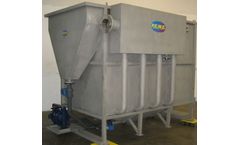
Applications: Refineries Petrochemical industries Stormwater runoff treatment Wastewater treatment plants 1.2 Dissolved Air Flotation (DAF) Dissolved Air Flotation is another gravity-based method used to separate oil and water. In DAF systems, water is pressurized and saturated with air, which forms ...
MJM Environmental was engaged by ACC to assist in the $5 million upgrade of the 140 ML/d Albury Water Filtration Plant from a direct filtration process to an in-filter dissolved air flotation process. ...
The Harrison Wastewater Treatment Plant is a 2.3 MGD average daily design flow wastewater plant servicing the City of Harrison in Southwest Ohio. During the pilot testing, the plant was receiving an average daily flow of approximately 1.1 MGD. Due to local industries and residential waste, the influent wastewater to the Harrison plant occasionally experiences a high fat, oil, and grease (FOG) ...
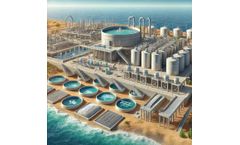
As water scarcity becomes a growing global concern, we’re turning to innovative solutions to meet our needs. Seawater reverse osmosis (SWRO) stands out as a leading technology for transforming seawater into usable fresh water. But, did you know that this membrane filtration process is more involved than simply pushing saltwater through a membrane? This is where seawater RO pretreatment ...
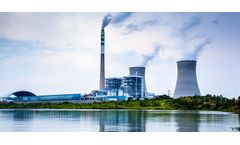
Water and wastewater treatment technologies help keep the grid up Water plays an essential role in thermoelectric power generation. Thermoelectric power plants need a lot of water. In fact, thermopower generation is responsible for 41% of daily industrial water withdrawals. From intake to outfall, from boilers to cooling towers, there is an ensemble of water treatment technologies needed to keep ...