
Refine by
Air Quality Planning Articles & Analysis
53 articles found
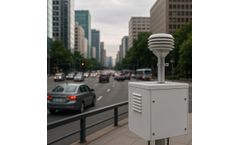
Urban planning increasingly treats air quality as an infrastructure input, leveraging multi-source data to reduce exposure, bolster resilience, and guide investment in healthier, more equitable cities.Key data types and their valuePollutant concentration data: monitoring commonly tracked pollutants include PM2.5, PM10, NO2, O3, SO2, and CO. ...

Let’s delve into the transformative impact of Carbelim Tree on urban green spaces. Urban Air Quality Improvement: Carbelim Tree goes beyond aesthetics; it actively contributes to improving urban air quality. ...

A step-by-step for local authorities to create data-driven air quality action plans, utilising hyperlocal data and innovative technology. ...
ByVortex
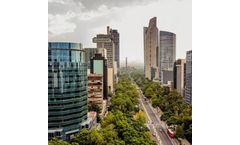
What is the air quality index of Mexico City? The Air Quality Index (AQI) is a universally adopted yardstick measuring the amount and severity of atmospheric pollutants. ...

In this case study, you’ll learn how Kansanshi Mine improved its compliance monitoring, reduced operational overhead and increased reliability by deploying its first network of Clarity Node-S devices. 6 Node-S air sensors Now operating continually around the Kansanshi mine 24/7 monitoring Previous collection was once every 24 hours 80% maintenance time saved Clarity ...
As part of the California Air Resources Board (CARB) AB617 Community Air Monitoring Program, Clarity deployed a 50-sensor network in Richmond, California with Groundwork Richmond and Ramboll SHAIR. The network is used to evaluate pollution sources and hotspots in the industrial city, as well as engage community members in environmental ...
This grant funding comes just a year after the EPA launched the Enhanced Air Quality Monitoring for Communities Program, which awarded $20 million in grants to improve ambient air quality monitoring across the United States with a focus on communities that already suffer a disproportionate burden of health and environmental ...
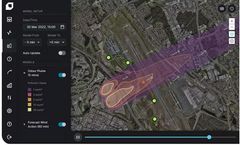
They are now able to plan for shifts with the highest weather and odour risks ahead of time. ...
TL;DR — Today we’re sharing the takeaways from our recent webinar on Air Quality Network Design as part of series in conjunction with the Environmental Management Bureau (EMB) of the Department of Environment and Natural Resources (DENR) in celebration of Clean Air Month in the Philippines. We discuss the important questions that should be taken into consideration when designing an ...

The 2008/50/EC Directive’s sampling point requirement introduces and examines the main question of when air pollutants should be measured. The Directive further examines different types of urban air quality monitoring locations: where should these monitoring stations be located and what is the requirement of the monitoring locations? ...
It claims over 7 million lives and costs the global economy $5 trillion per year. Data-driven air quality plans are still not possible because conventional measurement methods are expensive, stakeholders sometimes lack the necessary knowledge to analyze the data, and appropriate measures are often unknown. Here, we rely on our own low-cost and ...
TL;DR - As global urbanization continues and cities account for a greater portion of the world’s population, so too do they become responsible for more climate and air pollutant emissions. Cities across the globe currently suffer from disproportionately poor air quality and face the consequences when it comes to public and environmental ...

Pollutants in areas of low air quality can be hazardous and dangerous to people, especially to those with respiratory illnesses. ...
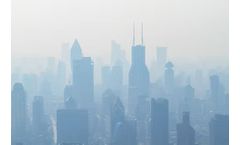
What is the Necessity of the Implementing Air Quality Monitoring Systems? Gone are the days when air quality monitoring system is not even a word. ...

This becomes a serious concern given the adverse health effects of air pollution. However, the National Clean Air Programme (NCAP) 2019 addressed the rising concern of poor air quality with the goal of a 30% reduction in particulate pollution by the year 2024. One of the key components of the NCAP is to increase the existing ...

Some equipment or products are so sensitive that the slightest invisible contaminant can harm them. In places such as data centers or pharmaceutical facilities, these contaminants should be well monitored and eliminated, otherwise, they could disrupt operations or endanger consumers. Ensuring that cleanrooms are free from contaminants is one-way companies can earn the trust of clients and get ...
ByAKCP

Following the update of health recommendations and the management measures of the High Council of Public Health (HCSP, France), the Regional Health Agency and GWAD’AIR (Approved Association for the Monitoring of Air Quality) have deployed a network of air quality sensors to measure hydrogen sulfide (H2S) ...
ByENVEA
These other sources — some of which are listed above — contribute to the surrounding air quality and benzene levels measured at refinery perimeters. AFPM members have invested billions of dollars to reduce emissions — improving marine vessel loading operations, installing different building features designed to capture benzene emissions, and ...

Moreover, during this year’s summit, plans on air quality and food were also introduced. Mark Watts the executive director of C40 believes these are not just policy proposals- there are signs for businesses to shift towards more sustainable business models; in his speech he also emphasized the importance of consumption of goods and food ...

The most common air pollutants include carbon monoxide, ground level ozone, nitrogen oxides, particulate matter, sulfur oxides, and volatile organic compounds. There are other pollutants that are important both due to their impact on the environment and on public health. We will take a look at two such pollutants, ammonia and hydrogen ...