
Refine by
Alloy Analysis Articles & Analysis
22 articles found

XRF analysis changes the economics: test cathode material in 3-10 seconds, identify cobalt, nickel, iron, manganese, and phosphorus, and route accordingly. ...
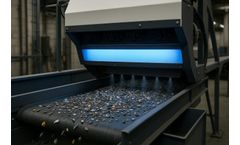
LIBS technology matured from laboratory instruments to industrial sorters, enabling real-time elemental analysis of metal alloys at belt speeds. Today, AI-powered sorting systems trained on large spectral datasets achieve material classification accuracies that exceed human expert performance on mixed battery streams, and continue to improve through operational ...
Visual inspection fails because these alloys often look identical—same color, same oxidation, same physical appearance. ...

Without accurate differentiation, recyclers risk underpricing high-value material or receiving penalties for contaminated lots. Instant alloy analysis using portable X-ray fluorescence (XRF) transforms cable recycling economics. ...
In modern electronics manufacturing, precise control of solder alloy composition is critical for assembly quality and reliability. Electronic manufacturing services (EMS) and surface-mount technology (SMT) lines consume kilograms of tin-based solders every day—both lead-free alloys (e.g., Sn-Ag-Cu or Sn-Bi) and classic tin-lead (Sn-Pb) for specialized tasks. Even small deviations in ...

The purification of platinum-rhodium alloys has long been a focus of research, and the development of accurate analytical methods for their compositional analysis holds significant practical value. In real-world applications, the presence of other impurities can notably affect the purity and performance of platinum-rhodium alloys. Therefore, it ...
Modern XRF analyzers are designed for simplicity: point, press, and within seconds you get a precise breakdown of a material’s composition. But behind this straightforward user experience lies a sophisticated system of advanced components. In this article, we’ll explore what makes up an XRF analyzer, how it works, and why choosing the right configuration is essential for your ...
Choosing analytical equipment isn’t just a purchase — it’s a strategic investment in your business. One wrong result can cost you thousands — or even millions — of dollars. Inaccurate analysis leads to defective products, financial losses, and serious reputational damage. In industries where every measurement matters, you need an analyzer you can trust to deliver ...
In the world of X-ray fluorescence analysis, accuracy, functionality, and convenience are key factors when selecting equipment. Today, we will review two analyzers from Elvatech - ProSpector 2 and ProSpector 2 LE. We will examine their features to help you make the right ...

Ensuring the quality of these materials is essential, and one of the most effective tools to achieve this is XRF (X-ray fluorescence) analysis. XRF provides fast, accurate, and non-destructive testing of metals, alloys, and coatings, making it a vital technology for the aerospace ...

Gas Analysis for Alloy Development The development of new alloys involves intricate manipulation of material compositions. Gas analysis aids researchers in understanding how different gases interact with metals during printing and heat treatment, leading to the formulation of innovative alloys with tailored ...

Acid testing is a common way to distinguish how much gold is present in a simple jewelry alloy. This method is inappropriate for dental alloys because the composition is more complicated. ...

The new Hitachi OE750 spark spectrometer can measure the entire spectrum of elements in metals to low detection limits. For us at Hitachi High-Tech, this was the goal for the OE750 development team and why we ended up designing a completely new optical concept and using a different detector technology. Our view is that detection limits of below 10ppm or >1 ppm (depending on the application and ...
For metals analysis, below are five predictions that will shake up the landscape in 2020: 1. ...
It can achieve next-level OES analysis, such as: The ability to analyse all alloying, treatment, trace, residual and tramp elements for iron alloys and steel. ...
Most handheld LIBS analysers are used for fast sorting of alloys in scrap yards, and alloy identification and analysis in various applications within the metals industry. ...
In the wake of mis-certification scandals around the world, firms are tightening their quality assurance (QA) processes using materials analysers.Industry has been shaken recently by news of companies providing false certification in a range of fields, from emissions testing through to metal grading. Cases where suppliers have delivered mislabelled products only serve to highlight the importance ...
Sample preparation is the most important step of any chemical analysis. To get the best results with any elemental alloy analyser regardless of the technology, the sample must be clean before taking a measurement. ...

” XRF (X-Ray Fluorescence) analysers enable the chemical, non-destructive analysis of metals and alloys in a wide variety of materials. A simple point-and-shoot method means that even relatively inexperienced users can analyse metals content quickly and easily, following the requisite introductory course that is provided by Ashtead Technology’s ...

Oil and gas industries utilise many radiation sources in various applied radiation-based technologies. Those technologies provide significant benefit to the daily operations of the industry. Gamma emitting sources of Cs-137, Co-60, Ba-133, Am-241 are used in oil and gas well logging, in Multiphase Flow Meter (MPFM) technology at oil and gas production facilities and in transmitted level gauges ...