
Refine by
Ammonia Catalyst Articles & Analysis
16 articles found
Stage 3: SCR DeNOx System for Final Polishing Following thermal oxidation, the flue gas enters the Selective Catalytic Reduction (SCR) system.The SCR unit is responsible for removing residual nitrogen oxides, including:Nitric Oxide (NO) Nitrogen Dioxide (NO₂)Using catalyst-assisted reactions between ammonia and NOx, the system converts pollutants into harmless ...
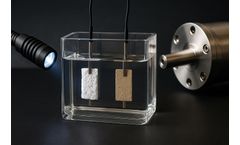
Phase-dependent photo-assisted electrocatalytic reduction of nitrate to ammonia was studied using titanium dioxide (TiO2) as the catalyst. By comparing amorphous and rutile TiO2, the work demonstrates how structural order and electronic properties influence charge transfer and the formation of key reaction intermediates during nitrate conversion.The synergistic ...
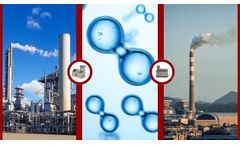
Catalyst deactivation studies are central to maintaining efficiency in industrial chemical processes, including petroleum refining, petrochemical production, syngas and hydrogen manufacture, environmental catalysis for emissions control, and large-scale chemical synthesis such as ammonia and methanol production. ...
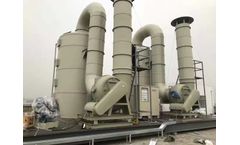
Selective catalytic reduction (SCR) or selective non-catalytic reduction (SNCR) systems reduce nitrogen oxide emissions by reacting with ammonia or urea in the presence of a catalyst. Particle Filtration: After the initial removal of particles, a further stage of filtration can be employed to capture any remaining fine particulate matter not removed in the first ...
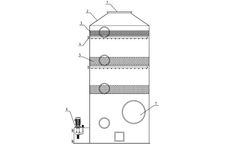
Selective catalytic reduction (SCR) and selective non-catalytic reduction (SNCR) are two common methods to reduce NOx emissions. SCR uses a catalyst and ammonia or urea to convert NOx into nitrogen and water, while SNCR injects ammonia or urea directly into the flue gas to chemically reduce NOx. ...
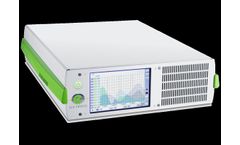
As a side product, Ammonia (NH3), is quickly formed, because Ammonia Nitrate is merely a complex formation, not a covalent bonding. Even on the pure 5N level of the N2O product, Ammonia (NH3) is still emerging on ppb to ppm level. On the current customer site, the Ammonia concentration lays between 30ppb and 2ppm. ...

A catalytic activity testing rig was developed for this purpose and was able to continuously monitor the concentration of NOx in the effluent, alongside the formation of by-products including ammonia and nitrous oxide. The catalysts in this study were prepared from palm kernel shell (PKS) activated carbon impregnated with copper and iron oxides at various ...
Wrong acidic features can easily lead to undesired products and/or, in the worst cases, to the deactivation of the catalyst. Both the number of the acid sites and their strength are therefore crucial and ammonia temperature programmed desorption is arguably one of the most used techniques to investigate them. This analysis basically consists in adsorbing gaseous ...
The Nitrogen oxides concentration in the flue gas, can be effectively reduced by reacting them with ammonia water, or urea in high temperature. Ammonia/urea reacts with both nitrogen monoxide NO and nitrogen dioxide NO₂, to produce nitrogen N₂ and water vapor H₂O and CO₂ when Urea is used. ...

History: The company is a leading manufacturer of Ammonia, Urea, Di-methyl-formamide, Ammonium bicarbonate etc. Process Overview: Ammonia and Urea production unit generate their H2, N2 & CO2 feeds through a common reformer. ...
ByMunters
A few fundamentally different types of methods can be used in waste incinerators as well as in other combustion-oriented processes: filters, scrubbers and ammonia injection. Dust filters remove the particles, scrubbers are used above all to reduce corrosive substances, and ammonia injection with or without catalysts (SCR or SNCR) is used to ...
ByOPSIS AB
The reactions take place at a temperature of 600-750 F in the presence of a catalyst. Ammonia is injected into the exhaust gases prior to their passing into the SCR. ...
A special catalyst that oxidizes both VOCs and ammonia is used. VOCs are converted to carbon dioxide and water, while some – but not all – of the ammonia is converted to nitrogen oxides (NOx). The exhaust gas stream is then directed to a second catalyst. Residual ammonia and NOx react on the ...
The mass spectrometer was used to prove the superior thermal stability, during methane partial oxidation Figure 1, of an innovative embedded Rh@Al2O3 catalyst with respect to conventional impregnated material (1). More recently, the same research group used the mass spectrometer to investigate methanol steam reforming and Water Gas Shift Reactions over an embedded Pd@CeO2 (2) ...

The SCR system uses a vanadium/titanium catalyst with anhydrous ammonia as the reductant. The reductant is injected immediately downstream of the boiler flue gas outlet where the temperature range is approximately 500 to 700o F for maximum NOx conversion. ...

The manufacture of nitric acid used to produce nitrogenous fertilizers typically occurs on site and is therefore included here. Ammonia Ammonia (NH3) is produced from atmospheric nitrogen and hydrogen from a hydrocarbon source. ...