
Amperometric Sensor Articles & Analysis
6 articles found
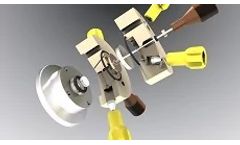
Electrochemical research hinges on understanding gas behavior at its most fundamental level. Tracking its roots to the 18th century, gas analysis has shaped discoveries in energy systems and environmental science, offering tools to decode complex reactions and innovate solutions. Today, it’s a cornerstone in tackling the pressing challenges of modern ...

The most commonly used sensors are amperometric sensors and colorimetric sensors. The ampere sensor works by measuring the current generated by the reaction between chlorine and the sensing electrode. ...
What is Dissolved Oxygen? Dissolved oxygen is a measure of how many O2 molecules are present in a liquid (most often water) at any given time. It is incredibly important because oxygen sustains life in bodies of water and reduced dissolved oxygen levels can act as a warning for events that destroy ecosystems, such as algae blooms. The units of measurement are typically mg/L or on a scale of ...

Accurate measurement and control of free chlorine in water is critical in many applications. Amperometric sensors are a popular alternative to colorimetric analyzers since the measurement is continuous and no reagents are required, however most sensors are extremely sensitive to pH fluctuations and have a limited pH range where they will ...

Water quality parameters Most traditional water quality sensors would be unsuitable for use inside pressurised pipes, so it was necessary for Intellitect’s engineers to develop sensor technologies that would be small, low cost, low power, robust and require almost no service or calibration. ...

A simple amperometric sensor was fabricated by using silver nanoparticles (Agnps) embedded three dimensional silicate sol–gel (SG) matrix (SG–Agnps). ...