
Analytical Column Articles & Analysis
45 articles found
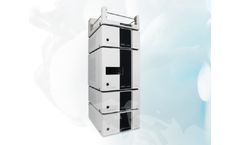
Poor pH control can lead to damage of the LC6000 and analytical column. When using a buffered mobile phase, always use a plunger wash on the 6100 Pump as this will eliminate the build-up of any salts within the buffer. ...

Due to the use of a 3 micrometer packing analytical column, the instrument is also in compliance with ASTM D6379 for jet fuel, kerosene, and middle distillates with boiling points in the range of 50° to 300° C without change to the instrument ...

An FID, or Flame Ionization Detector, is the most common detector paired with gas chromatography instruments for analytical applications. But how does and FID work? An FID uses a flame to ionize organic compounds containing carbon. Following separation of the sample in the GC column, each analyte passes through a flame, fuelled by hydrogen ...

For this study, a Gas Chromatograph (GC) with two analytical columns and a Flame Ionization Detector (FID) is used to achieve the absolute separation of methane, NMTHC and matrix gases. ...

Early runs collected under the final GC analytical conditions showed great retention time variation for these compounds. ...
You may have seen my last blog post about guard holders and cartridges that we have available for our various LC product lines, “Which guard cartridges and holders go with which LC analytical columns?” Along those lines of discussion, the following note is available to also show what specific products are currently offered for this: ...
The injection volume was 1 mL. The GC analytical column was a 15 m × 0.25 mm × 0.25 µm Rtx-1 (Cat # 10120). A three-port SilFlow device (SGC Analytical Science) was employed to split the flow at the end of analytical column to both MS and FPD. ...

Fully automated Inline Ultrafiltration protects the separation column – and the budget At BSK Labs, all samples are filtered before being analyzed. ...

Ensure that a preparative version of your analytical column is available because your column chemistry needs to be the same. ...

The evaluation of semi-volatile organic compounds (SVOCs) in environmental matrices poses many challenges for the analyst, not least the vast number that may be encountered in any given analysis. In addition, analyte reactivity and the potential for multiple analytes to co-elute makes achieving the required method detection limits (LODs or MDLs) quickly and ...
Compared to the conventional flow, the microflow approach downsizes two key variables: (1) the inner diameter (ID) of the fluidic channel inside the separation device, for example, the LC column; (2) the volume of fluid flowing through the columns in a given time. ...
This is comparable to the 2- to 4-minute total gradient/cycle time of traditional throughput workflows on wide-bore columns at analytical scale. Did Dr. Alelyunas use pixie dust or a magic wand? ...

Mb is homologous to both the α- and β-chains of Hb and shares many conserved Hb/Hp interface residues, yet whether Hp binds Mb remains unclear…Hb α- and β-chains were separated via reversed phase high-performance liquid chromatography…using a 4.6 mm × 150 mm C8 [O-5-100/15] analytical column with a 5 μm pore size ...
Decontamination efficacies of DeconGel 1101 were from 99.5% (on concrete) to 99.8% (on aluminum) to 99.8% (on stainless steel) for Nicotine determined by residual swipe analysis. Optimized experimental and analytical methods were successfully developed following standardized EPA sampling and analysis methods as guidelines for determination of organic compounds dissolved in a ...
Decontamination efficacies of poured DeconGel 1102 ranged from 100% (on concrete) to 100% (on floor tile) to 100% (on stainless steel), brushed DeconGel 1102 ranged from 100% (on concrete) to 100% (on floor tile) to 100% (on stainless steel), as determined by residual swipe analysis. Optimized experimental and analytical methods were successfully developed following standardized ...
Decontamination efficacies of DeconGel 1101 ranged from 99.2% (on concrete) to 99.6% (on stainless steel) to 99.2% (on aluminum) for Naphthalene as determined by residual swipe analysis. Optimized experimental and analytical methods were successfully developed following standardized EPA sampling and analysis methods as guidelines for determination of organic compounds dissolved ...
Decontamination efficacies of DeconGel 1101 ranged from 93.6% (on concrete) to 95.5% (on stainless steel) to 95.5% (on aluminum) for EG determined by residual swipe analysis. Optimized experimental and analytical methods were successfully developed following standardized EPA sampling and analysis methods as guidelines for determination of organic compounds dissolved in a ...
Decontamination efficacies of poured DeconGel 1102 ranged from 100% (on concrete) to 100% (on aluminum) to 100% (on stainless steel), brushed DeconGel 1102 ranged from 100% (on concrete) to 100% (on aluminum) to 100% (on stainless steel), as determined by residual swipe analysis. Optimized experimental and analytical methods were successfully developed following standardized EPA ...
Decontamination efficacies of DeconGel 1101 ranged from 98.4% (on concrete) to 99.7% (on stainless steel) to 99.8% (on aluminum) for BA determined by residual swipe analysis. Optimized experimental and analytical methods were successfully developed following standardized EPA sampling and analysis methods as guidelines for determination of organic compounds dissolved in a ...
Decontamination efficacies of DeconGel 1101 ranged from 99.7% (on concrete) to 99.9% (on stainless steel) to 99.9% (on aluminum) for TEA as determined by residual swipe analysis. Optimized experimental and analytical methods were successfully developed following standardized EPA sampling and analysis methods as guidelines for determination of organic compounds dissolved in a ...