
Refine by
Antiscalant Articles & Analysis
47 articles found
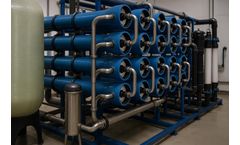
Effective pretreatment strategies before RO A practical pretreatment strategy does not need to be complex, but it should align with the specific chemistry risks present: Scaling control: Remove or stabilize hardness and alkalinity through softening, pH adjustment with acid dosing, or antiscalants to keep salts in solution. Particulate fouling control: Media filtration, ...

Silica fouling prevention in industrial plants and data centers is a critical challenge facing facility managers, sustainability directors, and process engineers. Silica deposits significantly reduce equipment efficiency, increase operational costs, and risk system downtime. However, with strategic management and innovative technologies from Genesis Water Technologies (GWT), silica fouling can be ...
Silica is everywhere—from sand dunes to microchips—yet its presence in groundwater can silently erode heat-exchange efficiency, foul RO membranes, and cripple high-pressure water boilers. Silica remediation for groundwater isn’t only a compliance box; it is a profitable tool that protects infrastructure, maximizes uptime, and safeguards community water supplies. Below we ...

Texas is one of the fastest-growing states in the U.S., with constant demand for new infrastructure, housing, and commercial developments. However, one of the lesser-known obstacles facing the construction industry is the lack of quality water for concrete production. From remote regions in West Texas to booming cities like Houston and San Antonio, the issue of poor water quality has begun ...
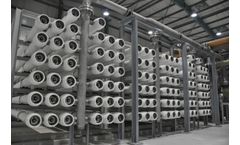
The control of silica fouling in reverse osmosis systems is crucial for maintaining system performance efficiency and longevity. It prevents costly downtime and membrane damage. This article provides practical knowledge on silica scaling in RO systems, its challenges, and effective control ...
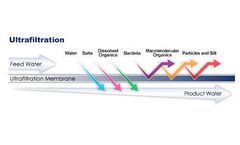
One facet of technological advancement is attempting to mitigate the more glaring issues that consistently crop up due to the nature of a system process. Of course, even with decades of improvement nothing is infallible. In this article, we will discuss the common issues that can occur using UF filtration systems. Ultrafiltration is a pressure driven membrane separation technology that is a ...

Heavy metals, organic contaminants, solid acids or bases, antiscalants, coagulants, and biocides add complexity to the brine solution. ...
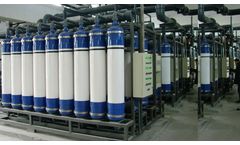
To prevent this, GWT is meticulous about designing and implementing proper pretreatment measures. This includes antiscalants to prevent scaling on the membrane, sediment filtration to reduce suspended solids concentrations that would cause excessive buildup on the membrane, and UV sterilization to prevent bacterial bio-fouling. ...
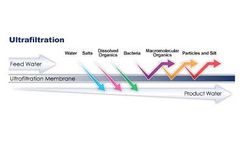
These minerals can crystalize, which makes them nearly impossible to remove without some sort of chemical cleaning or antiscalant pretreatment. Calcium and magnesium are two primary minerals that can cause scaling to occur on the UF filter systems membranes.MicrobiologicalBiological contaminants like algae and microorganisms are often found in surface water sources. ...

Veolia will also supply the required water treatment chemicals for the plant, including Hydrex™ coagulants and flocculants, RO speciality chemicals (such as antiscalants, cleaning and CIP chemicals), hygiene chemicals and other miscellaneous and commodity chemicals. ...
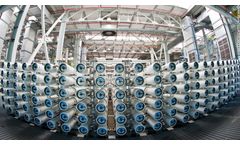
GWT designed/engineered a treatment system consisting of an advanced oxidation unit followed by specialized backwash filtration systems and concluded with a RO waste water recycling system that included antiscalant dosing and cartridge filtration. GWT’s local contracting partner installed this system that has performed well within operating parameters. ...
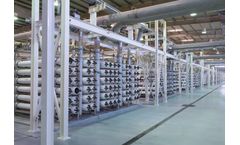
Current best practices have demonstrated that pretreatment processes such as electrocoagulation, bio-organic powder flocculant, new low fouling membrane chemistries, appropriately selected antiscalant chemicals and disinfection are critical to prevent membrane scaling and fouling. ...
Fouling is reduced in the first instance with the correct use of reverse osmosis antifoulants and antiscalants. Membrane cleaning products help to remove fouling from the membranes and should be chosen based on the type of fouling that occurs. ...

Conclusions: Sílice Incrustante en OI se Puede Evitar en México Avista Vitec 4000 Sílice Incrustante en EDI se Puede Evitar en México ExcellPureRO™ Membranas OI de Rechazo del Alto de Sílice En México se Puede Lograr 2 ppb de Sílice Vitec 4000 ExcellPureRO™ Membranas 2 Paso IO with pH=8.4 The correct ...
The customized system solutions included primary/secondary and tertiary disinfection for the greywater, along with two desalination systems (a primary as well as a secondary system, to recover a portion of the primary system’s wastewater stream). Optimized antiscalant chemical dosing and filtration was utilized to purify the beach well source. ...
It is also a challenge to attain the very low ppb levels of silica in the ultrapure product water required by power and electronics applications. The use of a premium silica antiscalant, use of high-silica-rejection RO membranes, and use of CO2 removal technology can lead to successful RO-EDI systems even with high feedwater silica. ...

There are some well-known techniques to reduce scaling; one of the most widespread is antiscalant dosing. In this study, 11 samples of new prototype chemicals based on co-polymers of acrylic and methacrylic acids, polyaspartic acid, maleic anhydride and different cross-linking agents is tested. A wide range of commercial phosphorus-based and green inhibitors were used as ...

Sparingly soluble salts (scales) vary in behavior including reaction rate, precipitation mechanisms and interaction with antiscalants; and certain antiscalant components can inhibit one type of scale but may fall short for another. Antiscalants do not change the saturation of the sparingly soluble salts. ...
The optimum mass ratio of HEDP, PAA and synthesized HPMA was obtained at 10/10/80, which showed excellent performance on controlling calcium carbonate deposition. The antiscale efficiency of the optimum mixture was 84% and 95%, respectively, in the calcium carbonate precipitation test and the calcium carbonate scale deposit test. ...
Free energy barrier values, critical nucleus radius and nucleation rates were calculated with and without addition of antiscalant {(scale inhibitor) [sodium hexametaphosphate (NaPO3)6, SHMP]} using crystallization equations that relate induction period with supersaturation ratios. ...