
Refine by
Aquaculture System Articles & Analysis
100 articles found
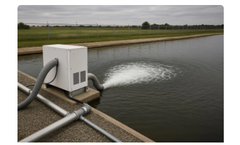
Advanced nanobubble technology provides a smarter solution to elevate dissolved oxygen levels while reducing chemical and energy use.The nanobubble system has transformed the water environment in industrial contexts by generating ultra-fine, highly stable bubbles that supply oxygen efficiently and support natural water quality.Advanced nanobubble technology yields tangible ...
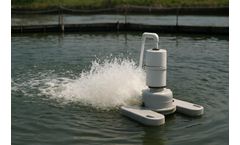
This is particularly costly in high-density operations. Advanced DO systems improve gas transfer and energy use by delivering finer bubbles.What Are Advanced Dissolved Oxygen ...
At the AquaMaof R&D Center we have been conducting technology and engineering trials on new aquaculture technology developments and a variety of fish species, including Shrimp. Israel Shrimp Operational ...
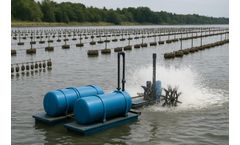
Fluctuations typically occur at night or in summer. Oxygenation systems are therefore used to maintain stable conditions.How Oyster Water Oxygenation Systems ...

Project Overview The Multipurpose Seaweed Park Project in Valamavur, Tamil Nadu is a forward-looking aquaculture initiative aimed at strengthening India’s seaweed cultivation ecosystem. Seaweed farming is increasingly being promoted by coastal development authorities and marine research bodies due to its role in coastal livelihoods, carbon sequestration, wastewater nutrient absorption, and ...
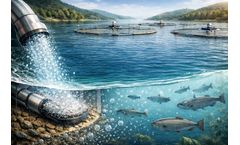
Fish farming is increasing worldwide. However, farmers have to struggle. Low oxygen levels, water pollution, and disease cause poor productivity. For this reason, more innovative solutions are now sought in modern farms. There is one innovation that is powerful today. Nanobubble Tech for fish farming is changing aquaculture practices on all levels. The technology enhances water quality. It ...
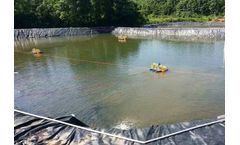
In the global aquaculture industry’s move towards intensification and sustainable development, Aquaculture geomembrane linings have transformed from an optional technology into a critical infrastructure, with their multiple advantages vividly demonstrated in practices across various countries. ...

Background: Aquaculture systems often struggle with the overstocking of farms and the creation of excess waste. ...

In the Philippines, aquaculture is one of the most important industries, but many fish farmers face common challenges such as water leakage, unstable water quality, and high maintenance costs. One of our clients, a local fish farmer, was planning to expand his business with five new ponds, each around 2,000 square meters. To ensure long-term durability and better water management, he chose our ...
Biofilm is a community of bacteria and fungi embedded in a glue-like structure that adheres to the surfaces of pipes, forming a protective layer. Bacteria like Legionella and Staphylococcus, among others, grow in a slimy mould and are difficult to kill and remove. Biofilms can develop easily in water pipes, industrial cooling systems, and even rivers and streams. Any efficient water treatment ...

Water Filtration: Hexagonal water may retain less contamination and could be part of advanced water treatment systems. Aquaculture: Fish farms using structured water report healthier aquatic life and reduced disease outbreaks. ...
HDPE membrane (High-Density Polyethylene Geomembrane) is a high-performance impermeable liner made from high-density polyethylene resin. hdpe geo membrane is widely used in landfill liners, mining tailings ponds, reservoirs, aquaculture ponds, and other containment projects due to its outstanding chemical resistance, low permeability, and excellent mechanical ...
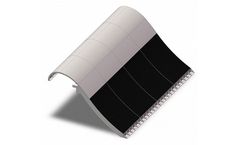
A Coanda effect inlet screen is a passive, self-cleaning filtration system installed at the head of a water intake structure. It uses the Coanda effect phenomenon, where a fluid flow tends to follow a curved surface to naturally direct water across a curved wedge wire screen. ...
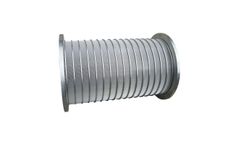
A rotary drum screen filter is a cylindrical filtration system partially submerged in the liquid or slurry it is designed to filter. ...
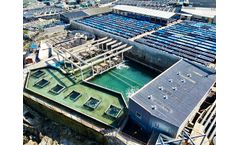
Since 2017, the company had made a large investment to protect the farm from such events, and could now close the intake point and temporarily run their operation as a recirculating aquaculture system (RAS) when conditions in Walker Bay posed risks to the abalone. ...
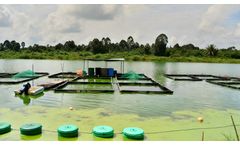
In the ever-evolving landscape of the food industry, challenges come in many forms. One of the most insidious threats to food production and quality is the proliferation of algae. Often overlooked or underestimated, algae can quietly exert harmful and damaging effects over time. This gradual contamination of water sources can lead to a cascade of issues throughout the food supply chain, ...
Seeking a revolution in freshwater aquaculture This article was featured in Eurofish Magazine 3 2024 SmartAqua4FuturE (SAFE) is an ambitious project funded by Horizon Europe that aims to revolutionise freshwater aquaculture. The project seeks to make freshwater aquaculture more environmentally friendly while increasing its financial stability ...
ByEurofish
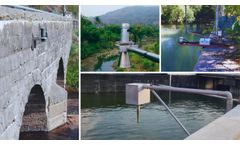
Aquaculture Why measure water level in fish tanks and aquaculture systems? Monitoring water levels in fish tanks and aquaculture systems is imperative to uphold optimal conditions for aquatic life. ...
IRTA offers its IRTAmar recirculation system as a model for aquaculture research, through the company INGESOM. ...
ByIRTAmar
The IRTAmar recirculation module is an automated, “smart”, multi-functional water treatment and recirculation system for use in aquaculture research, production and aquariumology. ...
ByIRTAmar