
Refine by
Aquifer Characterization Articles & Analysis
30 articles found
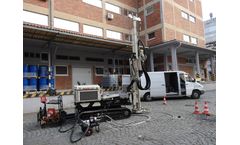
SITE CHARACTERISTICS Heterogenous aquifer (combination of sand, gravel and clay) together with a deep localization of CHCs contamination plume predetermine this site to be difficult to treat. Therefore, the remediation company DEKONTA arrived at an inventive decision to combine the direct-push injected NANOFER particles with a subsequent employment of the thermally enhanced in-situ bioremediation ...
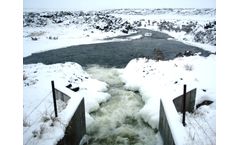
Overview The Idaho Department of Water Resources (IDWR) uses telemetry to view near-real-time water level data and track the response of aquifer recharge basins to changes in flow rates. Hourly groundwater level data provides further insight into barometric efficiency of the aquifer. Challenge Like many aquifers across the U.S., Idaho’s Eastern Snake Plain Aquifer (ESPA) has been dropping ...
Crawford Hydrology Laboratory, part of Western Kentucky University’s Applied Research & Technology Program, is continuing dye tracing studies in the Great Onyx Groundwater Basin to develop a high-resolution model of the “internal plumbing” of the aquifer. This kind of three-dimensional model can’t be achieved using qualitative methods alone. ...
Overview The Karst Research Institute, part of the Scientific Research Centre of the Slovenian Academy of Sciences and Arts, uses a variety of In-Situ equipment to continuously monitor several caves within the country’s vast, complex network of karst aquifers. Challenge Karst aquifers form when rainwater or groundwater seeps into fissures in soluble rock ...

Magnetic resonance (NMR) logging is well suited for helping manage aquifer storage and recovery (ASR) projects. An excellent example is this project in Denver Colorado, in which they used Vista Clara NMR borehole logging tools to characterize the Denver basin aquifer properties, especially hydraulic conductivity, for potential ...

One of the more challenging situations in geophysics is the need to identify and characterize aquifers in highly saline environments. Saline environments are inherently conductive, which means conventional Electrical Resistivity Tomography (ERT) techniques are less effective because the ERT signals don’t penetrate very far into highly conductive ground and ...
Nuclear Magnetic Resonance (NMR) is a powerful technology for groundwater investigations, leveraging the same physics as medical MRI imaging to directly detect water and characterize subsurface hydrogeologic parameters. In geophysics, surface NMR methods can be used to non-invasively map groundwater aquifers and borehole logging NMR tools can be used to obtain ...

ABSTRACT BOS 200® successfully remediated petroleum hydrocarbon impacts at an active retail petroleum facility in Europe, achieving the remediation goal of eliminating vertical migration of impacted groundwater to competent limestone aquifer underlain the site. CHALLENGES Site characterization activities following the release identified residual petroleum ...
After a thorough remedial design characterization was completed, BOS 200® was surgically injected over two field events to successfully achieve the site cleanup goals. ...
ABSTRACT High density sampling program was key to remediation of soil and groundwater impacted by TCE DNAPL at a former industrial site underlain by river deposits and sedimentary bedrock. CHALLENGES Impacted alluvium consisted of poorly sorted, fine to coarse grained sand. The source area was underlain by an aquitard of silt and clayey silt where dense non-aqueous phase liquid (DNAPL) pooled ...

Spatial distribution of dissolved inorganic carbon (DIC) concentration and stable carbon isotopes in the groundwater was used to distinguish the piezometers localized within the contaminated aquifer. Background groundwater was characterized by low DIC concentration (from 1.8 to 5.0 mmol/L) and negative values of d13CDIC (from -20.6‰ to -12.4‰). ...

Name: Wayne Hutchinson Office: Milwaukee Practice Area: Environmental Liability Management Area of expertise: Hydrogeology About Me in 140 Characters (or more!): I suppose I was drawn to a career in science, and specifically hydrogeology, because it allows me to use and apply mathematics, chemistry and physics to solve three-dimensional puzzles. And, as it turns out, it was also the perfect ...

This water level data logger is typically used in aquifer characterization test, pump tests, slug test, and step drawdown tests. ...
Determining the likelihood that groundwater contains faecal coliforms can aid water resource management in facilitating the protection of drinking water supplies. This study assesses the incidence of the faecal indicator organism Escherichia coli in 125 private water supplies (PWSs) serving individual houses in the Mid-West Region of Ireland. Two factors, aquifer type and rainfall (mm), were ...

Underground thermal energy storage (UTES) is a system that uses inter-seasonal heat storage, storing excess heat from the summer for use in winter heating, and the cooling potential from winter for cooling in summer. A cost-effective, low-energy and low-risk proven renewable technology, UTES reduces carbon emissions by up to 60% and is becoming an increasingly popular choice for residential, ...
By analysing the hydrographs of karst basin outflow, it is possible to identify aquifer characteristics and, accordingly, the main features of a karst basin. In this study, 19 basins with daily observed flow discharges during drought periods between October and April 1973–1983 were selected to analyse the master recession curve (MRC). During a drought period, the MRCs were separated into segments ...
In this study the value of subsurface treatment of urban stormwater during Aquifer Storage Transfer Recovery (ASTR) is characterised using quantitative microbial risk assessment (QMRA) methodology. The ASTR project utilizes a multi-barrier treatment train to treat urban stormwater but to date the role of the aquifer has not been quantified. In this study it was estimated that the aquifer barrier ...
In this study the value of subsurface treatment of urban stormwater during Aquifer Storage Transfer Recovery (ASTR) is characterised using quantitative microbial risk assessment (QMRA) methodology. The ASTR project utilizes a multi-barrier treatment train to treat urban stormwater but to date the role of the aquifer has not been quantified. In this study it was estimated that the aquifer barrier ...

The aim of the study is to characterise the Kham Bon landfill site. Hydrogeological and geochemical surveys were conducted and four boreholes were drilled. The hydraulic properties of the aquifer were tested, and soil, surface water and groundwater samples were collected at various times in the year. The physical and chemical properties of the samples, especially heavy metals, were analysed. The ...

ABSTRACT: The goal of this study was to determine if direct-push drilling methods combined with a circulation system could be used to establish a passive biobarrier in a very transmissive aquifer to treat tricholoroethene (TCE). The Site is located in central Indiana, where historic use of TCE has impacted an unconfined aquifer. ...