
Refine by
Array Detector Articles & Analysis
28 articles found

The variable-zoom method presented has a detector array with at least M*p pixels in each axis, where M is the maximum magnification and p x p is the size of the image array at each zoom. Pixels are binned based on the current magnification such that the final image size at each zoom magnification has a constant pixel array size. ...
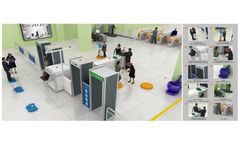
### Challenges and Solutions in Implementing Portable Walk-Through Metal Detectors The implementation of portable walk-through metal detectors presents a array of challenges and requires adept solutions to ensure effective threat detection, operational efficiency, and seamless integration within diverse security environments. ...

Therefore, BaTiO3 thin films can be used in the development of microelectronic devices, such as thin film capacitors, non-volatile memory elements, dynamic random access devices, optoelectronic devices such as optical waveguides, optical modulators, second harmonic generators, infrared detectors, etc., and can also be combined with superconducting thin films to develop ...

There are a vast array of detector dog training aids on the market covering the odours of mainstream drugs, explosives and some biological threats such as Bed Bugs and Termites. ...

Ultraviolet absorption detector and Photodiode array detector (PDAD) are the two most commonly used ultraviolet-visible detectors. Fluorescence detector Fluorescence detector (FD) is a highly sensitive and selective detector that can detect compounds that produce fluorescence. ...

Additionally, when using an Ultra-Violet detector, Diode Array Detector or Fluorescence Detector, the specific absorbance of the solvent must also be considered. ...

Phathom sensors generate multiple alternating beams of light to create a ratio-metric algorithm Each Phathom sensor has two LED light sources and two light detectors. LED 1 switches on and the light is picked up by detector 1 and detector 2. ...
ByPhathom
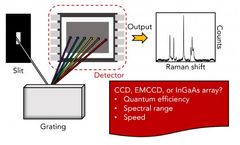
A CCD is a silicon-based multi-channel one- or two-dimensional array detector that is capable of quickly detecting whole spectra. Each channel within the CCD is a photodiode pixel, of which there are several thousand, and generates electronic charge proportionally to the number of absorbing photons. ...
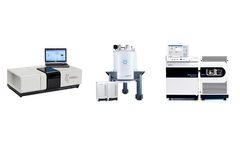
The first is an emission monochromator which works using the same principle as above except the light source is the emission from a sample and the monochromator selects which wavelength of light reaches the detector (Figure 3 Emission Monochromator). The second approach is to detect the spectrum of the dispersed light ‘all at once’ using an array ...
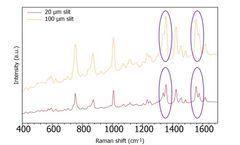
A long focal length spectrometer (i.e. high resolution) can also be adapted with suitable grating selection to be run-in low-resolution mode.DetectorsIn most dispersive Raman spectrometers array detectors are used, commonly silicon charged couple devices (CCDs) or, in the NIR region, InGaAs array detectors. These ...
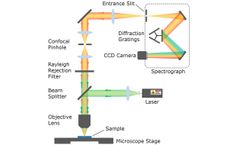
The remaining Raman scatter is then focused through a confocal pinhole and enters the spectrograph where it is wavelength separated and the spectrum detected using an array detector. Spatial information is obtained by moving the microscope stage, and therefore the sample, in the XYZ directions and acquiring an array of Raman spectra which are ...
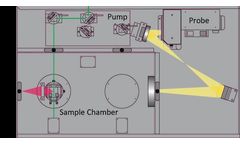
The figure shows single-point detection with a PMT, but it is also possible to employ an array detector (CCD or CMOS) to capture the full spectrum in one shot.It is also possible to classify Laser Induced Fluorescence into continuous wave or time-resolved LIF. ...
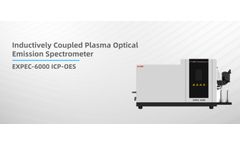
Full-spectrum real-time calibration to ensure long-term stability without separate calibration. Large surface array detectors, low noise, high dynamic, and high and low elements can be detected simultaneously. ...

At Environics, we deliver gas mixing technologies based on ultra-precise thermal mass flow controllers (MFCs) and extremely accurate computerization and calibration. This enables us to generate custom and standard solutions for gas flow instrumentation that runs the gamut of commercial and research applications. Here we will offer a breakdown of some of the key market segments that we serve. ...

Bruker Corporation today announced the launch of the automated, stand-alone FTIR imaging microscope LUMOS II, which provides ultrafast FTIR imaging capabilities based on modern focal-plane array (FPA) detector technology in its high-end version. The new LUMOS II is designed to identify particles, to determine coatings and contaminations, and to reveal polymeric ...

Now, NanoVision Technology brings particle counters to the digital age, utilizing a high density two dimensional array of high-efficiency detector elements. This technology allows any background light scattering by the chemical molecules to be differentiated from light scattered by particles within the fluid. ...

Different Type of Spectrometers NIR spectrometers can be broadly categorized into four types: filter, scanning monochromator, polychromator (a.k.a. diode array), and Fourier transform. Filter instruments are the simplest, using only a few discreet filters to sample different wavelengths. ...

How it works The system works by combining advanced Tyco FlameVision FV300 IR array flame detectors with Unifire’s highly advanced, Force high-flow, stainless steel 316L robotic nozzles (a new generation of remote control fire monitors), which feature industrial-robottype brushless (BLDC) motors, providing extreme accuracy and long life. When a fire breaks ...

Unlike traditional optical biomass probes, which are limited in range and sensitivity, the BE2100(R) utilizes an array of infrared lasers and detectors that are sensitive to different ranges of biomass changes. ...

At the other end of the ATR window is a linear variable filter (LVF) covering a wavelength range of 5.4-10.8 μm (1850-925 cm-1) combined with a 128 pixel detector array. The result is an infrared analyzer that, unlike an FTIR spectrometer, has no moving parts and an insignificant optical air path. ...