
Ash Testing Articles & Analysis
19 articles found

Solid residues, including char and ash, must undergo laboratory testing to verify that heavy metal content remains within safe disposal or reuse limits. ...
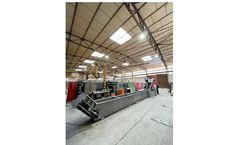
This system efficiently evacuates the ashes generated during combustion and cools them, ensuring optimal and safe handling of the by-product. Challenges in high-temperature ash extraction and cooling The main challenge in this project was to develop a system that could handle ashes directly from the furnace exit to their evacuation point. ...

Ashing is the process of removing organic material from a sample before analysis and is widely used in the food and petroleum industries. The processes of ashing can generally be split into two categories: wet ashing and dry ashing. Wet ashing removes organic material from a sample employing a liquid phase reactant such as combinations of acids. Dry ashing is achieved through the controlled ...
ASTM D874 is the main standard used to test sulphated ash from lubricating oils. It is routinely deployed for quality assurance and control (QA/QC) purposes where the composition of unused oils or additive concentrates can provide valuable insights for process engineers. ...
This abbreviation stands for the ‘Standard Test Method for Ash in the Analysis Sample of Coal and Coke from Coal’. The ASTM D3174 test is universally acknowledged as the most trustworthy and accurate application for the analysis of ash remnants after incineration. ...

Abstract : A short comparative study has been made on the sensitivity of 2 conventional bioassays (the ISO Daphnia magna immobilization test and the ISO algal growth inhibition test with Scenedesmus quadricauda) and 3 Toxkit microbiotests : the Daphtoxkit F™ magna, also with D. magna, the Thamnotoxkit F™ with the crustacean Thamnocephalus platyurus, ...

We’ll be testing the moisture content AND the ash content of wood pellets and lump charcoal. So, which do you think will have more moisture and which do you think will have a higher ash content? The Computrac® MAX® 5000XL is a rugged, reliable loss-on-drying (LOD) and loss-on-ignition (LOI) moisture, solids and ash ...

In this study, zeolites were synthesized from low-calcium (LCZ) and high-calcium (HCZ) fly ash, respectively. Subsequently, the zeolites were tested for their removal effectiveness for four aqueous cations, namely, Zn2+, Cu2+, Cd2+, and Pb2+, as a function of contact time, pH value, adsorbent dosage, and initial concentration of heavy metals. ...
This conference contribution will present a novel technology for renewable ash-free fuel production from low-value ash-containing feedstocks such as sludge digestate, wood bark or rice husks that cannot be utilized directly as a heating fuel, because of the high (low melting point) ash content. Biomass Ash Removal (BiAR) ...

Testing is carried out in accordance with the requirements of the Food and Feed Regulations 2010 (SI2503/2010). The primary activities are proximates testing for MOPFA (Moisture. Oil (A) or (B). Protein. Fibre and Ash) and minerals testing using atomic absorption spectrophotometry for calcium, sodium, potassium, magnesium, ...
The effect of fly ash on biodegradability and methane production from secondary paper and pulp sludge, including its modeling, was evaluated. Three tests with fly ash concentrations of 0, 10 and 20 mg/L were evaluated at 32 °C. ...

Current language by the American Concrete Institute committee 232 on “Fly Ash and Natural Pozzolans” further reinforces and clarifies the beneficial use of fly ash to reduce sulfate expansion and attack. ...

Extensive site‐specific biological and environmental data were collected to support an evaluation of risks to the fish community in Watts Bar Reservoir from residual ash from the December 2008 Tennessee Valley Authority (TVA) Kingston ash release. ...
A Baseline Ecological Risk Assessment evaluated risks to ecological receptors from ash in the river system post‐dredging. This paper describes the approach used and results from sediment toxicity tests, discussing any causal relationships between ash, metals, and toxicity. ...

The collection tank, over years of use, has accumulated an ash slurry that requires the reduction of solids to regain clean water storage volume. ...

This paper presents the results of the tests on the most suitable concentration for the ash and the bottom ash hydromixture transport. ...

The new system, which has been operating flawlessly for three years, has enabled the plant to achieve particulate outlet loadings of under 0.003 grains per dry standard cubic foot (grs/ dscf) – approximately five times better than the EPA’s MACT standards – even when, for compliance and evaluation testing, the ash content of the oxidizer feed ...

Abstract Two inhibitors, triethanolamine (TEA) and monoethanolamine (MEA), were tested for their ability to prevent the de novo formation of polychlorinated dibenzo- p-dioxins (PCDDs) and polychlorinated dibenzofurans (PCDFs) on sinter plant fly ash. The amounts of both PCDDs and PCDFs, formed by thermal treatment of the fly ash, decreased when ...

Results are presented for three different soils. For one soil (a fly ash), comparative testing using the new technique and a conventional method shows good agreement. ...