
Refine by
Astm Method Articles & Analysis
131 articles found

ASTM A53: Available in both seamless and welded forms, often used for lower-pressure applications like air, steam, or water transport within plants. 2. ...

Capacity tests validate system output and are typically conducted under standards such as ASTM E2848 or evolving international methods. These tests allow only limited total losses. ...
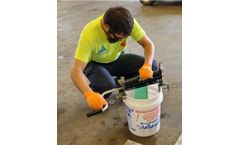
Of particular note, existing standards do not offer a method for quantifying sorbent performance when deployed for the recovery of oil on water or evaluating sorbents at full or meso-scale size. While the overall qualification of one sorbent’s ability to perform as compared to another sorbent may be determined by testing methods established by the ...
ByOHMSETT

Systems are configured and tested to meet a variety of official methods like ASTM, IP, EN, DIN, UOP, ISO and GPA.SCION gas chromatographs are designed to operate 24/7, which is a definite requirement as processes have to be controlled around the clock. ...

Objective An in vitro test was carried out to assess the ability of the Irrisept Antimicrobial Wound Lavage (Irrisept) device to disrupt and reduce clinically relevant biofilms. The testing approach used methods adapted from ASTM E2871-19, “Standard Test Method for Determining Disinfection Efficacy Against Biofilm Grown in the CDC Biofilm ...

Personal care and cosmetic products are ubiquitous in our daily lives. Most of us wouldn’t readily go out to meet our peers without first practicing a bit of hygiene, which is why these products are so widely used. Personal care products and cosmetics are mainly applied externally (e.g., on hair, skin, and nails) as well as orally (e.g., on teeth, gums, and tongue) either for hygienic ...

MANTECH is a leading innovator of water, soil, and food analysis generating the highest quality result, in the shortest amount of time using green methods. With simple, smart analyzers MANTECH has introduced rapid alkalinity testing (RapidAlk™) reducing total analysis time to under 4 minutes with the use of smaller samples, testing alkalinity in the fastest, greenest way ...
History of ASTM International The American Society for Testing and Materials (ASTM) is an organization that currently provides over 12,500 international standards. Its roots date back to 1898, when ASTM was formed by a group of scientists and engineers to address the frequent rail breaks affecting the fast-growing railroad industry. The group developed a standard for the steel used to fabricate ...

History of ASTM International The American Society for Testing and Materials (ASTM) is an organization that currently provides over 12,500 international standards. Its roots date back to 1898, when ASTM was formed by a group of scientists and engineers to address the frequent rail breaks affecting the fast-growing railroad industry. The group developed a standard for the steel used to fabricate ...
ByB&W Tek

Most of the universal geomembrane test methods cited worldwide are developed by ASTM International because ASTM has a long history in this activity. ...
What is a lubricant? A lubricant is defined as a petroleum-derived product used to control and reduce the friction and wear of moving machinery parts (e.g., in engines and turbines). The main purpose of lubricants is to help protect and prolong the lifetime of the ...
What is Pyrolysis gasoline or «Pygas»? Pyrolysis gasoline, also known as Pygas, is a byproduct of naphtha cracking during the production of ethylene and propylene. Pyrolysis gasoline is an easily flammable, colorless liquid with high aromatic contents and represents a mixture of light hydrocarbons (Figure 1). It is a high octane number mixture which contains aromatics, olefins, and ...
Pyrolysis gasoline, also known as Pygas, is a byproduct of naphtha cracking during the production of ethylene and propylene. Pyrolysis gasoline is an easily flammable, colorless liquid with high aromatic contents and represents a mixture of light hydrocarbons (Figure 1). It is a high octane number mixture which contains aromatics, olefins, and paraffins ranging from C5 to C12. ...
ByB&W Tek
AirDrain Synthetic Turf Drainage Doubles as a 100% Vertical Drainage Layer and Shock Pad. With an ASTM F355-10a: Standard Test Methods for Shock-Absorbing Properties of Playing Surface Systems and Materials resulted in a 14.7% reduction in GMAX over a cement ...
Differences between gasoline, diesel, and jet fuel Gasoline is a fuel made from crude oil and other petroleum-based liquids, containing carbon numbers generally between 4 and 12, and exhibiting boiling points of up to 120 °C. Gasoline is primarily used as a fuel for vehicles. Petroleum refineries and blending facilities produce motor gasoline for sale at gas (or petrol) stations. Most of the ...
Intake Air Temperatures: Standard Test Method for Research Octane Number of Spark-Ignition Engine Fuel (ASTM D2699) and Standard Test Method for Motor Octane Number of Spark-Ignition Engine Fuel (ASTM D2700), require specific intake air temperatures (I.A.T.), as follows: Research Method:52℃±1℃(125°F+/- ...
SINPAR Combination Octane Engine Unit with SXCP Digital Control Panel is the latest model of octane engine with easy-to-use features and auto-control system conforming to the latest ASTM D2699 (RON) and ASTM D2700 (MON) Standard Methods. Octane Engine SXCP Control system is characterized by precision and automation. ...

The test method presented here is applicable to the determination of mono-, di-, and tri-plus aromatic hydrocarbon (MAH, DAH, and T+AH, respectively) content in diesel fuels and middle distillates with boiling points in the range of 150° to 400° C in accordance with ASTM D6591. ...

ASTM is the authority for all respected and reputable American institutions who wish to benefit from nationwide knowhow and testing techniques. As one of the industry’s most innovative furnace developers, Thermcraft serves up specifically-customized furnaces to industrial facilities across the United States. What is the ASTM D3174 Test? Contained in a ...

Glycerol has many uses, but it destroys engines because it's a sugar alcohol, and therefore must be removed from biodiesel before it can be used or sold as fuel. ASTM International has set a limit of 0.02% glycerol in biofuels (ASTM Standard D6751). ASTM's standard analytical chemistry method for glycerol detection in biodiesel ...