
Refine by
Atmospheric Deposition Articles & Analysis
91 articles found
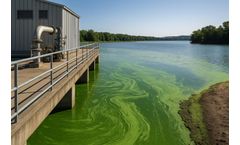
Early recognition hinges on monitoring with parameters described below.HAB Development Stages in ReservoirsStage 1 — Nutrient accumulation: Phosphorus and nitrogen accrue in water and sediments from agricultural runoff, urban runoff, wastewater discharges, and atmospheric deposition, setting the stage for growth.Stage 2 — Thermal stratification: Seasonal layering ...

Abstract Mercury contamination in soil primarily originates from atmospheric deposition, wastewater irrigation, and agricultural activities. ...

Abstract Mercury contamination in soil primarily originates from atmospheric deposition, wastewater irrigation, and agricultural activities. ...

They can enter the soil through surface runoff, atmospheric deposition and the disposal of solid waste, making the soil become the confluence of PCBs. Soil is an important destination for PCBs in the environment, and has a high adsorption effect on PCBs. PCBs in the atmosphere along with particulate matter deposition, waste and ...
They can enter the soil through surface runoff, atmospheric deposition and the disposal of solid waste, making the soil become the confluence of PCBs. Soil is an important destination for PCBs in the environment, and has a high adsorption effect on PCBs. PCBs in the atmosphere along with particulate matter deposition, waste and ...
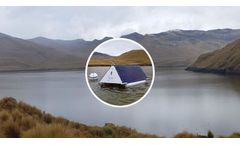
A recent publication in Global Change Biology points to a surprising connection between atmospheric dust and algal blooms. After many years of careful analysis of mountain lakes, Juan Manuel González-Olalla and James Powell discovered that dust deposition from atmosphere fuels algae growth. ...

These pollutants include those from vehicle exhausts, brakes and tyres, community activities, and atmospheric deposition. Where the stormwater system drains to ecologically sensitive zones, such as beaches, lakes or creeks, communities demand that the quality of the stormwater discharged into these water bodies must not lead to their degradation. ...

When phosphorus levels in a water body reach abnormally high amounts, it can severely disrupt natural cycles and trigger a chain reaction of ecological imbalances. Rapidly multiplying organisms such as algae can benefit the most from this excess of nutrients. If not dealt with promptly, these algae can form large, unsightly, and potentially toxic algal blooms, known as harmful algal blooms ...

Conventional measurement campaigns supplemented by real-time air quality monitoring using micro-sensors Environmental assessment company BioMonitor is studying airborne contaminants and the atmospheric deposition of particles released into the air by a waste-to-energy (WTE) unit undergoing refurbishment. ...

Ammonia is the most abundant alkaline gas in the atmospheric environment and plays an important role in the atmospheric environment and ecosystem. On the one hand, ammonia gas can promote the formation of sulfate and nitrate and increase the concentration of fine particulate matter (PM2.5) in the atmosphere, and on the other hand, it can ...

Quality assurance report: National Atmospheric Deposition Program. Retrieved from ...

How Waste Deposit System Works? Essentially, Waste Deposit System is empowered by technology. ...

Also, it is highly unstable and hence gets converted to O2 at high concentrations. Ozone in the Atmosphere Ozone occurs naturally through the reaction of solar ultraviolet (UV) radiation with molecular oxygen in the upper atmosphere (about 6 – 30 miles above the earth’s surface – Stratosphere). ...
Once released, the resident time of NH3 in the atmosphere is of only a day or less (i.e. can travel for3 responsible for long-range transport of reactive nitrogen. ...
Because of their very small size, PM1 undergoes various transformations due to coagulation, condensation, evaporation, and/or deposition in the atmosphere. After a long time mainly by activation in clouds and subsequent precipitation, they can be ultimately removed. ...

Abstract :Chemical analyses and toxicity test results for atmospheric wet and dry deposition from 5 sampling sites in Greece are presented in this study. ...

Urban soils hold the "memory" of cities; the geochemical quality of urban soils, to which the population is exposed, reflects its history: emissions since the industrial revolution, successive reconstructions on rubble, particularly following historical conflicts, etc. This is why we know little about the quality of these surface layers, made up of rubble of uncertain composition, even though it ...
ByBRGM
Human activities produce a significant surplus of nitrogen in the air either as nitrogen oxides or ammonia. It ends up deposited back onto land and washed into nearby water bodies. It is estimated that atmospheric deposition over land has increased threefold. Extensive atmospheric N deposition leads to ...

Marine Ecology Progress Series, 486, 23-35. [4] Rahav, E., Shun-Yan, C., Cui, G., Liu, H., Tsagaraki, T., & Giannakourou, A. et al. (2016). Evaluating the Impact of Atmospheric Depositions on Springtime Dinitrogen Fixation in the Cretan Sea (Eastern Mediterranean)—A Mesocosm Approach. ...

It takes so little P or N to create a HAB plus “new" P and N constantly get into the water from runoff, atmospheric deposition, ground water infiltration, and organic decomposition & recycling within the lake. ...