
Refine by
Audiometry Testing Articles & Analysis
8 articles found
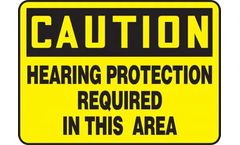
Hearing loss is one of many safety issues that permeate almost every workplace but is seldom discussed in the open. The Centers for Disease Control and Prevention (CDC)estimates that roughly 22 million Americans are exposed to hazardous noise levels at work. Additionally, the Hearing Loss Association of America estimates that of the 48 million Americans suffering from some degree of hearing loss, ...

An Easy Guide Our sense of hearing plays an essential role in how we communicate and experience the world, how we stay aware of our surroundings and thus, safe. That’s why, when hearing loss becomes an all-too-common reality, taking its irreversible toll on individuals, businesses, and society, organizations need to step in and take preventive ...

Hearing Loss In The Workplace In the U.S., OSHA has set regulations on worker noise exposure. The usual sound measurements method is to use a noise dosimeter attached to a worker that measures noise exposure as the person moves about the work area. However, this does nothing to identify the source and location of the noise. It also does not address non-OSHA noise issues such as community noise, ...
OSHA requires a noise dosimetry survey to determine if workers are exposed to noise that could damage their hearing. To satisfy OSHA’s requirement for Noise Surveys (29CFR1910.94 for General Industry, 29CFR1926.52 for Construction) involves attaching a noise dosimeter to a worker for a work shift when there is a possibility that person and persons performing similar tasks may be exposed to ...
In the U.S., OSHA has set regulations on worker noise exposure. The specific regulations are 29 CFR 1910.95 for industry and 29 CFR 1926.52 for construction. The usual measurement method is to use a portable noise dosimeter attached to a worker that measures noise exposure as the person moves about the work area. However, this does nothing to identify the source and location of the noise. It also ...
It has been clearly established that exposure to noise in the workplace over an extended period of time can lead to hearing loss. Noise exposure above 90 dB at a job can definitely lead to hearing loss. In fact, exposure at or above 85 dB is likely to lead to permanent hearing loss in some individuals. OSHA requires a noise dosimetry survey to determine if workers are exposed to noise that could ...
OSHA requires a noise dosimetry survey to determine if workers are exposed to noise that could damage their hearing. This is more than just using a sound level meter to take some noise readings. A noise dosimeter is actually worn by the worker for a shift. This enables a true evaluation of a worker’s noise exposure as he/she moves about the workplace. The noise dosimeter is worn for a full ...
The regulation that involves Hearing Conservation and Noise Reduction is the Occupational Safety and Health Administration (OSHA) under the Health Education and Welfare Department (HEW) of the Federal Government in the U.S. The specific regulations covering noise exposure to workers in American Industry are: General Industry 29CFR1910.95 Construction 29CFR1926.52 The specific noise regulation ...