
Bacillus Subtilis Articles & Analysis
55 articles found

PRO4000X, a tableted blend of proprietary strains of Bacillus subtilis and B. licheniformis, is fast approaching 1 million kg in sales. For many years, Aquaintech Inc, was the only company selling tableted Bacillus spores for use in aquaculture. Today we have been copied by dozens of companies, many selling products that do not perform as well as ...
Curcumin induces drug metabolizing enzymes like gluthathione-s-transferase and induction of enzymes results in efficient detoxification of cytotoxic or carcinogenic compounds (Shalini and Srinivas, 1987; Soni et al., 1992) Palumbo et al. reported that a number of Bacillus, Pseudomonas, Ralstonia and Burkholderia strains could completely inhibit A. flavus growth. B. ...

The oil and gas industry is known for its heavy reliance on synthetic materials, however a growing movement is changing how we approach this industry. Today, let’s talk about natural polymers for oil & gas industry applications. They are rapidly gaining traction. What is driving this change, and why should you pay attention? I’ve spent years in this field, and what I’ve ...
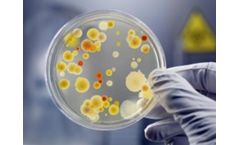
Aquaintech Inc., is focused on the Bacillus genus because they have the ideal properties needed for maximum impact and benefit. Bacillus subtilis colony on agar In a recent article, I pointed out how the practice of growing bacteria up on pond side is risky at best. ...
A tableted product (PRO4000X) containing equal proportions of specifically selected proprietary strains of Bacillus subtilis and B. licheniformis was added to hatchery tanks and the impacts on total Vibrio loads determined (Fig. 1, 2). Figure 1. Impact of Bacillus (PR04000X) on (yellow on TCBS) Vibrio loads in hatchery tanks. ...

Hey there, fellow cannabis growers! Need to know how to fix root rot? Look no further! Welcome to our guide on fixing root rot and ensuring the health and vitality of your precious cannabis plants. We all know how disheartening it can be to see your plants suffer, but fear not! In this article, we’ll dive deep into understanding root rot, identifying its signs, implementing prevention ...

It has been reported that protein crosslinks, including isopeptide bonds and disulfide bonds, are found in 30% of Bacillus subtilis spore shell proteins. The endogenous crosslinks are both reversible and irreversible. ...

The emergence of next-generation sequencing methods has accelerated their identification of various bacteria, such as Salmonella and Bacillus subtilis. Next-generation sequencing methods also offer an opportunity to study bacterial sRNAs at the community level. ...

According to the different positions of hydrolyzed starch: α-amylase, β-amylase, γ-amylase, isoamylase According to microbial sources: bacterial amylase, fungal amylase, fungal amylase According to the reaction temperature: medium temperature amylase and high temperature amylase, medium temperature amylase at 70 degrees, high temperature amylase at 90 to 105 degrees ...
Due to limited animal and plant resources, the industrial production of protease preparations is mainly prepared by fermentation of microorganisms such as Bacillus subtilis and Aspergillus terrestris. The role of trypsin is to hydrolyze intercellular proteolysis to dissociate the cells. ...
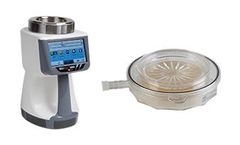
Recommended Microorganisms Microorganism Growth Promotion (Aerobic) Total Aerobic Microbial Count Total Yeasts and Molds Count Staphylococcus aureus ATCC 6538 *^ Soybean–Casein Digest Agar and Broth, 30 –35 , 3 days Pseudomonas aeruginosa ATCC 9027 ~ Soybean–Casein Digest Agar and Broth, 30 –35 , 3 days Bacillus ...
The strains of symbiotic bacteria preparations are derived from the human intestinal tract, which can promote the growth and reproduction of native bacteria, or directly play a role, such as Bacillus subtilis and Bacillus. Fungal preparations including Saccharomyces boulardii can also play a regulatory role through a specific mechanism of action. ...
Feeding a Farrowing Sow: What Should we Consider? From feeder costs to feed palatability, here are some of the hot topics to think about when you are choosing the right sow feeding system for your farrowing rooms. Farrowing Feeding Methods Farrowing sows play an essential role in pig production since sow and litter performance can influence the swine industry’s next outcomes. Considering ...

Five bacterial species (Pseudomonas aeruginosa, Bacillus subtilis, Lactobacillus delbrueckii, Staphylococcus aureus and Enterococcus hirae) and three fungal strains (Alternaria sp., Fusarium sp. and Aspergillus sp.) were isolated from dairy wastewater samples, identified and used for biodegradation process. ...
Methylene blue (MB) commonly found in the textile industry effluent has been chosen as a model dye to investigate bioremediation using Bacillus subtilis MTCC 441. Both free cells and calcium alginate immobilized cells have been used to remove MB from the effluent. ...
The mostly identified pathogens were Staphylococcus aureus (11.42%), Pseudomonas aeruginosa (9.28%), Enterococcus faecalis (10%) and Bacillus subtilis (8.57%) which were removed by treatment, but Escherichia coli (16.42%), Klebsiella pneumonia (8.57%), and Proteus mirabilis (11.42%) survived in the final sedimentation tank (lagoon) from where this water will be ...
Stronger disinfection techniques are required to inactivate Bacillus subtilis spores as surrogate microorganisms for Cryptosporidium parvum oocysts. In this study, the effects of UV and persulfate separately and also in combination were investigated on B. subtilis spore inactivation. Central composite design and response surface methodology ...
A novel pathogen score was calculated for each isolate. Bacillus cereus had the highest pathogen index: the pathogenicity of the other bacteria declined as follows: Aeromonas taiwanensis>Aeromonas hydrophila>Bacillus thuringiensis>Alcaligenes faecalis > Pseudomonas sp. >Bacillus pumilus>Brevibacillus sp. ...
The study probed into reducing faecal indicators and pathogenic bacteria, heavy metals and β-lactam antibiotics, from four types of secondary effluents by bioaugmentation process, which was conducted with Bacillus subtilis strain at 45 °C. As a result, faecal indicators and pathogenic bacteria were reduced due to the effect of thermal treatment process (45 ...

Some of the lipases and esterases are very broad in their substrate activity while others have preferences for specific fatty acids. For example, the Bacillus subtilis lipase attacks fatty acids with chain lengths of 8 carbons found in the 1, 3-positions of a triglyceride while the Staphylococcus aureus lipase has a very broad range of substrate degradation ...