
Refine by
Benchtop Xrf Analyzer Articles & Analysis
72 articles found

Latin America remains a focal point for critical minerals, with Chile's Atacama Desert holding roughly 60% of the world’s known lithium reserves. Bolivian Uyuni and Argentina’s Salar de Hombre Muerto contribute to the Lithium Triangle, a cross-border region that dominates global lithium supply. Global lithium demand more than tripled from 2020 to 2025 and is projected to triple again ...
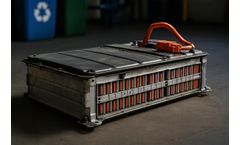
The global electric vehicle fleet reached 40 million units in 2024. Each vehicle carries a battery pack weighing 400-900 pounds, containing lithium, cobalt, nickel, and manganese. Most packs were manufactured between 2018 and 2024 and have an expected lifespan of 8-15 years. Projections indicate a wave of end-of-life EV batteries entering recycling facilities starting in 2026, peaking around ...
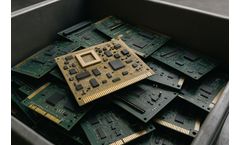
A real-world example demonstrates the value of precise metals grading in e-waste. An aggregate facility processed 40 tons of circuit boards and sold them to a bulk buyer for $32,000 at $800 per ton. By testing incoming material, the operations team estimated composition by device category—20% telecom infrastructure gear and 30% enterprise servers—and projected substantially higher values if the ...
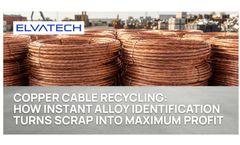
A scrap yard in Houston processes 40 tons of mixed cables every week. For years, they sorted by weight and appearance: thick cables went in one pile, thin in another, shiny copper here, dull brass there. The operation made money, but the owner knew he was leaving cash on the table. Then one day, a customer brought in what looked like standard copper wire. Visual inspection said copper. The scale ...
Chemical spot test: 2-3 minutes, ~80% accuracy; messy and consumable-heavy. XRF analyzer: 5 seconds, 99%+ accuracy; higher equipment cost but fast, non-destructive testing. ...

When a $2.3 million aerospace component fails catastrophic testing, investigators often trace the problem back to a single moment: the loading dock where the wrong alloy entered the facility. A batch of 316L stainless steel arrives with paperwork certifying its composition. It looks identical to 304 stainless. The receiving team checks the documentation, signs off, and sends it to production. Six ...
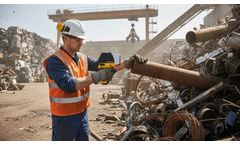
Owners and managers of scrap recycling companies know that profit is not made at the baler or the scale, but at the sorting stage. A single mistake in identifying metal grades during scrap intake can wipe out the entire margin on a batch of material. Misclassify high-grade alloy scrap as something cheaper (or vice versa), and you either overpay your suppliers or undercharge your buyers – in ...
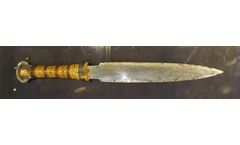
For most of human history, the materials behind great artifacts were a matter of educated guesswork. Was that dagger really made from a fallen star? How did a Roman glass cup change color from green to red? What alloys did ancient mints and silversmiths actually use? X-ray fluorescence (XRF) has quietly become one of the main tools for answering these questions. It lets scientists determine what ...
Owners and managers of scrap-recycling companies know very well: profit is born not at the shear or the weighbridge, but at the sorting stage. Mix up stainless grades, let a nickel alloy slip into “heavy melt,” or miss lead in aluminum – and all your margin goes negative together with a claim from the steel mill. At the same time, visual inspection, a magnet, spark testing and ...
In the production of galvanized rolled steel products, it is critically important to strictly control the composition of metallic coatings. Modern protective coatings on steel – from traditional zinc to complex zinc-aluminum-magnesium alloys – contain alloying elements (additions) such as aluminum (Al), magnesium (Mg) and silicon (Si). These additions have a strong influence on the ...
In modern electronics manufacturing, precise control of solder alloy composition is critical for assembly quality and reliability. Electronic manufacturing services (EMS) and surface-mount technology (SMT) lines consume kilograms of tin-based solders every day—both lead-free alloys (e.g., Sn-Ag-Cu or Sn-Bi) and classic tin-lead (Sn-Pb) for specialized tasks. Even small deviations in ...
PMI (Positive Material Identification) is an instrumental verification of the actual chemical composition of piping and equipment components before installation and during service. In oil & gas and chemical industries, PMI is implemented within a Material Verification Program (MVP): the current 4th edition of API RP 578 (February 2023) explicitly describes the program’s purpose, scope, ...
Ilmenite and Its Significance: Where It’s Used and Why Composition Matters Ilmenite is a mineral—the primary source of titanium—occurring as iron–titanium oxide (FeTiO3). It is a raw material for producing titanium dioxide (TiO2), a widely used white pigment, and for metallic titanium. About 95% of all mined titanium feedstock is processed into TiO2 pigment used in paints ...
Cast aluminum-silicon alloys are widely used in automotive, mechanical, and instrument manufacturing. They allow complex parts to be produced with precise geometry and low weight. But the properties of silumin depend heavily on its chemical composition. Even small deviations from the standard can affect fluidity, strength, crack resistance, and corrosion behavior. That’s why it’s ...
Why composition control matters Tool steel is the foundation of cutting and measuring instruments, machine parts subject to heavy wear, and dies for cold and hot forming. Even the slightest deviations in its composition can affect hardness, wear resistance, or hardenability. The result: equipment downtime, costly remelting of batches, or reduced service life of finished products. For ...

Imagine the first human settlements: people building homes, making pottery, storing water and grain. The material that made all this possible was clay. It is highly plastic, easily molded into any shape, and after firing becomes as hard as stone. Not by chance, clay tablets became the very first “pages” of human history. Even today, clay remains the foundation of entire industries: ...
At first glance, bronze may seem simple - a metal with a warm hue, slightly darker than copper. But if you work with metal professionally - in manufacturing, restoration, scrap purchasing, foundry operations, or archaeology - you know: not all bronze is created equal. That’s why fast, accurate, and non-destructive XRF analysis (X-ray fluorescence analysis) becomes an indispensable tool. We ...

Wood has been part of human life for millennia - from a childhood understanding of it as the “trunk of a tree” to recognizing it as an anisotropic, fibrous material widely used in construction, paper production, furniture manufacturing, chemical industries, arts, and even as fuel. Chemically, wood is a complex structure containing a range of organic compounds and various chemical ...
Introduction To obtain reliable and reproducible results by X-ray fluorescence (XRF) analysis, it is crucial that the sample be as compositionally uniform as possible and optimally prepared in terms of structure and surface. This is especially important when working with powdered materials—ranging from ore and coal to pharmaceutical and ceramic mixtures. In this article, we will show how ...
Introduction Effective quality control of solder joints is critical in the electronics industry. Precise monitoring of lead (Pb) and tin (Sn) content is essential, as incorrect Sn/Pb ratios can lead to soldering defects, reduced equipment reliability, and non-compliance with international safety regulations, such as the RoHS directive, which restricts hazardous ...