
Refine by
Benthic Articles & Analysis
181 articles found

Introduction Dredging is a fundamental activity to ensure port navigability, sediment management, and the hydraulic safety of rivers, canals, and artificial basins. However, it also involves significant environmental impacts that require careful management and appropriate technologies. This article analyzes the main environmental issues related to dredging and illustrates the sustainable ...
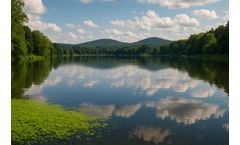
Pelagic zone: Open water where phytoplankton dominate primary production and where harmful algal blooms concentrate during stratification. Benthic zone: Sediments where phosphorus accumulates and releases; the condition of this zone largely determines how long a lake continues producing blooms after external nutrient inputs are reduced. ...
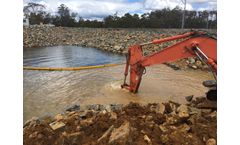
In-water works such as dredging, piling and trenching stir up sediment that can: Smother benthic habitats Reduce water clarity, affecting photosynthesis in seagrass and other plants Transport attached contaminants further afield A properly designed and installed silt curtain creates a controlled zone where turbidity is contained and allowed to settle, significantly reducing ...

Pre- and post-application samples were analyzed for sediment contaminant concentration, carbon content, benthic community, and bioavailable portion of the contaminants using passive samplers and laboratory bioaccumulation assays. ...
Laboratory experiments shown significant reduction in the uptake and toxicity of hydrophobic organic chemicals to benthic organisms. Early pilot studies that transferred the laboratory successes of activated carbon in reducing the bioavailability of hydrophobic chemicals in sediment to the field were conducted at Hunter's Point and Grasse River. ...
The other possibility was that benthic (or bottom-water) DO may have been high, and water column mixing could bring up this water. ...
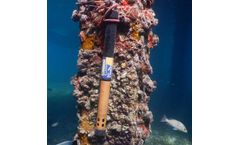
In both fresh and marine environments, benthic organisms are quick to colonize on instrumentation and deployment hardware used to collect environmental data. ...
The health of our planet’s water bodies is critical for sustaining diverse ecosystems and, by extension, life itself. In recent years, the restoration of water quality in lakes and other freshwater systems has become increasingly urgent due to the escalating problem of eutrophication. This article will explore the transformative impact of LG Sonic’s ultrasonic technology in restoring ...

Excessive sedimentation can suffocate benthic organisms, smother aquatic habitats, and clog waterways, affecting natural flow patterns. ...
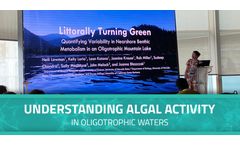
In her talk “Littorally turning green: Quantifying variability in nearshore benthic metabolism in an oligotrophic mountain lake,” Dr. Lowman offered initial estimates and findings on her still ongoing study. ...

Heili’s current research is focused on how mountain watersheds and nearshore processes in Lake Tahoe (NV/CA) may contribute to nitrogen and increased benthic algal blooms. Heili is deploying miniDOT loggers in Lake Tahoe where she will use the data collected to model rates of primary production like algal growth in the nearshore at various times throughout the year. ...

She currently incorporates and plans to incorporate more miniDOT® loggers into her research to study and track changes in oxygen levels per minute within benthic chambers.“MiniDOT® loggers give me a better understanding of what’s really happening in the water and have already increased my sampling frequency of dissolved oxygen from once every two hours to once every minute, which ...

Monitoring water quality in real-time allows you to avoid problems in your water body; Real-time data offers valuable insights about the chemistry of your lake and algae trends; A data-driven approach improves decision-making for reducing nutrients. “Real-time data is actionable data,” said Chief Water Specialist EJ Neafsey in a recent webinar. When it comes to water quality ...

Technical Air Quality Noise & Vibration Terrestrial & Marine Ecology Benthic Sampling & Analysis Hydrodynamic Modelling Geospatial Solutions Permitting and Planning Environmental & SocialImpact Assessments (ESIA) Permit Application Packages (PAP) Assurance and Performance Environmental Auditing Sustainability Reporting ...
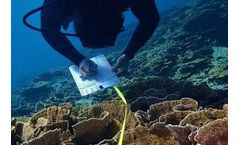
Both members of Reef Doctor’s science team and fully trained interns and volunteers (who are required to pass a series of rigorous tests before participation to ensure high quality data is collected) take part in SCUBA-based transect surveys, collecting data on reef fish and invertebrate indicator species (selected for monitoring on the basis of their ecological and economic significance) ...

Drought Intensification Alters the Composition, Body Size, and Trophic Structure of Invertebrate Assemblages in a Stream Mecrocosm Experiment As a result of climate change, many regions are expected to experience more intense and prolonged droughts over the next 100 years. The effect of this drought intensification on the health of running waters is thus a source of great interest. While the ...

Baseline studies will generally include numerous environmental data streams such as water, biodiversity, air, soil as well as benthic determinations. Baseline monitoring data collected can be voluminous and needs to be stored and managed in robust systems which allows data to be accessible, shared, interrogated, compared and analyzed over the project life. ...
The purpose of the program was to speed the biological degradation of all accumulated organic matter within the pond’s ecosystem: along the shore (littoral zone), on the surface of the open water (limnetic zone), and the bottom sediment (benthic zone). ...

In natural conditions, the food of tilapia is mainly composed of phytoplankton, zooplankton, benthic organisms and organic debris. In the breeding conditions, tilapia can feed on various forms of artificial feed, such as powder and pellet. ...

WQO are derived from tests with (almost exclusively) pelagic species without consideration for the partitioning of pollutants to the sediments and the threat to benthic biota. WQO\'s for individual chemicals do not take into consideration either additive and/or synergistic effects of toxicants. ...