
Refine by
Benzene Detection Articles & Analysis
22 articles found

Within this article, we compare methods of benzene detection, focusing on Titan 2 and Gas Chromatography (GC). When detecting benzene, Titan 2 has advantages over all other technologies. ...

ION Science Unveils the NEW Titan 2 benzene monitor, but what is the difference between the new instrument and its predecessor? In this comparative article, we delve into the differences between Titan 1 and Titan 2 and explore the upgraded features, including the increased sensitivity, implemented to comply with the upcoming benzene exposure limit changes. ...
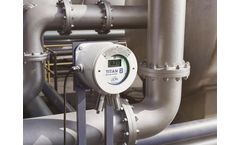
ION Science has launched a new, dramatically upgraded version of Titan, maintaining its position as the only fixed benzene-specific monitor in the world; Titan 2. In accordance with recent legislation changes, Titan 2 offers enhanced stability and sensitivity, supporting ION’s continued mission of protecting lives and preserving the environment. ION Science’s Group ...

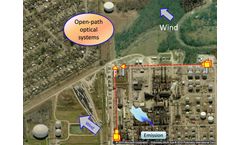
For regulatory compliant refinery fence-line benzene monitoring, technology choices do not end with Method 325 A/B. As a component within a multi-technology approach to 40 CFR 63.658 compliance or as a stand alone system, the Cerex UV Sentry meets USEPA criteria for OP UVDOAS as an alternative method for regulato- ry compliant refinery fence-line benzene moni- ...
In recent amendments to the National Emission Standards for Hazardous Air Pollutants from Petroleum Refineries, the U.S Environmental Protection Agency (EPA) is for the first time requiring fenceline measurements for benzene as a surrogate for facility fugitive emissions using time-integrated passive samplers with potential use of time-resolved measurements as alternate or ...

Monitoring Benzene exposure: Choosing the right solution for safety and health As a common carcinogen found in many industrial applications, there is a need to protect against benzene exposure for workers, the public and the environment. It is essential to choose detection instrumentation that is designed specifically to monitor ...

Asphalt production and benzene exposure: Protecting staff with a safety-first approach and PID technology. ...
Applications for PIDs include:- fixed systems for the area or fenceline monitoring of fugitive emissions portable instruments for confined space entry checks or leak detection & repair personal instruments, to alert a worker to a concentration above the regulatory OEL Fixed systems be benzene specific i.e. require no calibration correction factor ...

Executive Summary EPA’s Refinery Sector Rule, issued in 2015, includes monitoring air concentrations of benzene along the perimeter/fenceline of U.S. refineries. EPA Method 325 A & B requires refineries to continuously monitor benzene using passive sampling tubes over 14-day intervals. ...

Fenceline monitoring is used at our facilities to aid in the early detection of emissions, including benzene. The data helps us immediately correct problems and nearly all refining facilities quickly return to below action levels after initial problematic reads. ...
Hydrocarbons, hydrogen sulphide, benzene and mercury vapour are a few of the gases that exist within offshore applications. ...
These include kidney damage, immunological effects, central nervous system damage, increased leukaemia and other cancer rates. Using benzene, as an example, this can be powerfully illustrated. Benzene evaporates easily and can be detected by the human nose at approximately 3 ppm. The table below indicates that physical symptoms of ...
Fixed, portable or personal monitoring for benzene detection? Applications for PIDs include:- fixed systems for area or fenceline monitoring of fugitive emissions portable instruments for con ned space entry checks or leak detection & repair personal instruments, to alert a worker to a concentration above the regulatory ...
Rather than having to rely on human senses in a workplace setting it is advisable to use an appropriate form of quantitative monitoring; indeed the onus is on the employer to do the risk assessment. Remembering the old adage attributed to Lord Kelvin that you can’t manage what you don’t measure, there are methods published by the Health and Safety Executive in the UK and NIOSH in ...
Why you need to take Benzene seriously Benzene remains an important industrial chemical, but is well known as extremely hazardous and recognised as a ca rcinogen. Legislation across the globe has been put in place to ensure exposure of Benzene at plants where it is produced is minimised. Modern PID instruments offer the means to monitor Benzene concentrations down to 10 ppb or better. Benzene ...
In the national standards for the control of indoor environmental pollution in civil buildings, there are several kinds of toxic and harmful gases that must be detected. They are: benzene, formaldehyde, radon, ammonia, TVOC, benzene, radon, which is already a carcinogenic gas. Benzene, radon hazards to the human body and ...

Compounds emitted varied as the biosolid cakes were stored for a period of 50 days. VOCs detected in the biosolids are likely to occur from catchment sources as well as abiotic and biotic generation in the wastewater processing and the biosolids as they are stored. ...
Detecting benzene and total aromatic compounds (TACs) Typically, benzene has been monitored using hand-held photoionisation detection (PID) instruments fitted with a benzene pre-filter. In 2011 Ion Science introduced the Tiger Select, a revolutionary hand-held detector with two-mode operation for the rapid ...

CHALLENGES The site was formerly a general store with two 1,000 gallon USTs; the primary constituents of concern were Benzene, Toluene, Ethylbenzene, and Xylenes (BTEX). The shallow highly fractured phyllite schist bedrock is approximately 10 feet (ft) below ground surface (bgs). ...

Abstract Eight commercially available beverage samples were selected for low-level detection of benzene by static headspace analysis. This study will use the Teledyne Tekmar HT3 Automated Headspace Vial Sampler to analyze parts per trillion (ppt) levels of benzene in beverages. A GC/MS system will be employed in full scan/SIM mode for separation ...