
Refine by
Bin Level Articles & Analysis
33 articles found
Grain Level Measurements: A Technological Question Bin-level indicators have been around for decades. From simple switches and rotaries to advanced non-contact sensors, there’s no shortage of technologies to choose from. But there’s more to bin levels than just the sensor. The good news is there's a ...
Today's cloud-based programs are compatible with a wide range of sensors and measurement technologies. Their versatility lends them to be used with bins, tanks, or silos of different shapes and sizes, storing all types of grain, ingredients, or ...
As bulk material management continues its digital transformation, industries are turning to sensors and weighing systems to eliminate manual measurements and streamline production. However, when accuracy is insufficient, operators face major obstacles: financial disparities, underutilized storage capacity, frequent downtime, and weak ...
Workforce shortages in the U.S. have sparked great energy toward technology. The urgency to implement automated work processes continues to ...
Agriculture is a challenging profession. Its dangers and risks occur throughout the world and are not isolated to a single country or region. Starting in 1969, Brazil began keeping detailed statistics on agro-industrial accidents. It was disclosed that nearly 18% of all industrial workers (including ag professionals) suffered accidents. Preventive measures helped reduce that to 3.84% in 1984. ...
Feed mills and farms may experience tension when it comes to feed management. While they share a common goal of producing and delivering quality products, inventory management and delivery schedules sometimes falter due to ...
It's time to put an end to climbing bins. Knowing the volume and value of what is stored in grain bins is surprisingly simple and inexpensive. Installing a solution that measures grain bin levels automatically and lets you access to inventory from your phone or computer can improve inventory accuracy, save time, and keep ...
For more than a decade, BinMaster's 3DLevelScanner has provided highly accurate level and volume measurements for bins, tanks, and silos storing challenging ...
BinMaster fulfills a critical role as companies commit to Industry 4.0 investments and the establishment of smart factories. BinMaster provides sensors and inventory management software to measure and monitor bulk liquids and solids stored in tanks, bins, and ...
Although helpful, it’s likely you don’t have time to digest full-line brochures and long-winded product articles to determine which bin level sensors your operations need. BinMaster is here to arm you with high-level knowledge about your options and what to consider before calling someone—or us—to discuss your needs. ...
Multiple-Point Measurement Improves Accuracy 3D technology provides a volume accuracy of approximately 0.5% to 3% when placed in an appropriate location and utilized in a bin measuring less than 45 ft. in diameter. For bins measuring more than 45 ft. in diameter, the volume accuracy decreases, but will still be more precise in contrast to single-point devices. ...
Cyber-physical technology—like BinMaster inventory sensors and IoT software—drives Pharma 4.0 philosophies to protect processing and monitoring systems from cyber-attacks ...
Monitor Inventory on a Phone, Tablet, or PC Many feed mills, grain storage facilities, and pet food plants are big in size and small on staff. Making bin inventory management available anywhere, anytime enables people to be more efficient in their jobs. A simple login a website app or Software as a Service (SaaS) program puts real-time data in front of people who need it to make timely ...
After a volatile year for supply chains and bulk pricing fluctuations across industries—from milling to plastics to aggregate—the state of industrial markets in 2026 remains uncertain. With the total cost of inventory distortion projected at $1.7 trillion in 2024 [IHL], it is clear that plant operators and worksite supervisors need better visibility into their bulk inventory levels ...
Automated inventory management systems are the way of the future. But to maximize efficiency and minimize maintenance, it’s highly recommended to leave installation to experienced ...
Silos full. Conveyors humming. Trucks on time. What could go wrong? Inventory measurements could—and often do—cause trouble. A cost controller says, “there is no way your material measurements are right. You said we had 120,000 cubic feet of material at the end of May. Based on sales and deliveries, you should have been closer to 7,700 cubic feet." Dropping a tape to measure ...
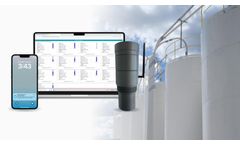
Are you climbing tanks to gauge level? Gain real-time visibility into your process 24/7. Remote tank level monitoring lets you check the level in multiple tanks, bins, silos or reservoirs, across multiple sites, all from your computer or smartphone. ...

Backgorund Australia is the fifth largest producer and the second largest exporter of coal in the world. Apart from export, coal is used domestically for electricity generation, manufacture of steel and cement and other power generation purposes. Mining contributes heavily to the Australian economy and accounts for 6-7% of Australia’s GDP, exceeding both agriculture and tourism industries ...
Not long ago, bulk material management involved dirty clipboards, dangerous climbing, and long tape measures to determine grain, plastic, and cement levels in a bin or silo. Enter digital transformation, which replaced antiquated processes with high-tech instruments like BinMaster level sensors and cloud software.Digital transformation improves ...
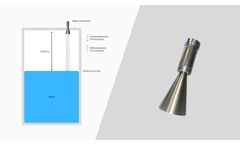
A radar level sensor is a device that utilizes radar technology to measure the level of a substance, such as a liquid or solid, in a container, tank, bin or vessel. It is a continuous level measurement device that provides real-time, non-contact level measurement. ...