
Refine by
Biocatalyst Articles & Analysis
54 articles found

Challenge High Lauric and Stearic Fatty Acids Solution Qwik-Zyme L, VitaStim Surfactants ...
System Activated Sludge Flow Rate 120,000 gallons per day Background The municipality upgraded their wastewater plant three years ago with finebubble aeration. Immediately they began noticing a foot of foam on the basins and persistently higher effluent ammonia numbers. They traced the foaming issue down to a tannery in town. The tannery has an existing wastewater process of their own ...

Unraveling the enzymatic acid base catalysis mechanism is essential for improving catalytic efficiency, designing customized biocatalysts, and addressing challenging synthetic objectives. Molecular Mechanisms: General vs. ...
Modern Classification Challenges Contemporary enzyme research increasingly recognizes the limitations of EC classification for engineered biocatalysts, moonlighting enzymes with context-dependent functions, and intrinsically disordered enzymes that challenge structure-function paradigms. ...
Enzyme Engineering: Expanding Biocatalyst Capabilities One of the most exciting areas is the application of enzymes in protein engineering. ...
From larvae to full-blown swarm, here’s how these pests thrive—and how to stop them in their tracks. What are Midge Flies? The term midge flies or midges, refers to several species of tiny non biting flies. These mosquito like insects are often seen swarming around wastewater treatment plants and sewage lagoons because it is an ideal environment for their larvae, often called ...

BiocatalystsIn organic synthesis, thermally stable enzymes act as biocatalysts, catalyzing chemical reactions under non-conventional solvent and temperature conditions.The thermal stability of proteins is an important research field, as it is crucial for understanding biotechnology, drug design, and basic biological processes. ...
Future Directions and InnovationsAdvancements in genetic engineering and protein engineering are poised to enhance enzyme performance further, creating biocatalysts with novel functionalities and increased stability under industrial conditions. ...
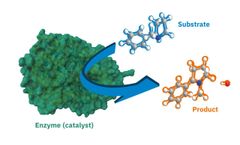
Industrial Enzyme Production The production of enzymes on an industrial scale is a testament to the versatility and efficiency of these biocatalysts. Creative Enzymes specializes in industrial enzyme production, offering customized solutions to meet the unique needs of various industries. ...
As the world grapples with the challenges of sustainability, resource scarcity, and environmental protection, the importance of industrial enzymes will only continue to grow. These versatile biocatalysts offer a promising pathway towards a more efficient, eco-friendly, and cost-effective future, empowering industries to meet the demands of the modern world while safeguarding our ...
Among this diverse enzymatic arsenal, Driselase stands out as a remarkable and multifaceted biocatalyst, finding applications across various industries. Driselase is a complex mixture of hydrolytic enzymes, primarily comprising cellulases, hemicellulases, and pectinases. ...

From predicting enzyme structures and unraveling catalytic mechanisms to engineering improved biocatalysts and accelerating drug discovery, the possibilities are truly endless. ...

The method involved the use of a highly effective biocatalyst, Candida Antarctic lipase B (CALB), which is commonly applied in organic syntheses such as esterification and transesterification. ...
Foaming is a common problem in wastewater treatment and can occur in multiple processes (i.e., clarifier, aeration basin, aerobic digester) within a plant. Not only can foaming create hazardous working conditions for operators, but it also hinders the performance of treatment plants. Though foaming can be caused by an assortment of issues, we will cover the two most common foaming ...
Today, the dynamic field of Enzyme Engineering and Modification is driving these biocatalysts towards unprecedented capabilities, triggering a wave of transformative applications across diverse sectors. ...
Summary Ana-Zyme G is a product designed for anaerobic systems to break down fats and long chain fatty acids into short chain fatty acids. This study was designed to evaluate the impacts of Ana-Zyme G on biogas generation in a mesophilic dairy digester with the feed supplemented with 2% heavy whipping cream. Testing was run as a BMP style test at 35°C (95°F) run in the ...
Overview A 3.7 acre pond, that takes over 2 million gallons of effluent from a reclamation facility every day, was experiencing excessive algae growth. ...
Compared with other microbial treatments, the enzyme treatment method has the advantages of high catalytic efficiency, mild reaction conditions, low requirements for wastewater quality and equipment conditions, fast reaction speed, wide adaptability to temperature, concentration and toxic substances, and reusability. 1.2 Enzyme technology and environmental protection Enzymes are catalytic ...
As a biocatalyst, enzyme has been widely used in various production fields of light industry. ...
In recent years, the application field of DNA-SIP technology has also been continuously expanded, and it has important application prospects in the physiological and ecological processes of intestinal microorganisms and health medicine, the discovery of important functional genes of microorganisms, the high-throughput screening of biologically active substances, and the synthesis of active ...