
Refine by
Biochar Soil Amendment Articles & Analysis
69 articles found
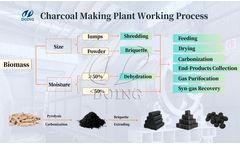
These could be in the catering and barbecue industry, industrial smelting, or agricultural soil amendment. Different application scenarios impose varying requirements on the charcoal's fixed carbon content, calorific value, and shape. ...

Charcoal itself has multifaceted applications: as a domestic or industrial fuel, as a soil amendment for nutrient retention, and as a precursor for activated carbon. ...
Biochar, a carbon-rich byproduct of biomass pyrolysis, is gaining recognition for its multiple benefits, including soil enhancement, carbon sequestration, and renewable energy production. ...
Biochar and Its Expanding Applications Biochar is primarily known for its application as a soil amendment. When added to soil, biochar enhances fertility, improves water retention, and increases crop yield. This ability to improve soil health has made biochar a ...
A study published in Nature demonstrated that biochar-amended soil not only increases soil carbon storage but also further sorbs atmospheric CO₂, with calcium and magnesium in biochar reacting with CO₂ to form stable inorganic carbonate minerals. ...
This process, known as pyrolysis, breaks down complex organic compounds into simpler substances, producing a range of valuable byproducts, including biochar, syngas, and oil. The continuous nature of the reactor allows for a steady input of waste material and the continuous output of these byproducts, which enhances both efficiency and scalability. ...
A pyrolysis plant can tailor this process to produce biochar (for soil amendment), bio-oil (for heating) or syngas. This not only diverts organic waste from landfills but also creates carbon-neutral energy solutions. ...
As the palm oil industry continues to expand across Southeast Asia, Africa, and Latin America, sustainability has become a central concern. Every year, millions of tons of palm kernel shells (PKS) are generated as byproducts of oil extraction. Traditionally, these shells were treated as waste or low-value fuel. However, with the advancement of pyrolysis technology, palm kernel shells are now ...
Land Rehabilitation Potential Restoring degraded land requires interventions that rebuild soil organic matter and restore ecosystem functions. The biochar machine contributes by producing a soil amendment that resists decomposition and builds resilience against erosion. ...
As the world searches for sustainable solutions to address climate change and soil degradation, biochar has emerged as a powerful tool. Produced through the carbonization of agricultural waste such as rice husks, wood chips, and crop residues, biochar offers both environmental and economic advantages. The growing availability of modern biochar production machines makes this solution increasingly ...
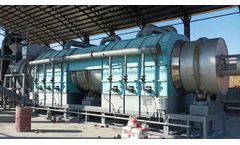
At the forefront of this evolution is the biomass pyrolysis plant for sale, an industrial solution engineered to convert agricultural residues, forestry waste, and other organic materials into biochar—a stable, porous solid additive. Functionality of Biochar in Soil Amendment Biochar operates as a ...
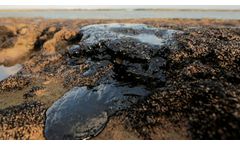
Furthermore, the solid carbon residue—often referred to as biochar—can be used as a soil amendment. Biochar has been shown to enhance soil aeration, retain moisture, and improve nutrient retention, which is particularly beneficial in soils affected by oil contamination. Its porous ...
When biochar is added to the soil, it acts as a long - term carbon sink. The carbon in biochar is in a stable form, and it can remain in the soil for hundreds to thousands of years. ...

Once produced, it can remain in the soil for hundreds to thousands of years. When biomass is pyrolyzed into biochar, a significant portion of the carbon present in the original biomass is locked into the biochar structure. ...
This process transforms the rice hulls into biochar, a stable form of carbon that can be used in a variety of applications, including as a soil amendment. ...
Carbon trading is an innovative approach to addressing climate change, enabling organizations and nations to offset their carbon emissions by investing in carbon reduction or sequestration projects. Among these, biochar pyrolysis production has emerged as a powerful tool in reducing greenhouse gas emissions while promoting sustainable agricultural practices. Biochar is a carbon-rich material ...
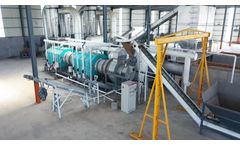
Biochar production has become an essential part of the sustainable waste management and renewable energy sectors. With its capacity to sequester carbon and improve soil health, biochar holds significant value in environmental and agricultural applications. However, the investment required to acquire biochar production equipment can vary greatly, depending on several critical factors that ...
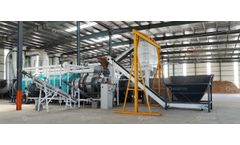
The process transforms the husks into biochar, which can be used for a variety of applications such as soil amendment, water filtration, and even as a carbon-neutral fuel source. ...
Biochar’s properties make it an ideal soil amendment, helping farmers improve soil health while also promoting sustainability in agriculture. ...

This process not only sequesters carbon but also produces a valuable soil amendment. While biochar’s applications in agriculture are well-documented, its role in reducing methane emissions, particularly in ruminants, has garnered significant attention. ...