
Refine by
Biocide Articles & Analysis
224 articles found
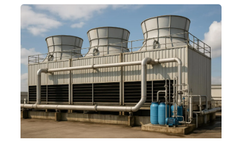
Chemical treatment programs Conventional approaches use corrosion inhibitors to protect metal piping, oxidizing biocides to control microbial growth, and pH control to maintain chemistry. ...
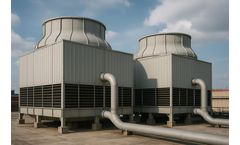
This enables a targeted approach to problem areas.Water Treatment ProgramOxidizing biocides for rapid disinfectionNon-oxidizing biocides for long-lasting controlAnti-scalants to prevent mineral buildupMonitoring and TestingMeasuring biocide levelsMonitoring pH and conductivityTesting for Legionella presenceCleaning and MaintenanceClean basins and ...
Why anti-fouling paint is not the answer Biocidal paints leach toxic metals into the water and can violate water quality regulations. ...

Project Overview Client : Veolia Water Services Date : September 1, 2016 Info : Water Treatment Plant Upgrade Description of Works Salt Reduction Building – Internal Area SRU RO units installations Connections into RO Blend Stream Potable Water Supply connections Air lines supply connections FRP channel grate covers installation ...

Challenge A newly upgraded 500,000 gallon per day wastewater system has a large industry that produces biocides. Biocides are made to disinfect and kill bacteria, viruses, and germs making them toxic to wastewater ...

Eliminate water first (the primary enabler of microbial growth—”diesel bug”). Use water separators, polishing systems, or tank ...
Water is widely regarded as the #1 enemy of diesel systems. Even small amounts—especially free water—trigger a destructive chain reaction that affects tanks, fuel lines, pumps, injectors, and the engine ...
Fuel polishing and fuel maintenance are related concepts in the context of stored fuels (especially diesel), but they differ in scope, frequency, and approach. These terms are most commonly used for backup generators, marine vessels, emergency power systems, or any application where fuel sits in tanks for long periods and can ...

Abstract Many water and process systems are experiencing increasing operational strain due to rising organic loads, biofilm development, and higher chemical demand. These challenges often manifest as instability in treatment performance rather than immediate regulatory exceedances. This article summarizes findings from full-scale municipal testing of Jenfltch JC9450 and translates those findings ...

These surface-associated microbial communities form a complex extracellular polymeric substance (EPS) matrix that can retain up to 95% water, protect embedded microorganisms from oxidizing biocides, and serve as a breeding substrate for invertebrate pests such as filter flies (Psychodidae). ...

ERG (Air Pollution Control) Ltd has successfully designed, supplied and commissioned a solvent abatement system for Seagate Technologies. Seagate manufactures hard drives at their facility in Derry, Northern Ireland, and required a new scrubber package as part of their £35M factory expansion in ...
The facility transitioned to a mineral-oxychloride biocide (JC 9465) dosed three times per week at 45 gal per application. ...
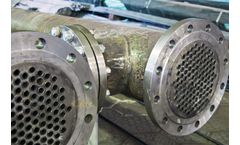
A method to prevent biofouling settlement in sea or brackish water intake and cooling water systems is necessary to help retain their efficiency and integrity. The most common method is continuous dosing with sodium hypochlorite, which is both expensive and environmentally undesirable. A pulsed chlorine dosing technique, Ecodosing™, has proved to be effective yet cheaper and less ...

These surface-associated microbial communities form a complex extracellular polymeric substance (EPS) matrix that can retain up to 95% water, protect embedded microorganisms from oxidizing biocides, and serve as a breeding substrate for invertebrate pests such as filter flies (Psychodidae). ...

Biofouling that develops despite regular biocide application. Silica deposits that accumulate faster than expected. ...

Cooling towers play a crucial role in the operation of modern HVAC and industrial systems, serving as essential components for maintaining optimal environmental conditions. It is, however, worth noting that such structures also hide immense health risks in case they are not exposed to proper and routine maintenance. As we approach 2025, several new environmental conditions, changing climate ...

In California’s sun-soaked vineyards, where the wine and table grape industries are cornerstones of the state’s agricultural economy, powdery mildew remains a relentless adversary. Caused by the fungal pathogen Erysiphe necator, powdery mildew is one of the most pervasive and damaging diseases in viticulture, affecting both the yield and the market quality of grapes. Once ...

The treatment consisted of azole based corrosion inhibitors in the presence of low molecular anionic polymers (PAA, PAA/copolymers), phosphate containing products and biocides. The use of Sorbster® adsorbent media to treat the blowdown stream would be an “easy to implement add-on” to the current treatment program. ...
Microbes are ubiquitous, but once they’ve entrenched themselves in your fuel system, half-measures may prove ineffective in eliminating them. Without addressing the root cause by removing free water and significantly reducing the active colony, microbial resurgence is likely. While achieving complete sterilization of a fuel system may be elusive, it’s possible to manage and mitigate ...
As winter approaches, many wastewater operators have already begun increasing their solids retention time to prevent the loss of nitrification in the winter. Overall, this makes a lot of sense, as nitrifiers have a slow growth rate and metabolism. However, there is a major shortfall to holding more solids going into the winter. Higher MLSS or MLVSS does not mean more active bacteria in all ...