
Refine by
Bioenergy Articles & Analysis
253 articles found

Furthermore, the pyrolysis process used to produce biochar can generate bioenergy (bio-oil and syngas) as a byproduct, further enhancing its sustainability by offsetting energy consumption during production. ...

Facilitating Hands-On Experience with RemScan for Bioremediation Studies in Science Technology Engineering and Mathematics (STEM) Education at RMIT. ...
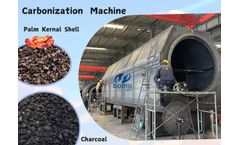
Palm oil is a widely used vegetable oil worldwide, particularly in food processing, cosmetics, and bioenergy. After palm fruit is processed to extract its oil, the empty fruit bunches often become a neglected waste stream. ...

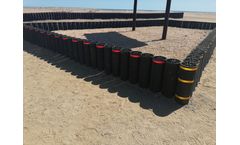
Product supplied: Ocean Non Woven Geotextile, 3 mm Quantity supplied: 29,000 m² Client: Reliance Bioenergy (project details withheld) Executive summary Ocean Non Wovens supplied 29,000 square metres of 3 mm non-woven geotextile for a Reliance Bio-Energy project that formed a critical part of the facility’s containment, filtration and drainage systems. ...
The closed-loop integration of biochar into bioenergy facilities maximizes resource utilization, demonstrating the interconnected potential of biochar pyrolysis equipment within broader energy infrastructure. ...
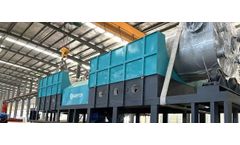
Conclusion Investing in a sawdust charcoal making machine offers a strategic entry into the bioenergy and resource recovery sector. With proper planning, reliable feedstock, and efficient system integration, the venture promises stable returns while contributing to environmental sustainability. ...

The use of renewable resources, especially green bioenergy, will be an important direction for future research and development applications. ...

The first few months of 2025 have been among the most economically turbulent in recent history, but despite this there are still signs anaerobic digestion (AD) will continue to play a key role in boosting energy security, tackling climate change, and managing organic wastes. The global biogas market was estimated to be worth USD 65.53 billion in 2024 and is projected to expand 4.2% per year ...
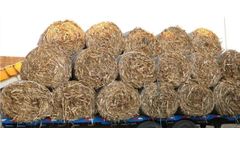
The IPCC’s Global Warming of 1.5°C report explicitly lists "Bioenergy with Carbon Capture and Storage (BECCS)" as a core technological pathway to achieving carbon neutrality. ...
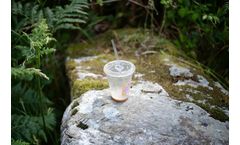
When selecting disposable tableware for an event, you may think you are making a more sustainable choice by selecting those labelled “bioplastic” or “compostable”. But are these materials really biodegradable? A new study by Falzarano et al., investigates the biodegradability of two single-use items, specifically a cup and a plate. These items were certified as ...

Energy Intensity: The pyrolysis process itself requires a certain amount of energy input. While the co - production of bioenergy can offset some of this, ensuring a net energy gain on a large scale can be challenging. ...

The ability of xylanase to efficiently degrade xylan has made it indispensable in industries such as food, feed, paper and pulp, textiles, and bioenergy. Key Industrial Applications of Xylanase 1. Food and Beverage Industry Xylanase plays a fundamental role in improving the quality of bakery products. ...
This advancement is crucial for the broader adoption of bio-oil as a renewable energy source. Integrated Bioenergy Systems Combining biomass pyrolysis with other bioenergy technologies, such as anaerobic digestion and gasification, creates integrated bioenergy systems that maximize resource utilization and energy recovery. ...
Biomass Production: Halo-organisms such as Dunaliella salina can be utilised for biomass production, which can be employed in bioenergy production or as animal feed. Just looking into the human kidney it can be considered, to some extent, as a biological desalination plant, as it plays a crucial role in regulating electrolyte balance and removing excess salts from the body. ...

In view of the excessive use of fossil energy which damage to the air and vegetation, a renewable bioenergy draws more and more attention. Biomass energy is energy generated by living or once-living organisms. ...
While rice husk has traditionally been considered waste, its improper disposal can lead to environmental pollution and health hazards due to its high silica content and slow decomposition rate.Importance of Sustainable Recycling Sustainable recycling of rice husk is essential for several reasons:Environmental Protection: Proper recycling prevents the accumulation of rice husk waste in landfills, ...

Applications: Wood Handling Process: Integral in transforming raw wood logs into premium wood chips. Bioenergy Production: Contributing to sustainable energy solutions with high-quality wood chips for modern heating plants. ...
Forestry Industry Similarly, the forestry industry can benefit from biomass pyrolysis by converting forestry residues and woody biomass into bioenergy and biochar. By utilizing biomass pyrolysis plants to process logging residues and forest thinnings, the forestry sector can reduce waste, lower greenhouse gas emissions, and create value-added products from previously ...

An Early CPC Success Story In 1999, Community Power Corporation (CPC) joined with the U.S. National Renewable Laboratory (NREL) and Shell Renewables, Ltd. to design and develop a new generation of small modular biopower systems (the BioMax® Systems) that would power 80 homes in the Philippines. The project included setting up a renewable energy services company (RESCO) that sold the ...
In 2005, Community Power Corporation (CPC) completed a Phase II Small Business Innovative Research (SBIR) grant for the U.S. Army that proved the BioMax® system could convert dry packaging materials from mobile kitchens to utility grade electricity using a standard Army, diesel fueled, 60 kWe Tactical Quiet Generator (TQG). Under Subsequent SBIR projects with the Army, CPC has continued to ...