
Refine by
Biofuel Analysis Articles & Analysis
32 articles found
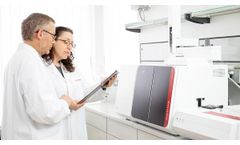
Lastly, people other than trained personnel should be able to operate the devices. Developed for the analysis of biofuels and their precursors, the multi EA 5100 elemental analyzer can measure all relevant elements – nitrogen, sulfur, and chlorine. ...

The internal load quality variation in a fuel type load often causes problems in sampling and continuous quality control. Fuel that was thought to be of uniform quality can, in fact, be a mixture of this and that and this is not easy to discover by quick visual assessment. You can see this for yourself by taking a look at recycled wood or waste components before and after processing. Raw ...

Within the fuel sector, the manufacturing of biofuel blends using biomass resources lessens the impact of carbon dioxide (CO2) on the environment, while also allowing fuel manufacturers to receive tax credits and demonstrate compliance with regulatory initiatives. To quantify the biogenic content of transport fuels, carbon-14 analysis is a critical step. Full ...

Biofuels must be up to scratch as contaminated or improperly blended fuel can damage a company’s bottom line. ...
A problem that is sometimes encountered with biodiesel blends is inaccurate blend ratios. This article describes a quick analytical method to assess blend ratios and ensure fuel performance According 10 a study' done by the National Renewable Energy Laboratory, the chief problem found with biodiesel blends was inaccurate blend ratios. Retail customers and fleet managers do not typically worry ...

” Projects funded through BRDI must address one of the foll owing topic areas: Feedstocks development: Research, development, and demonstration (RD&D) focused on feedstocks and feedstock logistics as it relates to the production of raw materials for conversion to biofuels and biobased products; Biofuels and biobased products development: RD&D ...
This is a resource for customers and prospects to investigate options for testing their critical fluids such as lubricating oil, hydraulic fluids, fuel, biofuels, grease and coolants. We have also included a section that describes the various techniques for doing this testing. ...
On October 4, 2016, Canada’s Ecofiscal Commission (EFC) published a report, Course Correction: It’s Time to Rethink Canadian Biofuel Policies, arguing for the termination of biofuel subsidies. The report claims that Canadian biofuel policies have reduced greenhouse gas (GHG) emissions an average of three million tonnes annually, accounting for less than 0.5 percent of Canada’s ...
EPA is inviting public comment on its analysis of greenhouse gas (GHG) emissions from the production and transport of cottonseed oil feedstock used in the production of biofuels. The Federal Register notice also provides an overview as to how EPA may apply its analysis in future determinations, as to whether biofuels from ...
On April 24, 2015, EPA released a Federal Register notice inviting comment on analysis of the greenhouse gas (GHG) emissions produced during the production and transport of Brassica carinata (carinata) oil feedstock for use in the production of biofuels. The plant is not used for food in the U.S., and has high concentrations of erucic acid, making it attractive ...
In its QER, DOE points out that while U.S. biofuel production has increased significantly over the past decade -- due largely to the federal Renewable Fuel Standard (RFS) --"[c]ontinued growth in ethanol use will depend in part on investment in additional distribution capacity; growth in the use of other biofuels, such as 'drop-in' fuels, will depend on continued ...
USDA's National Institute of Food and Agriculture's Biomass Research and Development Initiative (BRDI) is accepting research and education grant applications for projects to integrate science and engineering research in: (1) feedstock development; (2) biofuels and biobased products development; or (3) biofuels development analysis. ...

The promotion of biofuels as energy for transportation in the industrialised countries is mainly driven by the perspective of oil depletion, concerns about energy security and global warming. Nevertheless, the production of biofuels entails emissions to the environment coming from the different stages in the product life cycle. ...
This is a result of a preliminary analysis of the Greenhouse Gas (GHG) emissions resulting from the growth and transport of biomass sorghum feedstocks that are used to make biofuels. The analysis, which was conducted in response to a petition from the National Sorghum Producers, assumes that the emissions from production of ...

We are a global leader AMETEK, Inc. is a leading diversified manufacturer of electronic instruments and electromechanical devices. We have over 11,000 colleagues at more than 80 plants across the United States and in 14 countries around the world. Supporting those operations are more than 80 domestic and international direct sales and service locations in over 30 countries worldwide. AMETEK ...
The fuel produced from double filtration method was tested and the result indicated average load consumption is about 47%.Keywords: value stream mapping, VSM, biodiesel production, energy saving, Pareto analysis, biofuels, lean production, double filtration, cost ...

By providing a globally consistent measure of patterns of forest loss and gain, the new analysis helps highlight countries and regions that deserve more attention, for example: Malaysia has witnessed annual forest loss of 1.6 percent between 2000-2012, compared with Indonesia’s 1.0 percent. ...
Because of high investment costs and low yield per hectare, Jatropha is not a sound economic choice.Keywords: energy balance, life cycle assessment, LCA, Jatropha Curcas Linnaeus, JCL, biodiesel production, biofuels, Tunisia, energy analysis, oleaginous plants, investment costs, low yield, energy ...

Camco conducted a study supported by WWF-Tanzania Programme Office aimed at analysing the impact of the biofuels industry, globally and with particular emphasis in Tanzania. ...

The main obstacle in biodiesel production from waste fats and oils is their high free fatty acid content. Its precise measurement helps Professor Karel Kolomaznik’s Faculty of Applied Informatics team at Tomas Bata University in Zlín (Czech Republic) to develop suitable new technology. Biodiesel from waste The Tomas Bata University research group has developed a special catalytic ...