
Bioindicator Articles & Analysis
46 articles found

Aster and Osmanthus – These bioindication plants change appearance when specific pollutants are around. ...
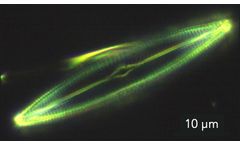
The gold standard methods to assess water quality using diatoms as a bioindicator are time-consuming, expensive, and complex, in contrast Raman spectroscopy is rapid, easy-to-use, and cost effective. ...

This article discusses the environmental concerns about heavy metal accumulation in dominant forest mosses and dwarf shrubs. Samples of two different species of mosses, such as glittering wood moss (Hylocomium splendens) and feathermoss (Pleurozium schreberi), and two species of dwarf shrubs, that is European blueberry (Vaccinium myrtillus) and lingonberry (Vaccinium vitis-idaea), were collected ...
ByBiovala

In the present study, a euryhaline oyster, Crassostrea hongkongensis, was collected from different sites of the Pearl River estuary; and various physiological (heart rate, alkaline phosphatase as homeostatic regulation, and glycogen as energy reserve) and cytological (lysosomal membrane stability) biomarkers were quantified to assess this species as a potential bioindicator of ...

Bulking and foaming phenomena in activated sludge wastewater treatment plants are in most cases related to the abundance of filamentous microorganisms. Quantifying these microorganisms should be a preliminary stage in their control. In this paper, the simplicity of quantifying them based on the intersection method is demonstrated, by redescribing the theory and applying a new improved ...
Protozoa density and abundance of filamentous bacteria have been shown as promising bioindicators of biomass production reduction. ...

BM Respirometry and microscopic Bioindication stand as an effective combination to analyze this situation accurately and figure out some conclusions that could afford to take the corrective actions that can reduce the harmful effects coming from this situation. ...
Our hypothesis is that freshwater snails can serve as bioindicators of pesticide exposure based on their capacity to passively accumulate tissue residues. ...
Biofilms can make good bioindicators and biomarkers, offering a convenient tool to monitor metal contamination in streams that results from mine tailing sites. ...
Our results indicate that substrate SDI and MBC can both be regarded as bioindicators of the pollutant removal ability in CWs. ...
The approach used here, (identifying bioindicators, and community zones with corresponding inflow ranges) is generic and will be useful for developing targets for managing inflow in estuaries world‐wide. ...

During the investigation, cow manure was used as a bioindicator. The results of this study demonstrated that the germination level was the highest using 1875 kg/ha of Activated Peat Moss and 14 days of incubation. ...
Knowing the response of the stygofauna species to present levels of groundwater salinity makes it possible to understand and measure the effects of saltwater intrusion on stygofauna, rendering them potential bioindicators of this environmental pressure. Biotic and abiotic sampling was conducted in six shallow wells located in the fresh–saltwater interface of the Arade estuary ...
The present study provides some evidence for the accumulation mode of PFAAs in leaves, which is valuable for the understanding of their environmental behavior and the development of alternative bioindicator. This article is protected by copyright. All rights reserved ...
Bird eggs are widely used as noninvasive bioindicators for environmental mercury availability. However, previous studies have found varying relationships between laying sequence and egg mercury concentrations. ...
We used Orius insidiosus, a small anthrocorid bug that is sensitive to dietary neonicotinoids, as a bioindicator of the exudates' toxicity. Nectar from directly sprayed clover blooms contained 5493–6588 ng/g imidacloprid or 2882–2992 ng/g clothianidin and was acutely toxic to Orius. ...
These basins can be spontaneously colonized by wild plants, which can be used as bioindicators of edaphic characteristics. As the basins are anthropogenic environments, the description of plant biodiversity allows the determination of which species colonize such environments and identification of the relationships between plants, basin type and operation. ...
A new approach by combining bioindicators (BiI) and biotic indices (BIs) for evaluating water quality is presented in this paper. ...
In the present study, polychlorinated biphenyls (PCBs), polybrominated diphenyl ethers (PBDEs), and 2 alternative brominated flame retardants (BFRs)—decabromodiphenyl ethane (DBDPE) and 1,2‐bis(2,4,6‐tribromophenoxy) ethane (BTBPE)—were investigated in the biosphere reserve and a reference site by using the kingfisher (Alcedo atthis) as a bioindicator. Residue concentrations in ...

This study was undertaken to assess the potential ability of four distinct bioindication methods to monitor zinc pollution levels. The study area was the region around the town of Olkusz, one of the oldest centres of the metallurgic industry in Europe. The four bioindication methods used for the assessment of zinc levels were the moss–bag method and the ...