
Refine by
Biological Phosphorus Articles & Analysis
114 articles found
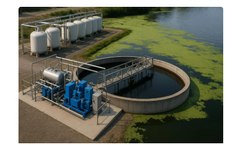
Conventional systems require energy for sufficient aeration to support the nitrifying bacteria; fluctuating loads demand stable performance with lower energy intensity when possible.Phosphorus Removal can be achieved by chemical precipitation or biological phosphorus removal. Chemical precipitation uses aluminum sulfate or ferric chloride to form insoluble ...

Specifically, these blogs aim to deepen knowledge on why carbon, nitrogen, and phosphorus are essential nutrients, and why the 100:5:1 C:N:P ratio exists. In the last blog we discussed nitrogen, how bacteria use it, how it’s removed from the system, and why it is vital for biological treatment. Today, we’re discussing phosphorus, the ...

Technical Principle DNA-SIP technology mainly targets microbial communities and reveals microbial actors involved in the metabolic process of labeled substrates in complex environments. With the exception of phosphorus, almost all biologically significant elements have 2 or more stable isotopes. Generally, compounds composed of heavy isotopes or light isotopes ...

And parathyroid hormone for hypothyroidism, a condition where the body produces abnormally low levels of the hormone, which regulates and maintains a balance of calcium and phosphorus. Biologics are among the top-selling therapeutics on the market, making up eight of the top 10 selling drugs. All biologics are injected using either ...

The team selected black phosphorus nanomaterials as the research object, and fine cell biology and molecular biology studies found that nanomaterials can accurately target a specific biomolecule in cells to obtain specific biological effects. ...
ByMatexcel

Established in 2010, SWAN’s five-layered model of a Smart Water Network (see figure below) is based on the following: The physical layer consisting of pipes, pumps, valves etc. The sensing and control layer consisting of sensors and actuators. The collection and communication layer consisting of data exchange and transmission. The data management and display layer consisting of ...

When the supernatant from the sludge dewatering process is not returned back into the influent, the Total Phosphorus is biologically reduced to 2 to 3 ...
In order to meet the more stringent phosphorous limit, aluminum sulphate is injected into the SBR to chemically precipitate phosphorus that is not removed biologically. The final secondary effluent is polished in a deep bed filter, followed by UV disinfection before being discharged to the Ouse River. ...

Staff investigated using a biostimulant in the digesters to improve biological phosphorus uptake and remove excess through the centrifuged biosolids. ...
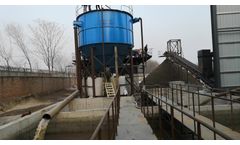
When using regular mud discharge, the interval between two sludge discharges can generally be 8 hours.(6) Moisture content of sludge after concentration: When the moisture content of sludge from the secondary sedimentation tank into the sludge concentration tank is 99.2%~99.6%, the moisture content of the sludge after concentration can reach 97%~98%.(7) When the grid concentrator is used, the ...

Valrico is an extended aeration AWTP in which both nitrification and denitrification processes occur continuously in the same aeration basin. Optimizing both BNR (Biological Nutrient Removal) processes in the same basin can only be achieved by tightly controlling aeration to maintain the appropriate balance of oxygen rich and oxygen deficient environments. ...
Scanning Success: A multiparameter analyzer helps a Kentucky treatment plant step up to the plate and meet a new phosphorus limit in its permit In 2001, the Lexington Fayette Urban County Government West Hickman Creek Wastewater Treatment Plant in Nicholasville, Ky., was starting Phase II of its third upgrade since 1972, when the state imposed a phosphorus ...
In addition, a public that favors green technology perceives biological processes as friendlier to the environment. BNR technology was in its infancy when Alberta Environment established new stringent effluent limits and forced treatment plants to meet a phosphorus discharge of 1.0 mg/l. ...
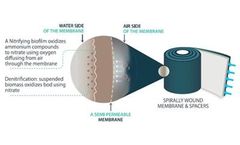
The ability to achieve up to 90 percent biological reduction of phosphorus levels without adding chemicals and to achieve levels down to 0.3 mg/L with only moderate chemical use. ...

Secondary Treatment: Degradation of any biological constituents by way of aerobic biological processes such as a fixed film activated sludge process. These treatments use bacteria, enzymes and protozoa that consume the biological material in the solution. Tertiary Treatment in some cases, there is still matter that should not be released into ...

Firstly, the chopped straw can fully replenish the soil nutrient, increase soil organic matter and improve the soil structure. Straw is a kind of biological resources and it contains nitrogen, phosphorus, potassium, calcium, protein and other mineral nutrients and organic matter. ...
Location of the plant Teklrdag / TURKEY Scope of work Design of Industrial Wastewater Treatment Plant Contract Date 2012 Completion Date 2013 Flowrate of the plant: 200.000 m V day Inlet Pollution Parameters: COD: 1.500 mg/ L ss: 500 mg/ L PH: 6-9 Oil & Grease: 250 mg/ L TP: 5 mg/L TKN: 60 mg/ L Outlet Discharge Values: COD: 300 mg/ L SS: 100 mg/ L PH: 6-9 Oil & Grease: 10 mg/ L ...
Location of the plant Tekirdag/ TURKEY Scope of work Design of Industrial Wastewater Treatment Plant Contract Date 2012 Completion Date 2013 Flowrate of the plant: 200.000 m V day Inlet Pollution Parameters: COD: 1.500 mg/ L ss: 500 mg/ L PH: 6-9 Oil & Grease: 250 mg/ L TP: 5 mg/L TKN: 60 mg/ L Outlet Discharge Values: COD: 300 mg/ L SS: 100 mg/ L PH: 6-9 Oil & Grease: 10 mg/ L ...
Location of the plant Tekirdag/TURKEY Scope of work Design of Industrial Wastewater Treatment Plant Contract Date 2012 Completion Date 2013 Flowrate of the plant: 60.00CI m3/ day Inlet Pollution Parameters: COD: 1.500 mg/ L SS: 500 mg/ L PH: 6-9 Oil & Grease: 250 mg/ L TP: 5mg/L TKN: 60 mg/ L Outlet Discharge Values: COD: 300 mg/ L SS: 100 mg/ L PH: 6-9 Oil & Grease: 10 mg/ L TP: ...
: 15 mg/ L Units of the Plants: Physical Treatment Mechanical Coarse Screen Mechanical Fine Screen Pre- Treatment Aerated Grit & Oil Trap Chemical Treatment Coagulation Basin Flocculation Basin Sedimentation Basin Biological Treatment Bio- Phosphorus Basin Anoxic- Aerobic Basin Sedimentation Basin Sludge Dewatering Sludge ...