
Refine by
Biomass Heating Articles & Analysis
164 articles found
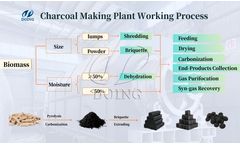
Within the biomass resource recycling industry, biochar and biocoal are two project areas that have garnered significant interest from investors. ...

Optimizing residence time is therefore essential for maximizing both yield and biochar performance. 5. Heating Rate The speed at which biomass is heated also affects biochar formation. A slow heating rate allows biomass components to decompose gradually, favoring the formation of solid char. ...
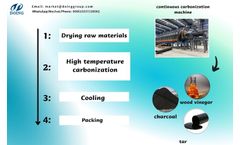
In the process of biomass resource recycling, biomass carbonization technology has garnered widespread attention for its ability to transform waste into high-value energy. ...
Each of these byproducts has distinct uses, making wood pyrolysis a versatile and economically viable solution for biomass utilization. The bio-oil produced can be used as a renewable energy source, either for heating or electricity generation. ...
Pyrolysis Chamber The pyrolysis chamber is the heart of any charcoal making machine. This is where raw biomass is transformed into charcoal through controlled heating in a low-oxygen environment.Why it’s important:Determines the quality of the charcoalControls temperature and airflow for consistent carbonizationProtects the machine from overheating or fire ...
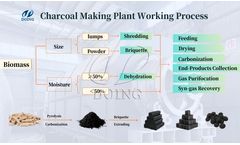
Charcoal production relies on a process called "Pyrolysis," which involves heating biomass to high temperatures, causing it to decompose in a near-oxygen-free environment. ...
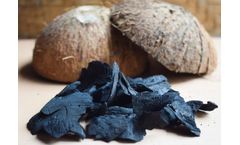
All of this begins with the production of charcoal. Biomass materials, such as coconut shells or fruit wood, are carbonized to produce charcoal. This process typically involves using a biomass carbonization furnace. The DOING carbonization furnace utilizes high-temperature heating to continuously and efficiently convert biomass ...
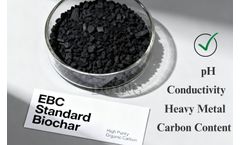
Biochar, essentially a carbon-rich material, is created by heating organic biomass in the absence of oxygen through a process known as pyrolysis. ...
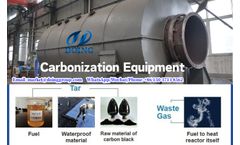
Biomass pyrolysis is a process that heats organic matter (such as wood, agricultural, and forestry waste) to high temperatures, causing it to decompose in an oxygen-free or low-oxygen environment. ...
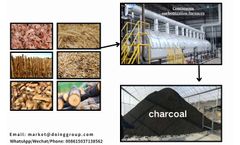
Here's how it works:Basic Principles of Wood Charcoal Preparation The core principle of wood charcoal preparation is high-temperature pyrolysis. In this process, wood or biomass is heated in an oxygen-deficient environment, gradually breaking down volatile compounds and leaving behind a carbon-rich solid residue known as charcoal. ...
Biochar is a stable, carbon-rich material created when organic biomass is heated in a low-oxygen environment. Unlike traditional burning, this process locks carbon into a solid form rather than releasing it into the atmosphere as CO₂. ...
Biochar is a solid product formed by heating biomass in the absence of oxygen through pyrolysis technology. ...
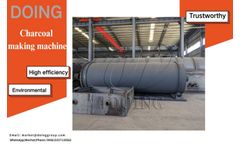
The crusher can crush raw materials such as wood and straw into uniform small pieces, while the dryer can effectively reduce the moisture content of the raw materials, thereby processing the biomass raw materials into a state suitable for carbonization. Generally, it is necessary to ensure that the raw material particle size is within 30 mm and the moisture content is below 15%, ...
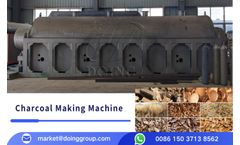
The core principle of charcoal kiln production is to heat wood or biomass at high temperature to remove moisture and volatiles from the raw materials, leaving carbon-rich charcoal. ...

In this blog post, we will explore how biomass pyrolysis plants operate, their environmental and economic benefits, and the impact they have on energy production, waste management, and sustainability. yrolysis is a thermochemical process that involves heating organic materials (biomass) in the absence of oxygen to break them down into useful ...

Green technology, leading the future DOING's carbonization equipment, with its unique design concept and excellent performance, provides the possibility for the efficient conversion of biomass energy. These equipments use advanced pyrolysis technology to pyrolyze various biomass raw materials, such as wood waste, agricultural straw, fruit shells, etc., in an ...
The production of biochar can be achieved through different methods, but the most common one is slow pyrolysis (in biochar production equipment). In slow pyrolysis, biomass is heated slowly in a closed container with limited oxygen supply. This allows for the efficient conversion of biomass into biochar, along with the production of valuable by - ...
Biochar pyrolysis is a thermochemical process that involves heating biomass - materials such as wood, agricultural waste, or dedicated energy crops - in an oxygen - limited environment. As the biomass is heated to temperatures typically ranging from 300°C to 800°C, a series of complex chemical reactions occur. ...
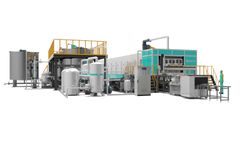
Moreover, when powered by energy-efficient drying systems or renewable energy sources, the carbon footprint of molded pulp production is further minimized. Manufacturers adopting solar, biomass, or heat recovery systems can enhance sustainability by lowering overall energy consumption. ...
Biochar is a carbon-rich material produced by heating biomass (e.g., agricultural waste, forestry residues, and organic matter) in a low-oxygen environment (biochar production equipment) through a process called pyrolysis. ...