
Refine by
Bioreactor Effluent Articles & Analysis
23 articles found
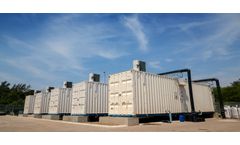
Our advanced technologies like MABR and membrane bioreactors (MBR) produce high-quality effluent that can be reused for cleaning, irrigation, toilet flushing, landscaping, and even drinking. ...

Last March, residents of Sector 28 Vashi, Navi Mumbai complained of a toxic smell from the local industrial area. The people said that the chemical manufacturers in the neighbouring Trans Thane Creek (TTC) industrial region are the source of the toxic smell. They complained that the toxic smell caused severe discomfort affecting their health and caused contamination of water (Free Press Journal- ...
The U.S. EPA, under the Clean Water Act, establishes Effluent Limitation Guidelines (ELG). On August 31, 2020 the EPA issued a finalized version to the Stream Electric Power Generating category (40 CFR Part 423). This finalized version added numerical limitations on several pollutants and waste streams. One waste stream of interest is flue gas desulfurization (FGD) wastewater. FGD waste streams ...

The plant consists of a rotary drum influent screen, flow equalization, USBF® bioreactors, microfiltration for effluent polishing and UV disinfection. ...

That has led to increasingly strict wastewater effluent limits for phosphorus and nitrogen. To remain in compliance while operating with constrained budgets, more operators are evaluating upgrades to BNR bioreactors. ...

This study focuses on the use of fluidized resin beads to mitigate fouling during ultrafiltration (UF) of the effluent of an anaerobic bioreactor. Two different module configurations were tested: A fluidized bed of resin beads was generated in a tubular UF membrane, and a hollow fiber (HF) UF membrane was submerged into a fluidized bed, respectively. ...
The aim of this study was to assess the efficacy and effluent quality of a pilot-scale intermittently aerated and fed, externally submerged membrane bioreactor (MBRes) treating municipal wastewater. The effluent quality of the MBRes was evaluated regarding system ability to comply with the Greek legislative limits for restricted and ...
A number of pilot-scale gravel and wood-chip hybrid bioreactors planted with select species, together with unplanted units, were evaluated for their nutrient removal capabilities from the typical greenhouse effluent with high levels of nitrate and salts. Two levels of nutrient solution (high and low loading: HL/LL) were prepared to simulate the typical ...
The nanofiltration (NF) membrane fouling characteristics and cleaning strategies were investigated and compared for treating membrane bioreactor (MBR) effluent and MBR-granular activated carbon (GAC) effluent of an antibiotic production wastewater by DK membrane. Results showed that the fouling of treating MBR effluent was ...
This study evaluated the hydroxyl radical scavenging characteristics of wastewater from five membrane bioreactor (MBR) and five activated sludge (AS) systems. The average values of the characteristics of both wastewater types was found to be significantly different at a 90% confidence interval in terms UV absorbance at 254 nm, alkalinity, and biopolymer concentration. ...
At the same time, implementation of the Baltic Sea Action Plan and the EU Water Framework Directive is expected to result in more stringent effluent quality demands. The current situation gives rise to new challenges for the municipal wastewater treatment plants (WWTPs). This paper describes how two of Sweden's largest municipal water organizations; Stockholm Vatten and Syvab, ...
Decline in the permeability in nanofiltration (NF)/reverse osmosis (RO) membranes that filtered effluents from a membrane bioreactor (MBR) treating municipal wastewater was investigated in this study. ...

The capability of six isolated bacterial strains to utilise cyanide in cassava mill wastewater as a nitrogen source in a batch bioreactor was examined and evaluated. The results revealed that all the isolates were capable of degrading cyanide with percent degradation between 60 and 94% in 96 h. ...
A pilot-scale dual-stage membrane bioreactor (dsMBR) incorporating two ultra-filtration (UF) side-stream membrane modules was designed, constructed, operated and evaluated on-site for treating high-strength textile effluent. The effluent stream was characterised by a COD range of between 45 to 2,820 mg/L and an average BOD of 192.5 mg/L. ...
Membrane Bioreactor (MBR) with sponge cube media and reverse osmosis (RO) were investigated in laboratory scale. ...

Swanage sewage treatment works utilises the latest membrane bioreactor technology to produce high quality effluent that exceeds EU standards and is cleaner than the sea into which it is discharged. ...
A conventional full-scale wastewater treatment system with primary and secondary treatment followed by rotating biological contactors (RBC) and sand filtration were compared in a side-by-side study with a pilot-scale membrane bioreactor (MBR). Effluent from the two pretreatment trains was sent to two identical RO pilot systems. The effluent water ...
Pilot-scale anaerobic and aerobic treatment in a two-step bioreactor was performed for the removal of pollutants from pulp and paper mill effluent. After seven days of anaerobic treatment, colour (45%), lignin (60%), COD (26%) and adsorbable organic halogen (AOX) (20%) were reduced. The anaerobically treated effluent was then treated in a ...
The purpose of the study was to recover butanol from the effluent of the hydrogen-producing bioreactor containing acetate, butyrate, and carbohydrate. ...
The pilot consisted in a septic tank followed by a fixed-film, partly aerated bioreactor with effluent recirculation operated under two different scenarios: normal operating conditions and increased influent flow. ...