
Biosolids Digestion Articles & Analysis
29 articles found

They do this by using anaerobic digestion to convert biosolids into biogas. The biogas is then used to generate electricity, which powers the plants and other facilities in the area. ...

The newly built plant serves state-owned facilities and customers in multiple cities, including the State Hospital at Whitfield. The process of dewatering digested biosolids releases H 2 S gas in the air, which causes a very distinct and unpleasant odor. ...
This building plays a vital role by in water treatment providing sewage receiving and pumping, sludge mixing and thickening, as well as dewatering digested biosolids. These processes release H2S, Ammonia, and other VOC's into the air, which cause unpleasant odors. ...

Feedstocks can include manure, sewage biosolids, and food wastes. Among anaerobic digestion’s advantages is its ability to treat high-load streams while producing valuable products, including energy. Anaerobic digestion can produce significantly more energy than required to operate the process. ...
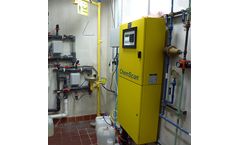
One of the major benefits of this process is to verify the reduction of very high ammonia generated in the anaerobically digested biosolids prior to mainstream aeration. Results This project required... ...
A new environmentally friendly digester is being added to the section of the plant which handles biosolids, the industry term for anything that goes into a drain or sewer that isn’t water. The anaerobic digester, which is expected to be completed by January 2021, will allow the WRRF to capture the methane gas released during the ...

In the U.S., utility companies unable to build solar and wind farms fast enough to meet new renewable energy mandates are purchasing energy from sources powered by biosolids. Proven technologies such as anaerobic digestion, thermal hydrolysis, co-digestion or thermal drying are enabling sludge to be converted into a valuable energy source, with ...
The biogas, a byproduct of digestion, rises to the top of the digester and is then collected. It can fuel engines to produce mechanical power, heat, or electricity that can fuel furnaces, boilers, and digesters, as well as power vehicles, and supply homes and business through the natural gas pipeline. ...
In the 1970s, sludge from municipal wastewater was simply disposed of, but by the early 1990s, the biosolids were being used beneficially, for instance, to create fertilizer. ...

Wastewater is packed full of resources — nutrients, micronutrients, metals, grit, biopolymers, biosolids, and more — and much of that can be recovered and sold, offering additional income for WWTPs. The concept of extracting resources from wastewater is not new, as utilizing biosolids and generating energy from digester gas has ...
The conventional sludge treatment techniques of aerobic and anaerobic digestion leave a considerable amount of organic sludge that requires hauling and appropriate disposal. ...

One of the major benefits of this process is to verify the reduction of very high ammonia generated in the anaerobically digested biosolids prior to mainstream aeration. The project required ASA to develop new calibration methods for ammonia and nitrate, allowing much improved upper detection limits, new types of sample filters that could survive without frequent ...
Biogas, digested sludge and sludge liquor are the main products of anaerobic sludge digestion. Each of the products is influenced significantly by specific conditions of the digestion process. Therefore, any upgrade of the digestion technology must be considered with regard to quality changes in all products. ...

However, because the Mobile area is one of the wettest areas of the country, the drying beds were very inefficient and not able to effectively handle the daily production of digester biosolid sludge. Additionally, the removal of the dried sludge from the beds was extremely labor intensive and time consuming. ...
Co-dewatering of water treatment residuals (WTR) and wastewater biosolids can potentially benefit municipalities by reducing processing equipment and costs. This study investigated dewaterability (using capillary suction time, CST) of combined alum residuals (Al-WTR) and anaerobically digested biosolids at various blending ratios (BR), defined ...
Simulation studies for a full-scale anaerobic unit of a wastewater treatment plant (WWTP) were performed using the anaerobic digestion model no. 1 (ADM1). The anaerobic full-scale plant consists of one mesophilic and one thermophilic digester, operated in an anaerobic sequential batch reactor (ASBR) mode, and sludge enrichment reactors (SER) for each ...
The use of biosolids in Australia is strictly regulated by state guidelines, some of which are under review following recent research outcomes. Communication and research between the water industry, regulators and researchers specific to the regulation of biosolids is further enhanced by the Australian and New Zealand Biosolids Partnership ...
The increased interest in biomass energy provides incentive for the development of efficient and high throughput digesters such as anaerobic membrane bioreactors (AnMBRs) to stabilize waste activated sludge (WAS). ...

The City and County of San Francisco completed a two-year pilot study of pre-treatment processes to mesophilic anaerobic digestion for improved biosolids stabilization and production of biosolids suitable for unrestricted reuse (class A biosolids). ...
ABSTRACTDuring 2001-2003 the city and county of San Francisco completed a two-year pilot study of pre-treatment processes to mesophilic anaerobic digestion for improved biosolids stabilization and production of biosolids suitable for unrestricted reuse (class A biosolids). ...