
Refine by
Bod5 Articles & Analysis
270 articles found

EPDM membranes help contribute to a plant meeting regulation for no contaminants in wastewater effluent in Morelos, ...
On average, the filter’s volumetric organic loading is approximately 127 lbs/1000 ft³ and removes 65% BOD5 on average. This performance is remarkable at such a high organic loading, given the highly variable influent with significant BOD spikes. ...

Synopsis: Systems that dilute wastewater before depositing it into the ocean will deposit concentrated wastewater when they fail – violating environmental regulations. Application: The MarineFAST® treats, rather than dilutes, wastewater, and operates without needing to release wastewater into the ...
Classification is based on compliance with restrictions based on: Physical parameters: total suspended solids (TSS), nephelometric turbidity unit (NTU) Chemical parameters: biochemical oxygen demand (BOD5). Microbiological parameters: E. coli, Legionella spp., intestinal nematodes, coliphages and clostridium spores. ...
ByIdrica
The leachate has the characteristics different from ordinary urban sewage: high concentration of BOD5 and COD, high metal content, large change of water quality and quantity, high content of ammonia nitrogen, poor biochemical property, etc. ...
Aerated biological filter The aerated biological filter is a new process integrating biological oxidation and throttling suspended solids, which can effectively remove suspended particulate matter, COD, BOD5, nitrifying substances, remove nitrogen and phosphorus, and remove harmful substances. ...

The pollutants in the sewage mainly exist in the form of solid and dissolved carbohydrates, which make the sewage show high BOD5, CODcr, SS and chromaticity. , P and other nutrients. Since the solid residues in the sewage are mainly organic substances, it is necessary to strengthen the pretreatment, carry out solid-liquid separation, and reduce the subsequent treatment ...
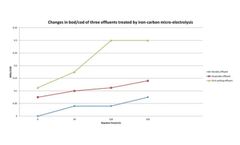
Biochemical oxygen demand (BOD), is the decomposition of organic matter in water into inorganic matter by aerobic microorganisms in water at a certain temperature. It is a comprehensive indicator of the content of oxygen-demanding pollutants such as organic matter in water. Biochemical oxygen demand is an important water pollution parameter. In wastewater, wastewater treatment plant effluent and ...
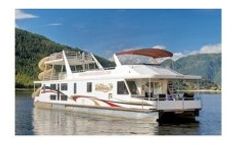
Over the years, the increase in houseboat activity on the lake has caused increased influent loading conditions (TSS, BOD5, and Total Phosphorus (TP)) at the local wastewater treatment plant. Boats unload their sewage into the collection system and this increased influent has put stress on the existing WWTP’s ability to process TSS, BOD5, and Phosphorus in ...
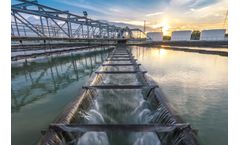
The measurement of the oxygen present in the measuring cells carried out after five days of incubation provides the BOD5 while after twenty days the BOD20; BOD5 - Five-day Biochemical Oxygen Demand BOD5 Refers to the five-day biochemical oxygen demand. ...
ByYASA ET

Aeration provides further stabilization of BOD5 or COD and nitrification of ammonia nitrogen. Settle cycle: Aeration and mixing are completely stopped during this stage to provide calm conditions that allow settling of the biosolids to the bottom of the tank, leaving a clarified supernatant layer above the solid–liquid interface. ...
ByCoftec

Did you know that microbial populations in wastewater are constantly changing? F/M or influent organic makeup and concentrations are a major influence as to what microbes are present. Other factors influencing microbial populations include temperature, pH, D.O., inhibitory compounds, and macronutrients. An underused tool in wastewater treatment is to check your system against the growth curve. A ...

The permitted effluent parameters are at 30 mg/L each for BOD5 and TSS, not very demanding and the plant delivers much better. BOD5 is typically less than 10 mg/L, TSS from 5 to 20 mg/L, ammonia less than 1 mg/L and Total Nitrogen in the 10 to 20 mg/L range. ...
Since the effluent is discharged to ground in the vicinity of an aquifer, Class A reclaimed water quality effluent was stipulated as follows: BOD5 and TSS of less than 10 mg/L, Total Nitrogen of less than 20 mg/L, average Turbidity of 2 NTU, and Median Fecal Coliform of 200 MPN/100 mL. ...
Project: Childcare Center Location: Simon Fraser University, Burnaby, BC Capacity: 5 m3/d (2,000 gpd) Contract: Design-Supply-Operate Key Features: Living Building Challenge Compliant, Odorless, Noiseless, Out-of-sight This USBF® wastewater treatment plant is installed to meet the stringent requirements of the “Living Building Challenge” (beyond LEED). The system treats ...
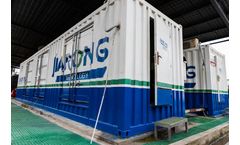
Capacity: 50tons/day Influent water quality: CODcr<=10000mg/L, BOD5<=2000mg/L, NH3-N<=5700mg/L, TN<=6000mg/L, Conductivity<=80000us/cm, SS<=50mg/L, Total hardness(as CaCO3)<=4000mg/L, pH 6-9, Temperature 20-40degree Celsius Effluent water quality/Discharge standard (GB16889-2008) BOD5<=30mg/L, CODcr<=100mg/L, NH3-N<=25mg/L, ...

The contact oxidation bed further reduces the concentration of organic pollutants in rural sewage, and the removal rate of CODcr and BOD5 in the effluent reaches more than 80%, which can reach the national second-level sewage discharge standard. ...
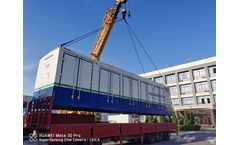
Jiarong case study- Hebei Landfill Leachate Treatment Project Capacity: 100tons/day Influent water quality: SS<=500mg/L, pH 6-9, CODcr<=10000mg/L, BOD5<=6000mg/L, NH3-N<=2200mg/L, TN<=2500mg/L, conductivity<=30000us/cm Effluent water quality/Discharge standard: BOD5<=30mg/L, CODcr<=100mg/L, NH3-N<=25mg/L, TN<=40mg/L, ...

Jiarong case study- Hunan Changsha Landfill leachate treatment ZLD project Capacity: 50tons/day Process: HPRO+Evaporation+Solidification Influent water quality: Conductivity<=50000us/cm, CODcr<=15000mg/L, Total Hardness<=3600mg/L, NH3-N<=5300mg/L, pH 6-9 Effluent water quality: CODcr<=100mg/L, NH3-N<=25mg/L, BOD5<=30mg/L, TN<=40mg/L, ...
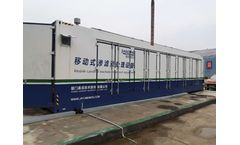
Jiarong case study-Dandong Landfill Leachate Treatment project Capacity: 200tons/day Influent water quality: COD<=5000mg/L, BOD<=1500mg/L, NH3-N<=1000mg/L, TN<=1600mg/L, SS<=500mg/L, conductivity<=12000us/cm, Total hardness(as CaCO3)<=1900mg/L, Total alkalinity(as CaCO3)<=5600mg/L, SiO2<=50mg/L, pH 6-9, Temperature 20-37L Effluent water quality: ...