
Boron Control Articles & Analysis
21 articles found
Boron in FGD Wastewaters Boron levels in flue gas desulfurization scrubber (FGD) wastewaters typically exist at ppm (mg/L) levels and often exceed 200 ppm. Boron is a nonmetallic element that occurs in industrial waters primarily in two forms: as nonionized boric acid and at pH greater than 11 as the borate ion. pH’s from 7.5 to 10.5 represent a mixture of both the acid and borate forms. ...
The customer asked us to evaluate the Electrocoagulation for the removal of Boron and to be able to drain the treated water into the sewer ...
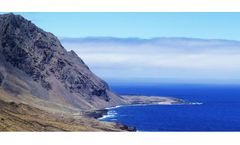
Although desalination is commonly believed to be too expensive for agriculture, Spain is disproving the notion. Spain has made a success of desalination, even for agricultural irrigation, despite long-standing challenges that in some cases have made it too expensive for the application. As far back as 2012, approximately 22% of desalinated water in Spain was already used for agriculture. ...
Most boron nitride prepared by chemical vapor deposition (CVD) is thin film, powder, etc., while bulk boron nitride is limited to highly anisotropic pyrolytic boron nitride, which cannot fully utilize the characteristics of structural diversity. ...

In this study, a different method was applied for boron removal by using vermiculite as the adsorbent. Vermiculite, which was used in the experiments, was not modified with adsorption agents before boron adsorption using a separate process. Hexadecyltrimethylammonium bromide (HDTMA) and Gallic acid (GA) were used as adsorption agents for vermiculite by maintaining the solid/liquid ratio at ...
The present study aimed to evaluate the efficiency of using cryptocrystalline magnesite to remove boron ions from aqueous systems. Batch experimental protocols were used to evaluate the adsorption capacity of magnesite for boron. Parameters optimized included: time, dosage, chemical species concentration and pH. Optimum conditions were observed to be 30 min of agitation, 1 g dosage of ...
Drinking water should contain certain chemicals only in limited quantities. Boron, one of these chemicals which is considered as a threatening compound and is difficult to eliminate from water. The purpose of the research is to study the major role of reverse osmosis (RO) and nanofiltration (NF) process which can contribute to the removal of this inorganic element from brackish water. For ...
Boron-resistant fungi were isolated from the wastewater of a boron mine in Turkey. Boron removal efficiencies of Penicillium crustosum and Rhodotorula mucilaginosa were detected in different media compositions. Minimal Salt Medium (MSM) and two different waste media containing molasses (WM-1) or whey + molasses (WM-2) were tested to make this process cost effective when scaled up. Both ...
In this study boron removal capacities of different microorganisms were tested. Candida tropicalis, Rhodotorula mucilaginosa, Micrococcus luteus, Bacillus thuringiensis, Bacillus cereus, Bacillus megaterium, Bacillus pumilus, Pseudomonas aeruginosa and Aspergillus versicolor were examined for their boron bioaccumulation capacities in simulated municipal wastewater. A. versicolor and B. cereus ...

This paper presents the three center design implemented in the South Israel (Ashkelon) seawater reverse osmosis (SWRO) desalination facility with guaranteed production capability of 100 Mm3/year. The facility design is based on the concept of a Three-Center Design: a pumping center, a membrane center and an energy recovery center. The BOOT 100 Million m3/year Ashkelon Desalination Plant is ...
An innovative plant that provides clean, potable water for over 1 million people in Israel. With an extremely narrow footprint, Hadera has one of the lowest-ever costs for high-quality desalinated water in BOT projects worldwide. Overview Capacity: 525,000 m3/day Technology: Reverse Osmosis (RO) Project Type: Build-Operate-Transfer (BOT) Location: Hadera, Israel Footprint: 1000m x 50-150m ...
When completed, Ashkelon was by far the world’s largest and most advanced desalination plant. With a huge capacity of up to 330,000 m3/day and with extremely high efficiency levels, the Ashkelon plant achieved one of the world’s lowest ever prices for desalinated water. In 2010, due to the unmatched success of the plant, it was expanded by nearly 20% to 392,000 m3/day, providing ...

In this study, the base water originating in Simav Open Pit Mine containing the most important reserves of colemanite and ulexite boron minerals, has a boron concentration of 150 ± 50 mg/L, was treated to maximum 2 mg/L with the help of pilot RO system which was designed with two–phase reverse osmosis system. This system was designed and produced by Italian GEL Company. Temperature, pH, pressure ...
This study aimed to enhance boron removal through powdered activated carbon adsorption (PAC) and application of a micro-filtration (MF) process as a pretreatment of a seawater reverse osmosis (SWRO) process. Batch and continuous experiments were conducted to investigate the effect of membrane filtration as well as PAC addition on boron removal in reconstituted seawater. In batch test, two kinds ...
The presence of arsenic and heavy metals in drinking water sources poses a serious health risk due to chronic toxicological effects. Constructed wetlands have the potential to remove arsenic and heavy metals, but little is known about pollutant removal efficiency and reliability of wetlands for this task. This lab-scale study investigated the use of vertical subsurface flow constructed wetlands ...
Reverse osmosis (RO) membrane is one of the most powerful tools for solving the global water crisis, and is used in a variety of water treatment scenes such as drinking water purification, waste-water treatment, boiler feed water production, ultra pure water production for semiconductor industry, etc. The desired performance of RO membrane varies according to quality of feed water being treated, ...
Reverse osmosis (RO) membrane is one of the most powerful tools for solving the global water crisis, and is used in a variety of water treatment scenes such as drinking water purification, waste-water treatment, boiler feed water production, ultra pure water production for semiconductor industry, etc. The desired performance of RO membrane varies according to quality of feed water being treated, ...
Boron in the desalinated water produced by the seawater reverse osmosis (SWRO) system is one of the most challenging issues for drinking or irrigation water uses. In recent years, many post-treatment methods and designs for boron elimination have emerged and attracted lots of attention, but only a few cases have demonstrated high performance and economic efficiency. The main aim of this work was ...

Abstract: Scaling and fouling of membranes is an on-going performance issue for most plants. There are continual improvements in membrane technology and plant design which increase efficiency, water quality and utilise different raw water supplies to produce clean pure water. This presentation outlines innovations in laboratory services and speciality chemicals designed to inhibit membrane ...
Sources of tritium generation in NDP are: nuclear fuel, boron in control rods, and deuterium in heat carrier. Tritium passes easily through the walls of a reactor vessel, intermediate heat exchangers, steam generators and other technological equipment, through the walls of heat carrier pipelines. ...