
Brownfield Site Redevelopment Articles & Analysis
13 articles found

Aestus performed our GeoTrax Survey to determine potential environmental liabilities at this abandoned gas station site. We discovered a previously unknown buried tank (see image above). The client removed the leaking tank and impacted soils before construction began on this redevelopment project. Our client was pleased that Aestus’ GeoTrax Survey identified this problem area before ...
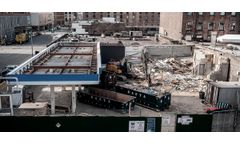
But on top of all of those factors, many of these brownfields are abandoned gas stations, which are unseemly and occupy much-needed real estate in American towns. The redevelopment of brownfield sites can bring additional economic value to towns, and allow for building without taking over previously unoccupied natural lands. But ...
Land recycling Land recycling, i.e. regeneration of previously developed land that is currently not in active use or available for redevelopment (so-called brownfield sites), is seen as a solution to limit land take. The reuse of brownfield land (e.g. former industrial areas, waterfront areas) has become important in developing ...

Service performed: Brownfield redevelopment Summary: EFI Global performed removal of several underground storage tanks (USTs), coordinated transport and disposal of approximately 1,000 cubic yards of soil from the tank pit on an abandoned wood manufacturing facility located in a downtown area. The property was originally developed in the 1860’s consisting of various parking lots, ...
For the purpose of this document, “excess soil” is soil that has been excavated, mainly during construction activities, that cannot or will not be reused at the site where the soil was excavated and must be moved off site. In some cases, excess soil may be temporarily stored at another location before the excess soil is brought back to be used for a ...

A corporate officer shares the valuable lessons his company has learned in addressing its brownfield redevelopment sites, providing case studies of four separate projects to demonstrate how a cooperative approach to remediation and redevelopment can pay dividends for the process and the company. ...

A case study is presented and redevelopment problems relating to derelict buildings in Lithuanian rural areas are analysed by the proposed techniques.Keywords: sustainable development, brownfield sites, building redevelopment, planning components, technical components, indicators, multicriteria analysis, sustainability, disused ...

In excess of 260,000 m3 of impacted soil is present on-site containing heavy metals, petroleum hydrocarbons, and polycyclic aromatic hydrocarbons.CityPlace was sold by CLC to Concord Adex Development Corp. (Concord Adex), who are redeveloping this Brownfield site into a $1 billion condominium construction project. ...
The costs associated with the redevelopment of brownfields include costs associated with demolition, site preparation, and construction. ...

Environmental Protection Agency’s (EPA) 2002 VI guidance document1 references a total of 374,000 contaminated sites, the National Research Council reports that the number may be as high as 439,000,2 and an often cited total in brownfields redevelopment literature is 500,000 sites. The fraction of these contaminated ...
The value of revitalising contaminated or brownfield sites has gained widespread acceptance. The efforts at remediation and eventual redevelopment of these sites involve several stakeholders, because the exercise directly impacts a number of different interests. The key issues to be resolved for the successful rejuvenation of ...
Environmental Protection Agency (EPA) to publish guidance to assist applicants in preparing proposals for grants to address brownfield sites. This law defines a brownfield site as “real property, the expansion, redevelopment, or reuse of which may be complicated by the presence or potential presence of a ...

Such exclusions eliminate many of those areas which are precisely in need of coverage today, for example potential Superfund sites in brownfields redevelopment projects. The definitions of 'cleanup costs' and the requirement of a 'claim' in the insuring agreement meant that voluntary cleanup costs were not covered, a serious impediment in ...