
Bulking Sludge Articles & Analysis
37 articles found

Quantitative PCR (qPCR) is also sometimes called real-time PCR. This is PCR, which is a technique used to amplify a specific DNA sequence. However, it differs from conventional PCR by also being able to simultaneously quantify the DNA sequence amplified. This is often helpful in microbiology to measure DNA (or cDNA from RNA) from specific organisms in real time during each cycle of ...
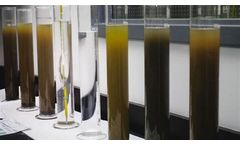
Sludge bulking remains one of the most persistent challenges in small and mid-sized wastewater treatment facilities, particularly during seasonal shifts that affect the food-to-microorganism (F/M) ratio, nitrogen-to-phosphorus (N/P) ratio, and temperature. These operational changes often trigger the overgrowth of filamentous organisms or biofilms, leading to poor ...
Why do we care about Microthrix filaments? Usually, Microthrix parvicella is associated with foaming problems in wastewater treatment. Sometimes we have observed high levels of what looks like M. parvicella in a sample of mixed liquor, and though the plant may be experiencing bulking, they do not have any foam. Even more confusing is when this occurs in summer, since M. parvicella is ...
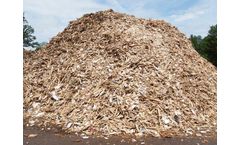
Since demolition activities generate far more waste per square foot than do construction activities, disposal costs represent a much larger portion of operating expenses.Wood Recycling MarketMarkets for wood waste include feedstock for engineered woods, landscape mulch, soil conditioner, animal bedding, compost additive, sewage sludge bulking medium, and boiler ...

Sludge dewatering processes remove the bulk of the moisture from sludge, leaving behind solid filter cakes. ...

1. What is MBR (Membrane Bioreactor)? The MBR (Membrane Bioreactor) which was first used in the late 1960s made a revolution in the wastewater industry in the early 1990s by combining membrane filtration with a biological treatment solution to treat wastewater. It's been commonly used since then and can be seen widely practiced in the design of both new and old wastewater treatment facilities. ...
It may be due to swelling of the sludge, which is not serious. But I am very surprised that the MLVSS of the biochemical tank is about 2000mg/l, the sludge age is relatively short, the sludge is not aging, and it is within the control range. ...

"What is the original cause? Sludge Bulking The dissolved oxygen in the aerobic tank is low or high for a long time. ...
All biological wastewater processes have a need for balanced sources of BOD, nitrogen, and phosphate. In aerobic processes, the correct ratio of BOD:N:P is critical for strong floc formation and good settling. A ratio of 100:7:1 works well in most aerobic processes, but his ratio can vary from 100:10:1 to 100:5:1, depending on what makes up the incoming BOD (municipal waste, cheese waste, sugary ...
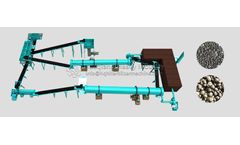
Ingredients: human animal waste, various food residues, kitchen garbage, cassava residue, powder residue, bean curd residue, dregs, oil residue, oil cake, bran, sugar mill brewery sludge, slaughter scraps, etc. bulk material. B. Excipients: Various crop straws, leaf weeds, melon vines, straw, pine shells, peanut shells, sawdust, chaff flour, and sorghum can be ...

One of the most important steps and the main bottleneck of the activated sludge wastewater treatment process (WWTP) is the secondary clarification, where sludge bulking is still a widespread problem. In this paper, an intelligent method, based on a knowledge-leverage-based fuzzy neural network (KL-FNN), is developed to predict ...
Bulking and foaming phenomena in activated sludge wastewater treatment plants are in most cases related to the abundance of filamentous microorganisms. ...
Bulking and rising sludge are common problems in wastewater treatment plants (WWTPs) and are primarily caused by increased growth of filamentous bacteria such as Microthrix parvicella. ...
Filamentous population in activated sludge and key operational parameters of full-scale municipal wastewater treatment plants (WWTPs) with bulking problems representative for Poland were investigated with quantitative fluorescence in situ hybridization. ...
Hitherto, this functionality of bacteria has not been realized due to the initial response of the aerobic treatment stage: namely, morphology change by bacteria to filamentous forms to overcome oxygen mass transfer limitations causing bulking/foaming and nitrification inhibition. There is evidence, however, of the potential expression of Hb proteins by activated ...
Sludge bulking caused by loss of stability is a major problem in aerobic granular sludge systems. This study investigated the feasibility of preventing sludge bulking and enhancing the stability of aerobic granular sludge in a sequencing batch reactor by optimizing operation conditions. ...
The plant’s bacteria are either in feast or famine mode, which causes upsets that lead to sludge bulking and TSS/BOD violations. With tightening grips on environmental compliance and the lack of water and manpower, wineries are struggling to operate an efficient and effective wastewater treatment ...
When this happens the plants can get low DO filaments that cause sludge bulking and poor settling. Aerobic digesters can add to that problem. ...
We investigated the bacterial community compositions and phosphorus removal performance under sludge bulking and non-bulking conditions in two biological wastewater treatment systems (conventional A2/O (anaerobic/anoxic/aerobic) and inverted A2/O (anoxic/anaerobic/aerobic) processes) receiving the same raw wastewater. Sludge ...

Diameter of clarifier = 16m. A part of sludge (50%) is re-circulated to the lagoon. COD of effluent = 255-3500mg/l. ...